
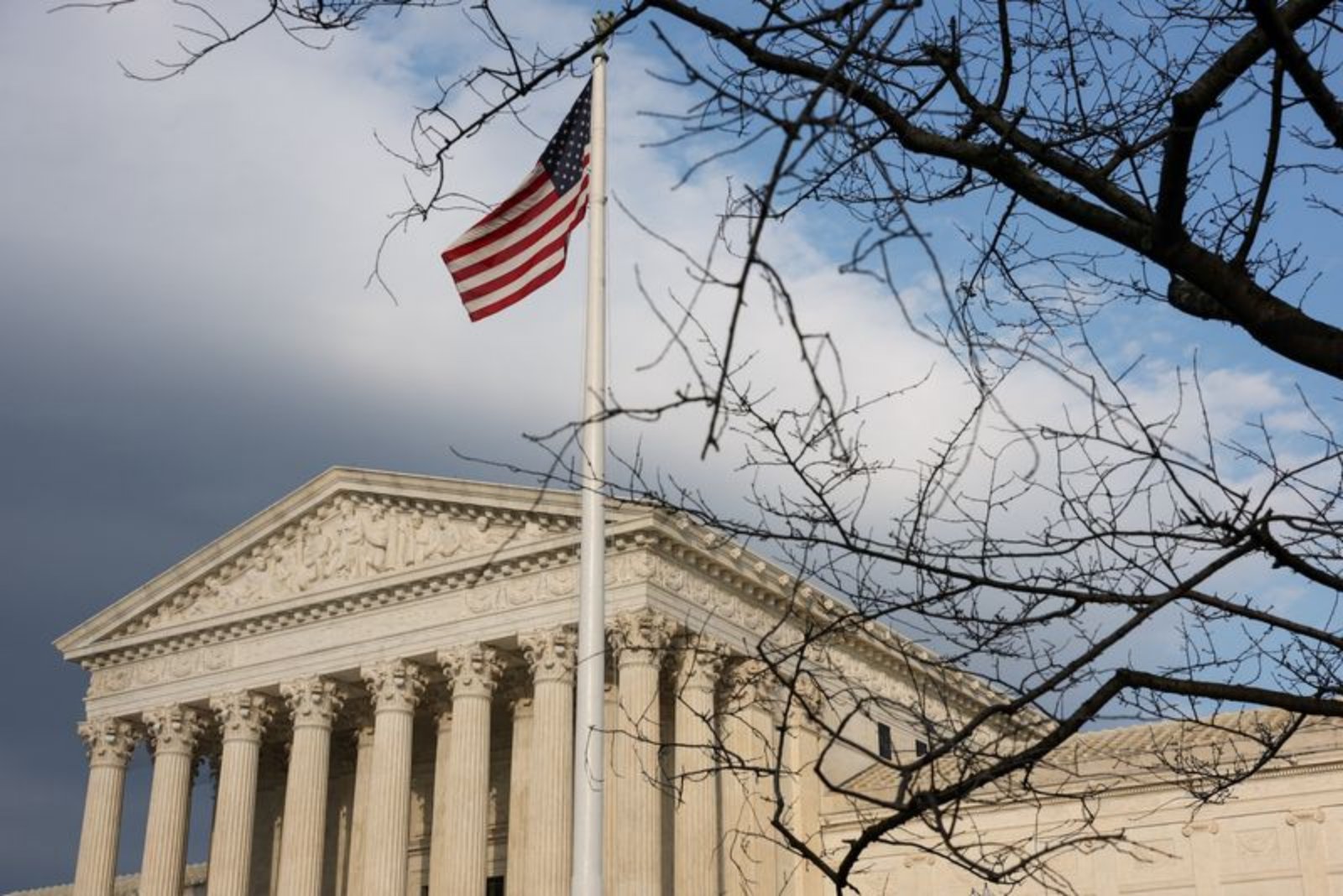
The U.S. Supreme Court on Monday granted a request from Republican U.S. Representative Nicole Malliotakis to restore the geographic lines of her Staten Island-based House district, after a New York state judge found the district's configuration unlawfully diluted the voting strength of Latino and Black residents.
State Supreme Court Justice Jeffrey Pearlman in January ruled that the contested district illegally lessened the influence of those minority voters, prompting Malliotakis and members of New York's board of elections to lodge appeals. The high court's action revives the boundaries that had been in place prior to the state court's ruling, at least temporarily, while the legal appeals play out.
The decision has immediate political significance. Republicans are aiming to maintain control of both chambers of Congress in the midterm elections, and the ability of Malliotakis - the lone member of President Donald Trump’s party representing a New York City-based district - to win reelection could be material for that effort. Republicans currently hold a narrow 218-214 majority in the U.S. House of Representatives, making each seat potentially decisive in determining which party controls the chamber.
Control of either the House or the Senate would have direct implications for the president's legislative priorities and for the oversight environment facing his administration. The article of record notes that surrendering control of either chamber to Democrats would both jeopardize President Donald Trump’s legislative agenda and enable Democratic-led congressional inquiries focused on him and his administration.
The suit challenging the Staten Island district was brought by a group of local voters and supported by attorney Marc Elias, a lawyer known for representing Democratic electoral interests. That legal challenge, and the subsequent state court ruling, set off the appeal by Malliotakis and the state's board of elections that led to the Supreme Court's intervention.
This episode is one of several recent instances in which the Supreme Court has stepped in on disputes over congressional district maps. The court on December 4 revived a redrawn Texas map that was crafted to potentially flip as many as five Democratic-held U.S. House seats to Republican control. On February 4 the justices permitted California to use a new map intended to add five congressional seats favorable to Democrats in the midterms. The process of revising electoral boundaries - redistricting - has become a politically charged battleground as parties seek any advantage heading into the November elections.
Context and procedural posture
The Supreme Court's move does not resolve the underlying legal dispute about whether the Staten Island district's layout violated voting rights protections; it simply restores the contested map while lower-court rulings and appeals continue. The outcome of the appeals process will determine whether the reinstated boundaries remain in place for the November elections or are again altered before then.
Implications for the 2024 midterms
The reinstatement preserves the district lines under which Malliotakis is seeking reelection and therefore preserves the current electoral map in that part of New York City while litigation proceeds. Given the narrow margin in the House, the fate of single districts such as this one can carry outsized consequences for which party controls Congress and for the legislative and investigative environment that would follow.