
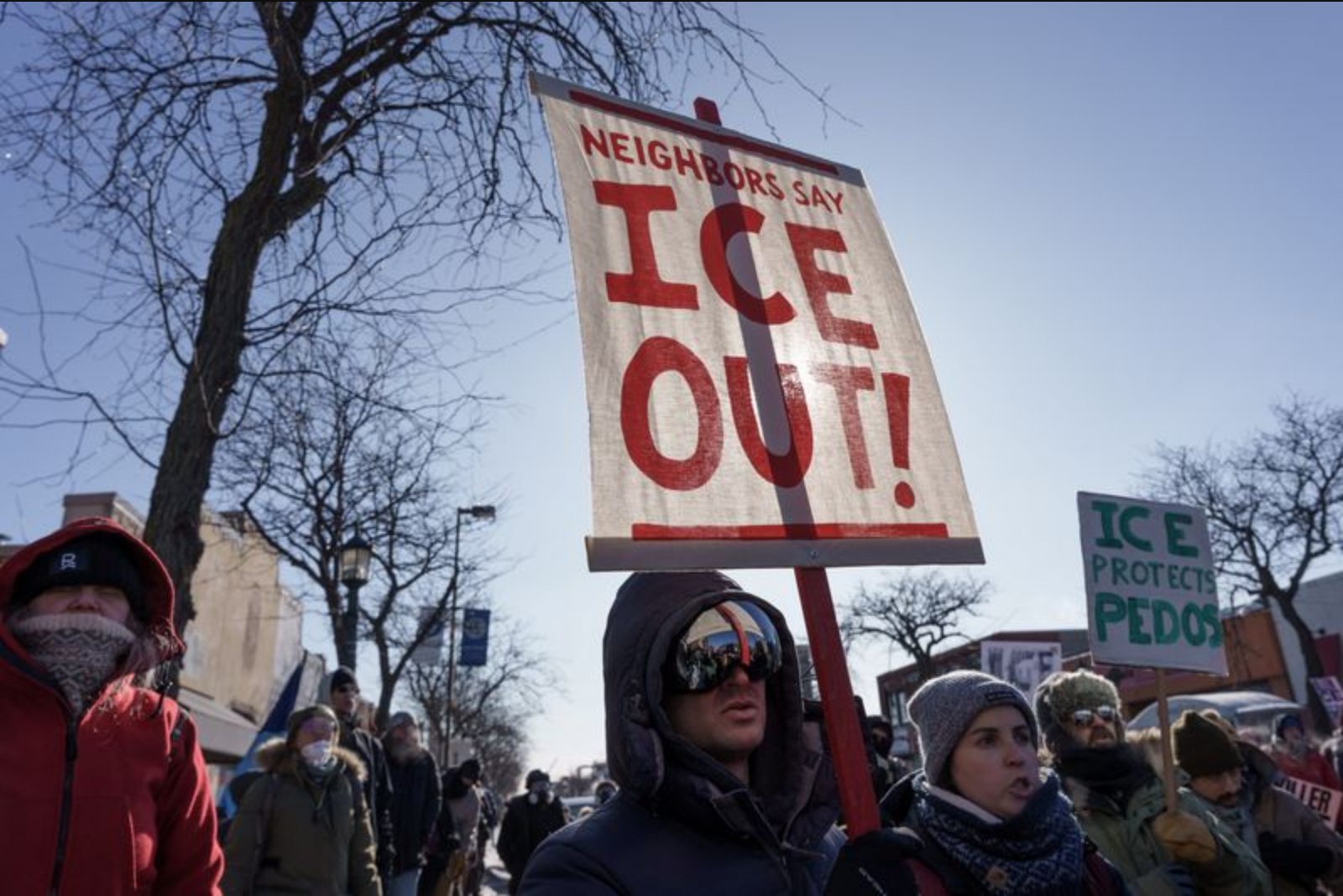
Jan. 26 - Attorney Chris Madel announced on Monday that he was exiting the Republican contest for Minnesota governor, accusing federal authorities of carrying out a campaign of retribution against state residents following confrontations tied to stepped-up immigration enforcement.
Madel framed his decision around recent fatal encounters between federal officers and two U.S. citizens, saying the deaths occurred amid clashes that followed a heightened enforcement push. The shootings of Renee Good on Jan. 7 and Alex Pretti on Saturday - both aged 37 - were central to his criticism of the federal operation now underway in Minneapolis.
In a video posted on X, Madel said he could not "support the national Republican stated retribution on the citizens of our state nor can I count myself a member of a party that would do so." He added that national Republican actions had made it "nearly impossible for a Republican to win a statewide election in Minnesota."
Madel, a lawyer who previously defended a Minnesota state trooper accused in the fatal shooting of a Black motorist, expressed qualified support for ICE's stated objective of removing "the worst of the worst from our state." However, he argued that the operation in Minneapolis - referred to internally as Operation Metro Surge - had "expanded far beyond its stated focus on true public safety threats."
His withdrawal reduces the field of contenders vying for the Republican nomination. More than 10 candidates remain in the August 11 primary, among them Minnesota House Speaker Lisa Demuth, state Representative Kristin Robbins and former state Senator Scott Jensen.
Political dynamics in Minnesota have shifted in recent days. Democratic U.S. Senator Amy Klobuchar entered the gubernatorial contest last week and is viewed by nonpartisan analysts as the likely favorite. Incumbent Governor Tim Walz announced this month that he would not seek reelection amid a welfare fraud scandal. Republicans have not held the state governorship since 2006.
Madel's announcement underscores growing strains within the Republican Party as it prepares for the November midterm elections. The immigration enforcement actions and resulting public clashes have become a flashpoint, provoking debate within the party about tactics and messaging in a state seen as competitive.
National political leaders have weighed in on the situation in Minnesota. Former President Donald Trump, who has criticized Governor Walz and is running as the Republican nominee for president in 2024, said on Monday that he was "on a similar wavelength" with Walz, who has called for ICE to pull back from the state.
Beyond the gubernatorial contest, the stakes in November include control of Congress. The Republican majority in the U.S. House and the party's edge in the Senate are both considered at risk as both parties target competitive races nationwide.
Context and implications
The resignation of a Republican candidate in the wake of federal enforcement operations highlights how immigration policy and enforcement tactics can reshape intra-party contests and statewide electoral prospects. With a crowded primary field and a high-profile Democratic entry, Minnesota Republicans face strategic questions about candidate positioning and messaging heading into a pivotal midterm year.