
Jan 31 - A federal judge in Minnesota on Saturday turned down a request to immediately stop a Department of Homeland Security (DHS) immigration enforcement operation in the Minneapolis-St. Paul region, according to court filings. The bid to enjoin the operation was made by the Minnesota Attorney General's Office, which has accused the federal deployment of a pattern of civil-rights violations.
U.S. District Judge Kate Menendez, sitting in Minneapolis, issued the decision denying the state's motion for an order halting the operation. Menendez - who was appointed by former President Joe Biden - framed her ruling in part around a recent development at the federal appeals court level: an appellate court had stayed a more limited injunction that had attempted to restrict some U.S. Immigration and Customs Enforcement (ICE) tactics in Minnesota.
"If that injunction went too far, then the one at issue here - halting the entire operation - certainly would," Menendez wrote in her ruling, underscoring the court's reluctance to enjoin the full scope of the federal deployment while the appellate process remains active.
The lawsuit brought by the Minnesota Attorney General's Office alleges that federal agents engaged in racial profiling, unlawfully detained lawful residents for prolonged periods, and used heavy-handed tactics that generated fear among community members. The state also contends the federal operation was politically motivated, alleging it targeted Minnesota because of its Democratic political leanings.
The Trump administration has defended the surge as an enforcement of federal immigration statutes consistent with the president's policy priorities. Some administration officials indicated the presence of federal agents in the region could be scaled back if Minnesota met certain demands, including the removal of legal protections for people living in the United States without authorization - a condition cited by administration sources.
Minnesota Attorney General Keith Ellison, an elected Democrat, responded to the court ruling with a statement: "We’re obviously disappointed in the court’s ruling today, but this case is in its infancy and there is much legal road in front of us, so we’re fighting on."
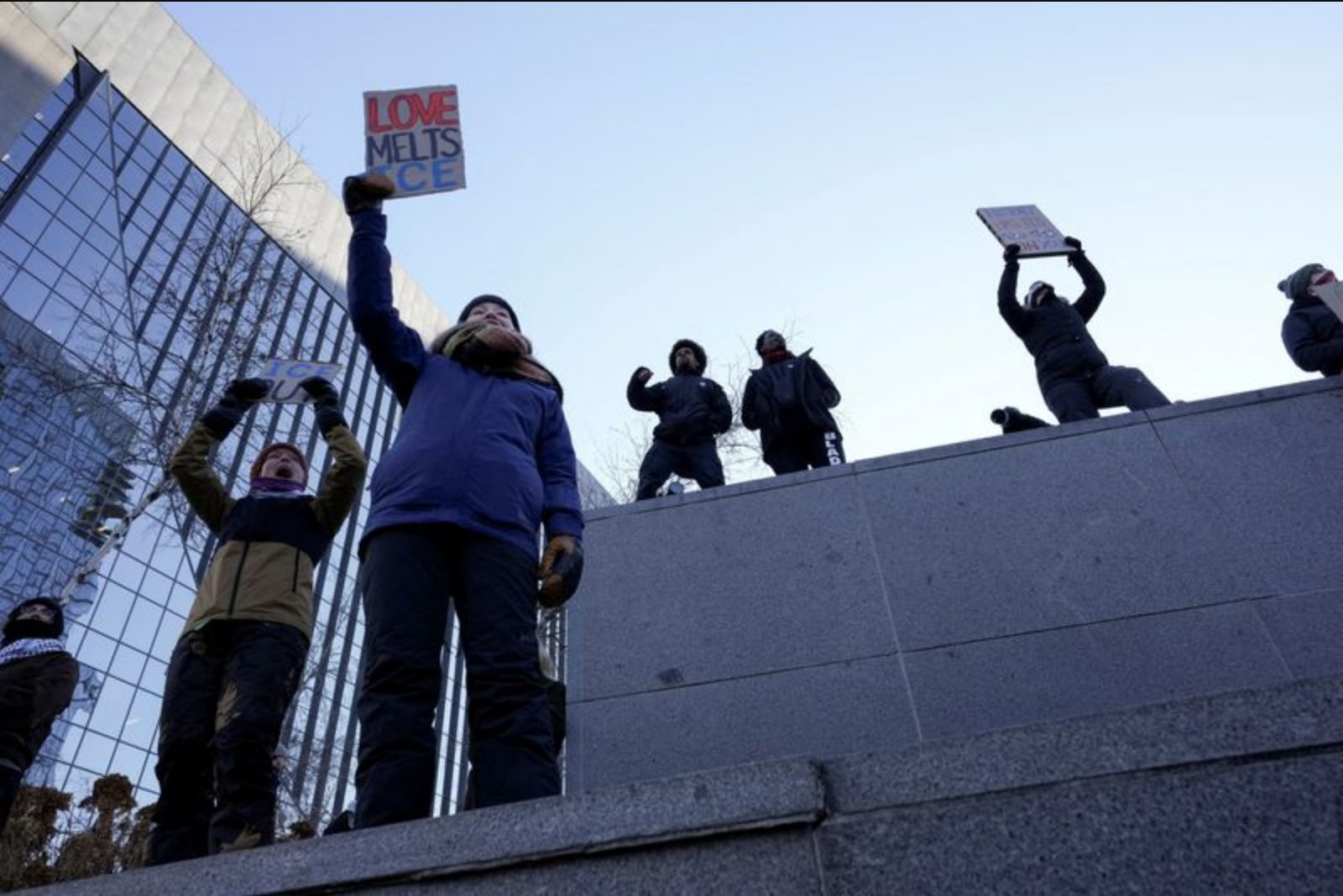
Tensions in the Twin Cities intensified after two separate fatal shootings involving federal immigration agents. On January 7, Renee Good was shot and killed in her car by a federal immigration agent in an episode captured in widely circulated bystander video. The situation escalated again on January 24 when Border Patrol agent-involved shooting resulted in the death of Alex Pretti. Those events prompted weeks of protests across the Minneapolis-St. Paul area.
The federal government has defended the agents involved in both shootings, asserting they acted in self-defense. However, publicly circulated video footage of the incidents has raised questions about those accounts and prompted calls for criminal prosecution of the officers. The lawsuit also notes that federal authorities declined to cooperate with local law enforcement investigations into the killings.
Beyond Minnesota, the administration has deployed federal law enforcement officers to other large cities and jurisdictions governed largely by Democrats, including Los Angeles, Chicago, Washington, D.C., and Portland, Oregon. The White House and administration officials have characterized those deployments as necessary to enforce immigration laws and to address crime, while critics in Democratic governments have accused the administration of misusing federal law-enforcement powers.
On Saturday the president said he had directed DHS to refrain from engaging with protests in Democratic-led cities "under no circumstances" unless local officials request federal assistance or federal property is threatened. Speaking aboard Air Force One, he added: "If they want help, they have to ask for it. Because if we go in, all they do is complain."
The state lawsuit remains active as legal proceedings proceed. The court's refusal to issue a blanket halt to the operation leaves the DHS deployment in place for the time being while the appellate issues and the underlying civil-rights claims continue to work their way through the federal courts.