
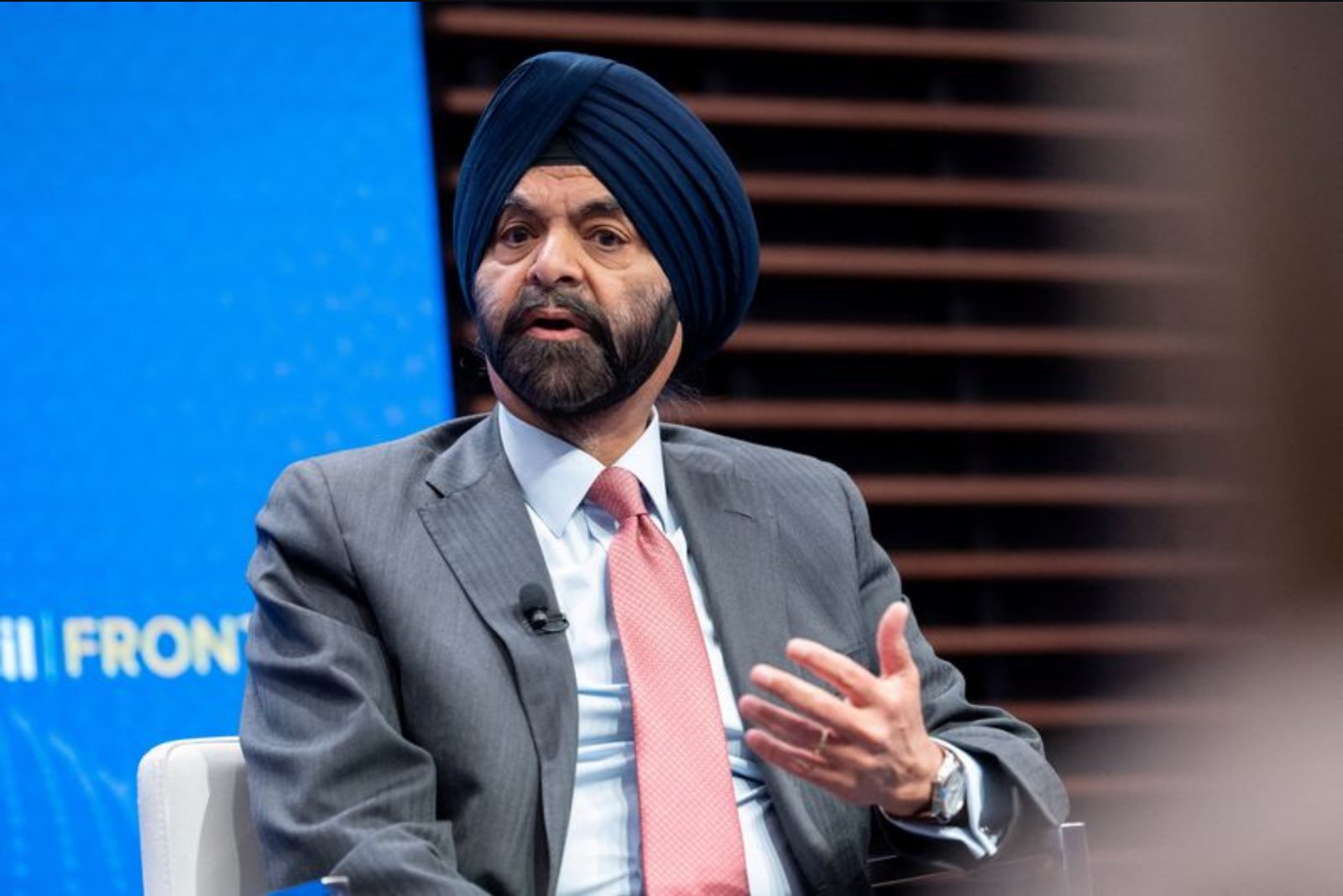
World Bank President Ajay Banga said the war in the Middle East is already generating cascading effects on the global economy and that the damage will deepen considerably if fighting continues rather than ending soon. Speaking in an interview on Friday, Banga described a range of scenarios for growth and inflation depending on whether the fragile ceasefire now in place holds.
Under a baseline scenario, in which the current fragile ceasefire announced by U.S. President Donald Trump takes hold and leads to an early end to the conflict, global growth could be lowered by 0.3 to 0.4 percentage point, Banga said. If the conflict persists, that reduction in growth could be as much as 1 percentage point, he added.
Banga also quantified potential impacts on inflation. He said inflation could rise by 200 to 300 basis points in the baseline case. If the war endures and disruptions intensify, the inflationary impact could be greater - up to 0.9 percentage point, according to his remarks.
"The question really is, does this current peace and the negotiations that are going to be happening this weekend - will this lead to a lasting peace and then a reopening of the Strait (of Hormuz)?" Banga asked. "If it doesn’t lead to that, and if conflict were to break out again, would that have an even larger impact, or longer-term impact on energy infrastructure?"
On the ground, the war has caused thousands of deaths across the Middle East and has lifted the price of oil by roughly 50 percent while disrupting supplies of oil, gas, fertilizer, helium and other goods. Tourism and air travel have also been affected by the conflict, compounding the economic fallout.
The two-week ceasefire announced by the U.S. president appears tenuous, with strikes by Israel and Iran reported to have continued. Iran said on Friday that blocked Iranian assets must be released and that a ceasefire must take hold in Lebanon before scheduled talks between the United States and Iran in Pakistan can proceed. President Trump said U.S. warships were being reloaded with ammunition in case those talks were not successful.
Recognizing the strain on vulnerable economies, Banga said the World Bank is already in discussions with several developing countries, including small island states with no natural energy resources, about accessing funds from existing programs under so-called "crisis response windows." These engagements aim to provide immediate financial support to countries facing acute energy and supply shocks.
Sectors affected: energy, commodities, agriculture (fertilizer), tourism, air travel, small island and energy-importing developing economies.