
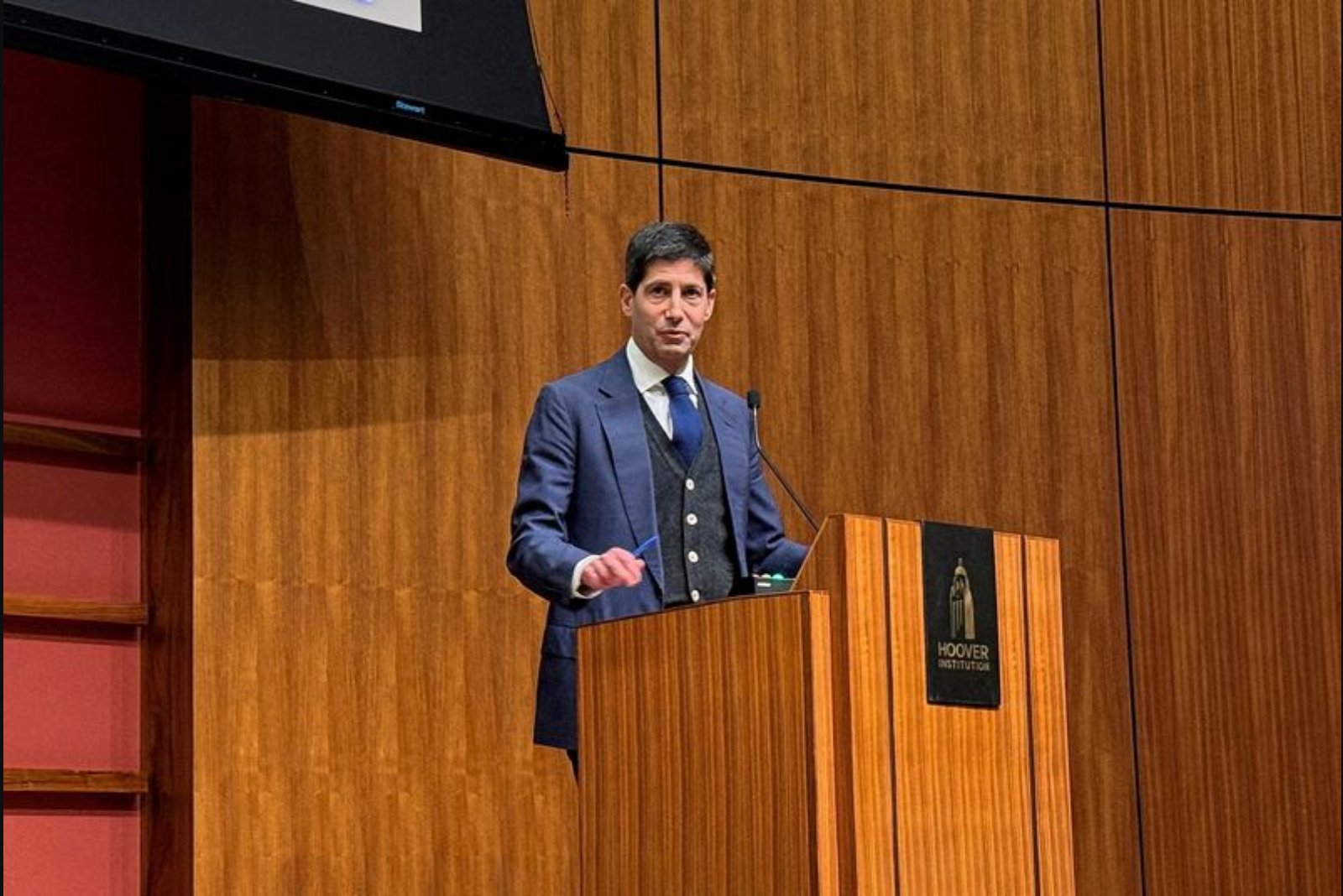
New York Federal Reserve President John Williams said on April 7 that there would be no break in leadership of the central bank’s key rate-setting body if Kevin Warsh has not been confirmed to replace Jerome Powell by the time Powell’s term as chair concludes. Speaking on Bloomberg’s television channel, Williams sought to reassure markets and observers that the Federal Open Market Committee’s (FOMC) work would continue without interruption.
“There’s no issue of continuity. There’s no issue of anything” when it comes to the leadership of the FOMC, Williams said, addressing concerns about the unsettled succession at the top of the Federal Reserve system. His remarks came against a backdrop in which President Donald Trump nominated Warsh, a former Fed governor noted in public times for his hawkish views, to succeed Powell when Powell’s current term as chair ends in May.
Despite the nomination earlier this year, there has been little formal progress to secure Warsh’s confirmation in the Senate, and the calendar is tightening for what would be a smooth transition. The path to confirmation has grown more uncertain as the Department of Justice opened a legal probe into cost overruns for renovations of Federal Reserve headquarters - an investigation that has drawn criticism and complicated the leadership transition.
That inquiry has prompted a prominent Senate Republican to declare that Warsh should not be confirmed until the investigation is resolved. With the White House indicating it will continue to pursue the nomination, the investigation nonetheless has increased the likelihood that Warsh may not be confirmed by the time Powell’s chair term expires.
Powell has said he will remain in the chair role until a successor clears Senate confirmation, a position that Powell tied to precedent within central bank practice. After the Federal Open Market Committee meeting in mid-March, Powell stated, “If my successor is not confirmed by the end of my term as chair, I would serve as chair pro tem.” Powell also noted that he would remain in his role as a Fed governor - a separate term that runs through 2028 - and would continue in that capacity “until the investigation is well and truly over with transparency and finality.”
Williams highlighted a technical nuance that has contributed to uncertainty among observers: while the roles of Fed chair and FOMC chair have historically been held by the same person, the FOMC chair is formally chosen by a vote of central bank officials. “Typically, we have this vote in January for the chair of the FOMC and, or if, a new chair is confirmed by the Senate, then that person becomes the chair of the FOMC,” Williams said, underscoring the procedural element at work.
Williams serves as vice chair of the FOMC and leads the New York Fed, the regional bank tasked with implementing monetary policy operations. He emphasized the practical side of the institution’s work in the near term. “The most important thing here is that ... we’re just focused on doing our work,” Williams said, reiterating the staff and officials will continue carrying out monetary policy responsibilities regardless of the timing of a formal leadership handoff.
Turning to the nominee, Williams offered measured praise for Warsh’s background and understanding of the central bank. He said Warsh “understands the Federal Reserve very well” from his prior service as a central banker and added that Warsh “has a keen understanding of what our mission is, and the importance of what we do.” Williams noted he had not recently spoken with Warsh, but that he expected the nominee, if confirmed by the Senate, to articulate his views and priorities for the role. “I do expect that when he does get confirmed by the Senate, that he will share his views and perspectives as he thinks about … what he wants to accomplish as chair,” Williams said.
The combination of a slow confirmation process, a Justice Department probe into renovation-related spending, and the procedural aspects of electing an FOMC chair have together created an unusual window in which the Federal Reserve faces heightened public scrutiny about its leadership succession. Williams’ comments aimed to balance reassurance about ongoing operations with a recognition of the institutional steps that lie ahead should Warsh move through the confirmation process.
Clear summary
New York Fed President John Williams told Bloomberg TV that leadership of the FOMC will remain continuous even if Kevin Warsh is not confirmed to succeed Jerome Powell before Powell’s chair term ends. Williams addressed the stalled nomination process, the Justice Department investigation into Fed renovation costs that has complicated confirmation prospects, Powell’s stated intention to remain chair until a successor is confirmed and to continue as a Fed governor through 2028, and the formal voting process for the FOMC chair.