
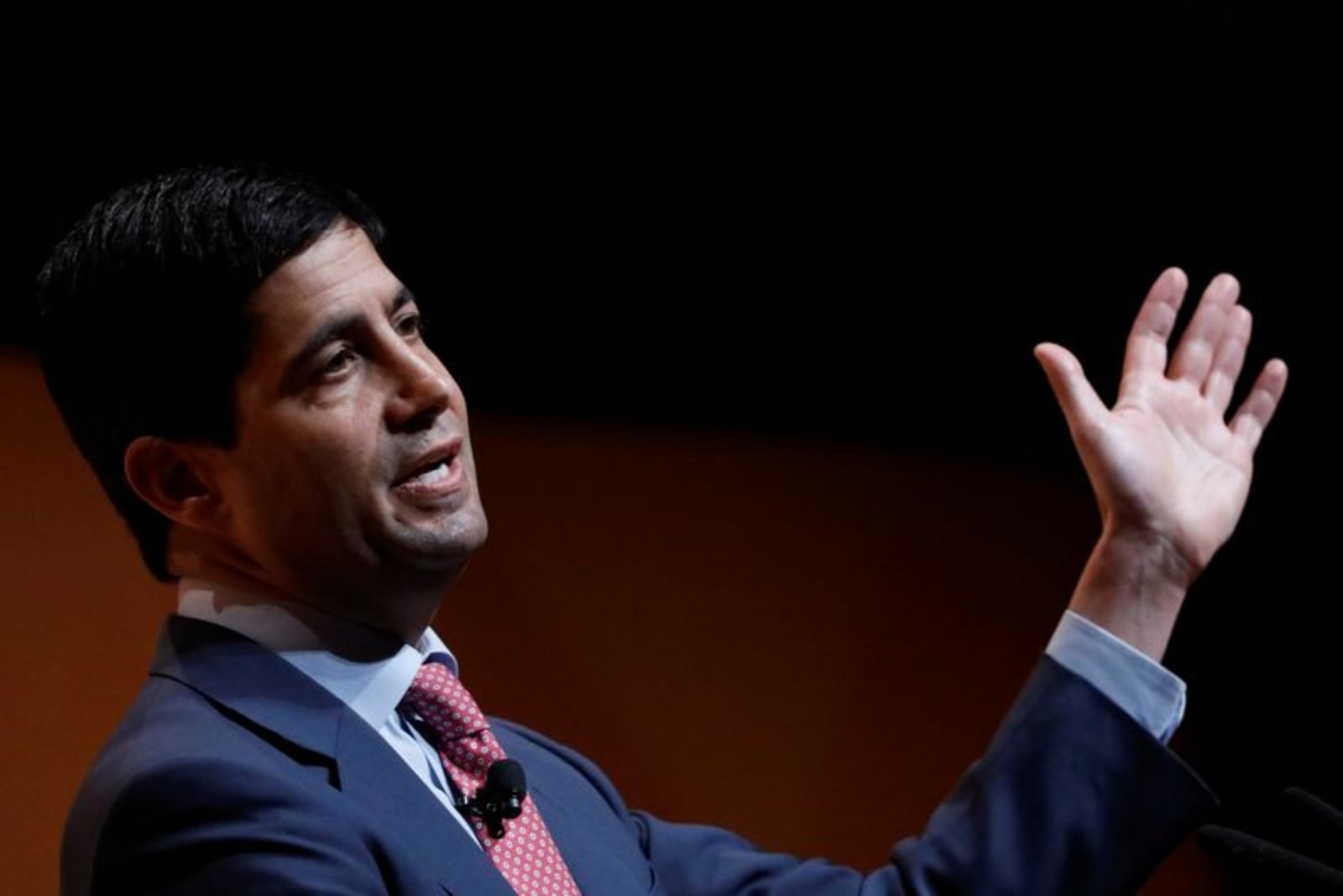
Kevin Warsh, President Donald Trump's nominee to lead the Federal Reserve, has received in excess of $1 million in compensation since 2020 for his role as a director of Coupang, the Seattle-based e-commerce company now implicated in a dispute that has inflamed trade tensions between the United States and South Korea.
Warsh joined Coupang's board in October 2019 and, according to available figures, has earned nearly $325,000 in total compensation each year since 2022. The company has been under investigation by South Korean regulators following a mass data leak. Some U.S. investors have urged the Trump administration to review that probe, arguing it discriminates against an American company.
Those investor concerns have moved into diplomatic channels. Vice President JD Vance and South Korean Prime Minister Kim Min-seok discussed the matter last week. Their conversation occurred days before President Trump announced a sharp increase in U.S. duties on South Korean autos and other imports - raising tariffs to 25% from 15% - on the grounds that Seoul was not meeting commitments under a trade agreement signed last year.
South Korean officials are in Washington this week to negotiate over the trade deal, but the parties have not resolved the dispute, leaving the situation between regulatory scrutiny of Coupang and broader trade tensions unsettled.
Warsh, 55, is a former Federal Reserve governor who currently lectures at Stanford University. His nomination has prompted questions about how his private-sector roles would intersect with the legal and regulatory limits that apply to members of the Fed's Board of Governors.
Under the Federal Reserve Act, "members of the Board shall devote their entire time to the business of the Board."
The White House did not provide an immediate comment on whether Warsh would be required to divest any holdings, or on a timeline for such action. Warsh did not respond immediately to inquiries about his intentions, and the Federal Reserve likewise did not respond immediately to requests for comment.
Federal Reserve rules prohibit any board member from holding positions or owning stock in a bank, banking institution, or trust company. Fed governors are generally ineligible to work for a member bank for two years after completing their service unless they have served a full term. Additional restrictions were strengthened a few years ago after a trading scandal led to the resignations of two regional reserve bank presidents.
Under the tightened rules, Fed officials are barred from purchasing individual stocks, entering into derivatives, or holding individual bonds and agency-backed securities. Newly appointed members of the Fed have six months from their start date to come into compliance with these restrictions.
Warsh previously served on the Federal Reserve Board of Governors from 2006 to 2011. He has also been a member of the UPS board since 2012. Compensation for his UPS board seat ranged between nearly $285,000 and $305,000 from 2021 through 2024, the latest period for which data are available.
Separately, some market-facing services have highlighted UPS and other companies for investor consideration. One such service advertises that it evaluates UPS using a broad set of financial metrics and that its model has identified notable past winners, while offering tools to compare opportunities within the same sector. The article does not include independent verification of those claims.
The convergence of Warsh's corporate affiliations, the regulatory probe into Coupang, and the ongoing trade negotiations with South Korea create a set of compliance and diplomatic questions that remain unresolved as of this week's discussions in Washington.