
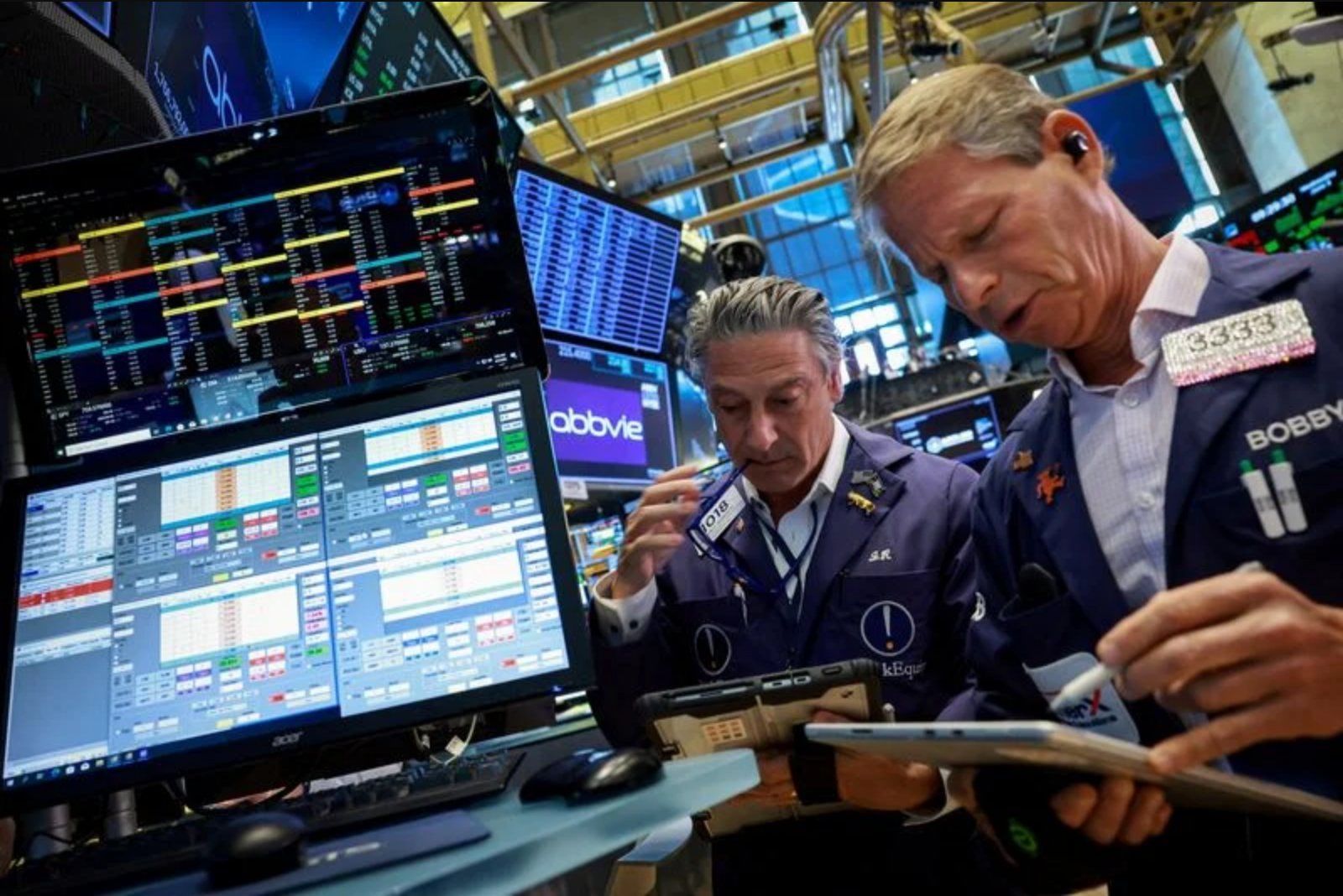
U.S. stock indexes closed sharply lower on Wednesday, with the sell-off led by semiconductor names and punctuated by fresh geopolitical friction between the United States and Iran. The combination of stretched technology valuations, rising volatility and inflationary pressure tied to energy costs pushed investors toward safer positioning.
President Donald Trump said the U.S. would attack Iran again "very hard" following one of the most significant exchanges of fire overnight since an April ceasefire in the Middle East war, comments that added to market unease. Against that backdrop, an index of semiconductors dropped steeply, with heavyweight chipmakers including Nvidia and Broadcom among the largest negative contributors to the S&P 500.
Market-wide measures of volatility rose as the Cboe Volatility Index climbed for a second consecutive day, reflecting a recent pick-up in jitteriness among traders. "Investors were still taking some profits in the tech space," said Tom Hainlin, an investment strategist at U.S. Bank Wealth Management in Minneapolis. He added that market participants appear to be "pricing in maybe a higher interest rate" after recent economic prints, and are also concerned about the evolving situation in the Middle East. "Perhaps that conflict continues on into the mid to late summer," he said.
Yields and rate expectations were already adjusting after a string of economic updates. The Federal Reserve is widely expected to pause on rates at its June policy meeting, yet investors are placing at least one 25 basis point hike into year-end pricing.
According to preliminary data, the S&P 500 lost 119.00 points, or 1.61%, to finish at 7,267.65. The Nasdaq Composite fell 505.31 points, or 1.97%, to 25,169.50. The Dow Jones Industrial Average declined 952.04 points, or 1.87%, to 49,920.07. Other market moves included Nvidia down 3.73%, Broadcom down 5.12%, and the Cboe VIX up 11.83%. Smaller-cap or single-stock moves were notable as well, with Super Micro Computer plunging after it unveiled plans to raise $7 billion through a mix of equity and equity-linked financings to finance component purchases tied to growing AI server demand. Separately, SMCI fell 28.04%, XPO declined 4.92%, ODFL lost 5.26%, and JBHT dropped 2.21%.
Inflation data on Wednesday showed U.S. consumer prices rose 4.2% in the 12 months through May, the largest annual increase since April 2023. The report cited rising gasoline and other energy product costs related to the Middle East conflict. The pace, however, was in line with economists' forecasts in a recent Reuters poll. Friday's U.S. jobs report was stronger than expected, adding another element for investors to weigh when forming expectations for monetary policy.
The rotation out of some of the highest-flying technology stocks has helped sectors that had lagged earlier in the year, including healthcare, real estate and consumer staples. At the same time, industrials led sectoral declines on Wednesday, weighed by names in freight and logistics after Amazon announced an expansion of its less-than-truckload freight services in the U.S. That move pressured shares of trucking companies such as XPO, J.B. Hunt and Old Dominion.
Market commentators also flagged potential headwinds from a highly anticipated technology listing slated for Friday, described as a $1.75 trillion offering for SpaceX that is targeting a record $75 billion raise. Market participants worry the event could exacerbate optimism in the technology complex and add further pressure if demand proves concentrated.
Trading conditions in the near term remain sensitive to developments on multiple fronts - geopolitical, inflationary and interest-rate related - as investors weigh profit-taking in growth names against pockets of outperformance elsewhere in the market.