
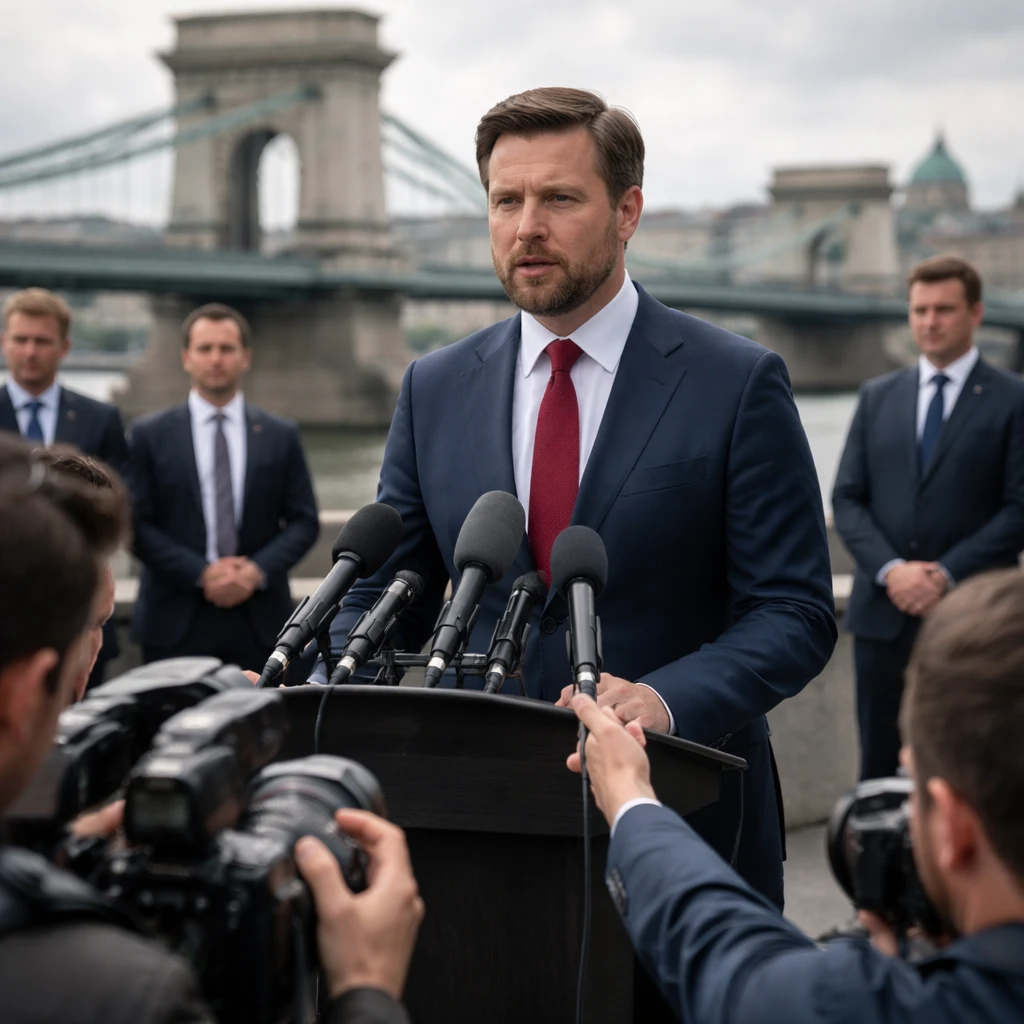
U.S. Vice President JD Vance said on Wednesday that the United States is positioned to reach an agreement to end the ongoing Middle East conflict provided Iran participates in good faith negotiations. Speaking while in Budapest, Vance said President Trump has instructed him and the negotiating team to pursue a deal.
"If the Iranians are willing in good faith to work with us, I think we can make an agreement," Vance said, describing the conditions under which talks could yield a resolution.
Vance highlighted recent developments he described as positive steps toward de-escalation. He reported that Iran had agreed to open the Strait of Hormuz. In addition, Vance said the United States and its allies had agreed to stop attacking Iran, an arrangement he characterized as the basis for a "fragile truce." He framed those moves as forming the starting point for negotiations.
The vice president said reactions inside Iran have been mixed. He noted that some actors within Iran have responded positively to the truce while others, he said, have been misrepresenting what has been achieved.
Vance also signaled urgency from the White House. He said President Trump is impatient to advance progress on Iran and offered a warning that if Iranians fail to engage sincerely, they will learn that President Trump is not one to mess around.
Summary
During a visit to Budapest, Vice President JD Vance said the United States is ready to finalize an agreement to end the Middle East conflict if Iran negotiates in good faith, adding that President Trump directed him and the negotiating team to pursue such a deal. Vance cited two concrete developments as underlying a "fragile truce": Iran's agreement to open the Strait of Hormuz and a U.S. and allied decision to cease attacks against Iran. He said responses inside Iran vary, with some positive reactions and some actors misrepresenting the outcome, and warned of consequences if Iran does not engage sincerely.
Key points
- Vance said a deal is attainable if Iran participates in good faith discussions, and that President Trump has tasked him and the negotiating team to work toward an agreement.
- According to Vance, Iran has agreed to open the Strait of Hormuz and the U.S. and its allies have agreed to stop attacking Iran - developments he described as forming a fragile truce.
- The report notes mixed reactions within Iran, with some responding favorably to the truce and others misrepresenting the situation; the article does not specify which economic sectors or market segments are affected.
Risks and uncertainties
- The truce is described as fragile - its durability is uncertain and dependent on continued cooperation between parties.
- Iran may not engage in negotiations in good faith as defined by U.S. officials; Vance warned that a lack of sincere engagement would carry consequences.
- Internal divisions in Iran, including actors who Vance says are misrepresenting progress, introduce uncertainty about whether the reported steps will lead to a sustained agreement.