
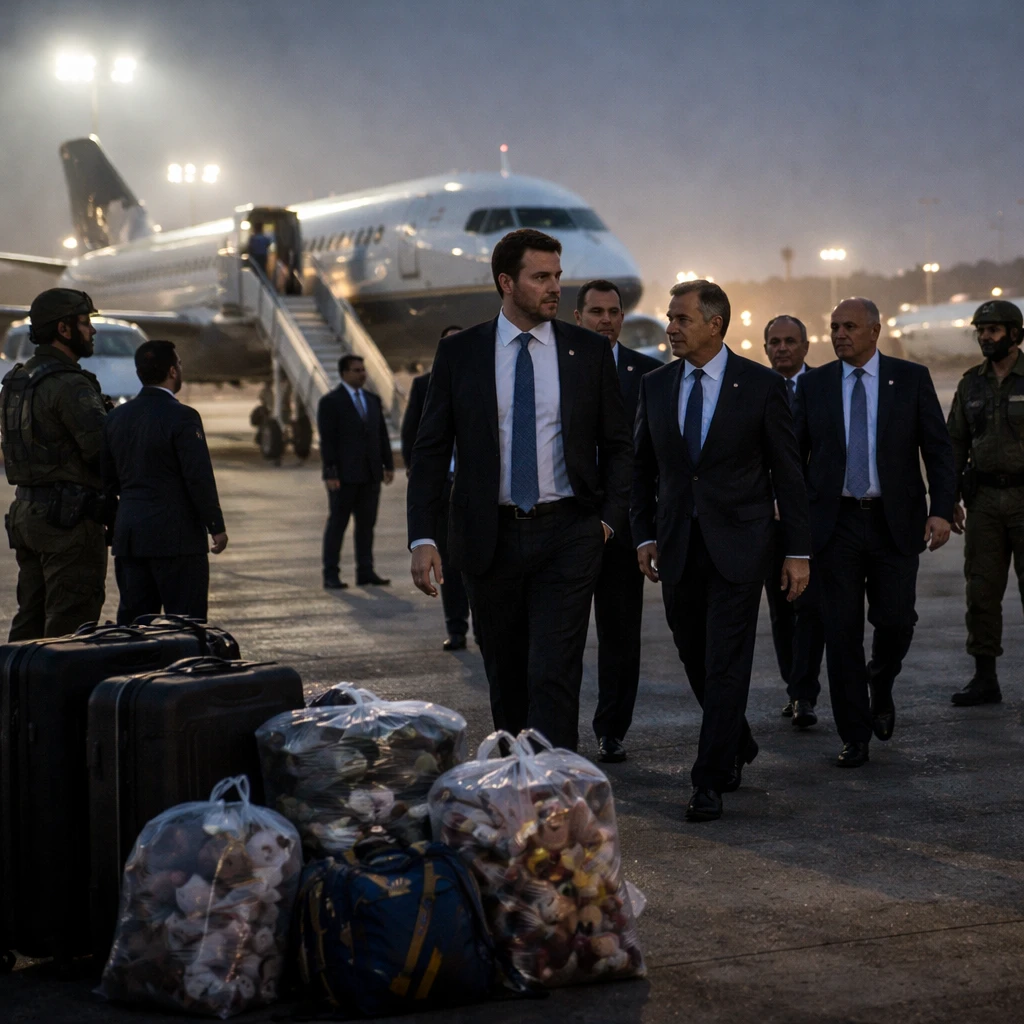
Diplomats from Washington and Tehran gathered in Islamabad today for talks that Pakistani Prime Minister Shehbaz Sharif has framed as a "make or break" attempt to negotiate a lasting ceasefire in a conflict now six weeks old. The meeting represents the most consequential diplomatic effort so far to address a confrontation that has closed the Strait of Hormuz and disrupted global energy and security dynamics.
Leading the U.S. delegation is Vice President JD Vance. The central economic aim of the American side is the unconditional reopening of the Strait of Hormuz - the 30-mile-wide maritime chokepoint through which a meaningful share of the world's oil supply transits. The waterway's closure has removed about 15% of global oil supply, a dislocation that has contributed to rising gas prices and growing public concern at home.
Iranian officials have recently asserted that they will exercise control over which vessels pass through the passage and "at what price", prompting critics to label the posture the "Tehran toll booth". That assertion, and the fact that parts of the waterway have been mined in what officials have described as "haphazard" ways, underline the logistical and security challenges facing any plan to restore normal traffic.
The Iranian delegation is headed by Parliamentary Speaker Mohammad Bagher Ghalibaf together with Foreign Minister Abbas Araghchi. Their arrival in Islamabad included a stark symbolic gesture: a flight carrying belongings of school children killed in early-war strikes. That detail underscores the grievances and human cost now entering the negotiation room. Tehran has also put forward new preconditions for progress in the talks, including the release of "blocked assets" and a separate ceasefire in Lebanon.
While U.S. intelligence assessments indicate Iran's military capability has been significantly degraded - with the country's missile inventory described as roughly halved - Tehran remains armed with substantial strike capacity. Israeli officials estimate Iran still possesses more than 1,000 medium-range ballistic missiles, many reportedly concealed in deep underground mountain complexes. Those capabilities shape the security calculus even as negotiators pursue a diplomatic off-ramp.
At the same time, the Pentagon is continuing to shore up regional defenses. A recent $4.7 billion contract awarded to Lockheed Martin (NYSE: LMT) for Patriot interceptors reflects ongoing investment in missile defense as high-level diplomacy proceeds.
U.S. political leaders have framed the talks within a constrained time window. President Trump has made the complete reopening of the Strait a non-negotiable condition of the current two-week ceasefire. He also warned that the U.S. is "loading up ships" with ammunition should negotiations in Islamabad fail, a statement that signals contingency planning in the event of a diplomatic breakdown.
Domestic pressures are mounting on the administration as economic effects filter through to U.S. consumers. Reported increases in gasoline prices and polling that shows two out of three Americans favor an end to the war add political urgency to the negotiations. Meanwhile, U.S. military engagement in the conflict has carried a substantial budgetary cost, with Pentagon estimates ranging from $25 billion to $35 billion so far.
The Islamabad talks bring these economic and security pressures into a concentrated forum. Negotiators face the twin tasks of resolving contested preconditions put forward by Tehran and addressing the immediate operational challenges in the Strait of Hormuz, including the removal or neutralization of explosive hazards. The outcome of these talks will determine whether a fragile ceasefire can mature into a lasting halt to hostilities and whether critical global energy flows can be restored without further escalation.
Key points
- The talks in Islamabad are the most significant diplomatic effort yet to end the six-week conflict that has closed the Strait of Hormuz and removed about 15% of global oil supply - impacting energy markets and shipping.
- The U.S. delegation, led by Vice President JD Vance, is pushing for the unconditional reopening of the 30-mile-wide Strait, a condition President Trump has tied to the current two-week ceasefire.
- Iran's delegation, led by Mohammad Bagher Ghalibaf and Foreign Minister Abbas Araghchi, arrived with a symbolic display of belongings of school children killed in early strikes and has raised new preconditions including the release of "blocked assets" and a ceasefire in Lebanon - factors complicating negotiations and affecting political and financial sectors.
Risks and uncertainties
- Failure to secure an unconditional reopening of the Strait of Hormuz risks prolonging disruptions to oil supply and sustaining pressure on energy markets and consumer fuel prices.
- Operational hazards in the waterway, including "haphazard" mining, present practical impediments to restoring shipping and could delay any agreement-dependent reopening, affecting maritime insurance and trade flows.
- Military and budgetary dynamics remain uncertain: despite reported degradation of Iran's missile inventory, estimates of more than 1,000 medium-range missiles and continued U.S. defense procurement, including a $4.7 billion Patriot contract, mean the security environment and defense spending trajectories could continue to influence markets.