
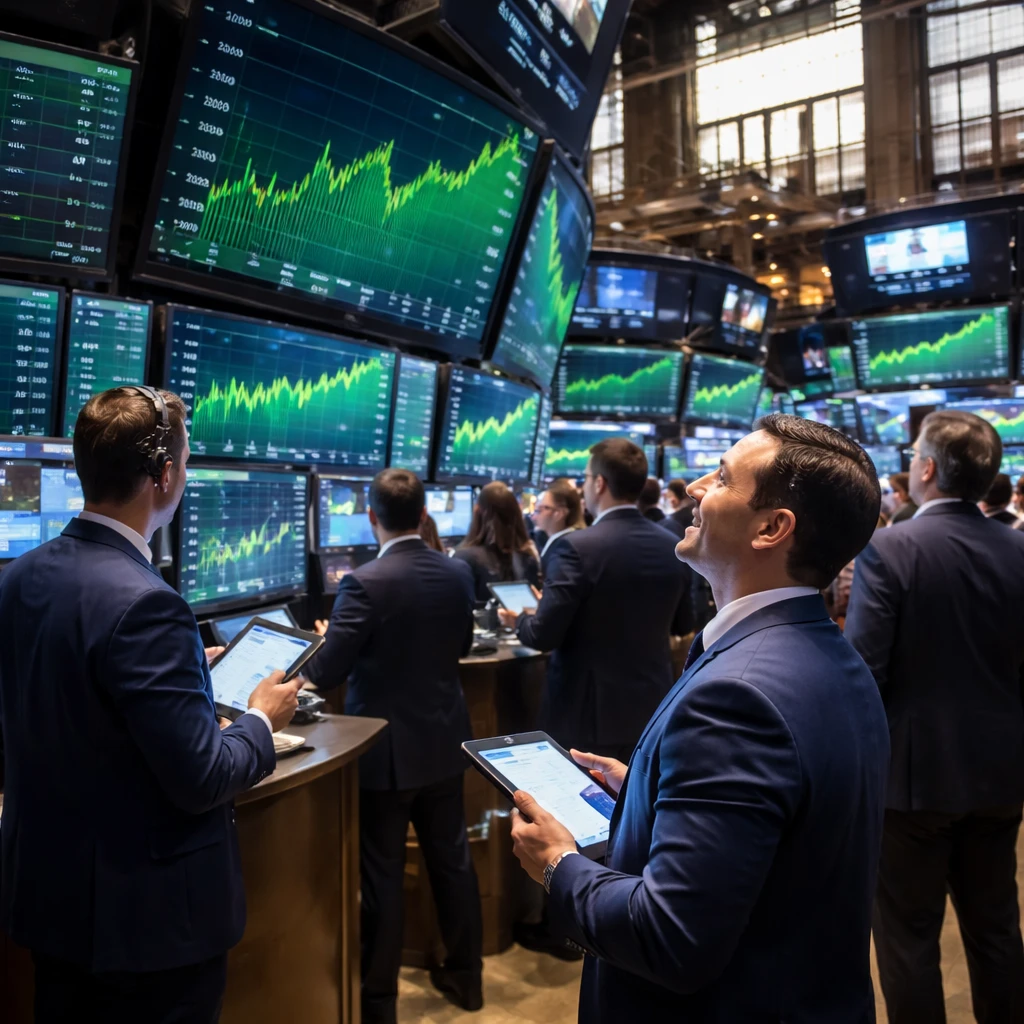
U.S. stock index futures showed gains on Thursday, suggesting renewed buying interest on Wall Street after President Donald Trump withdrew threats of tariffs aimed at European nations. This development alleviated fears of escalating global trade conflicts. On Wednesday, the principal U.S. equity indexes bounced back robustly, with the S&P 500 registering its largest one-day percentage rise in two months. This turnaround followed Trump's decision to step away from using tariffs as leverage to acquire Greenland, signaling potential progress toward resolving disputes surrounding the Danish territory.
Earlier in the week, specifically on Tuesday, Trump's trade threats had unsettled global markets, but investor confidence quickly returned once he reversed course. The CBOE Volatility Index, often referred to as Wall Street's fear gauge, declined further from a two-month high reached on Tuesday.
On Thursday morning at 5:59 a.m. ET, futures trading indicated a positive trajectory: S&P 500 e-minis were up by 41.75 points or 0.60%, Nasdaq 100 e-minis increased by 219.5 points or 0.87%, and Dow e-minis rose by 201 points or 0.41%.
Market participants are now turning their attention toward a series of critical U.S. economic indicators scheduled for release later in the day. These include the final third-quarter GDP figures, weekly jobless claims, and the personal consumption expenditures index, which is the inflation measure favored by the Federal Reserve.
The consensus anticipates that the Federal Reserve will maintain its current interest rates at its upcoming meeting amid ongoing inflation concerns and indications of an economy with resilience. President Trump reiterated his critique of Fed Chair Jerome Powell, accusing him of insufficient rate cuts, and announced that an official statement regarding the next Fed chairperson will be forthcoming.
Simultaneously, the fourth-quarter earnings season continues to draw significant attention. Companies reporting later Thursday include GE Aerospace, Procter & Gamble, and Abbott Laboratories. Additionally, chip manufacturer Intel, whose stock has surged 47% since the start of the year, is set to release quarterly results after markets close.
In premarket trading, shares of Alibaba Holdings rose by 5% following reports that the Chinese e-commerce company is preparing to launch an initial public offering for its chip fabrication subsidiary, T-Head. Meanwhile, shares of Venture Global climbed 10.6% after the company announced a favorable arbitration ruling in its dispute with Spanish energy firm Repsol.