
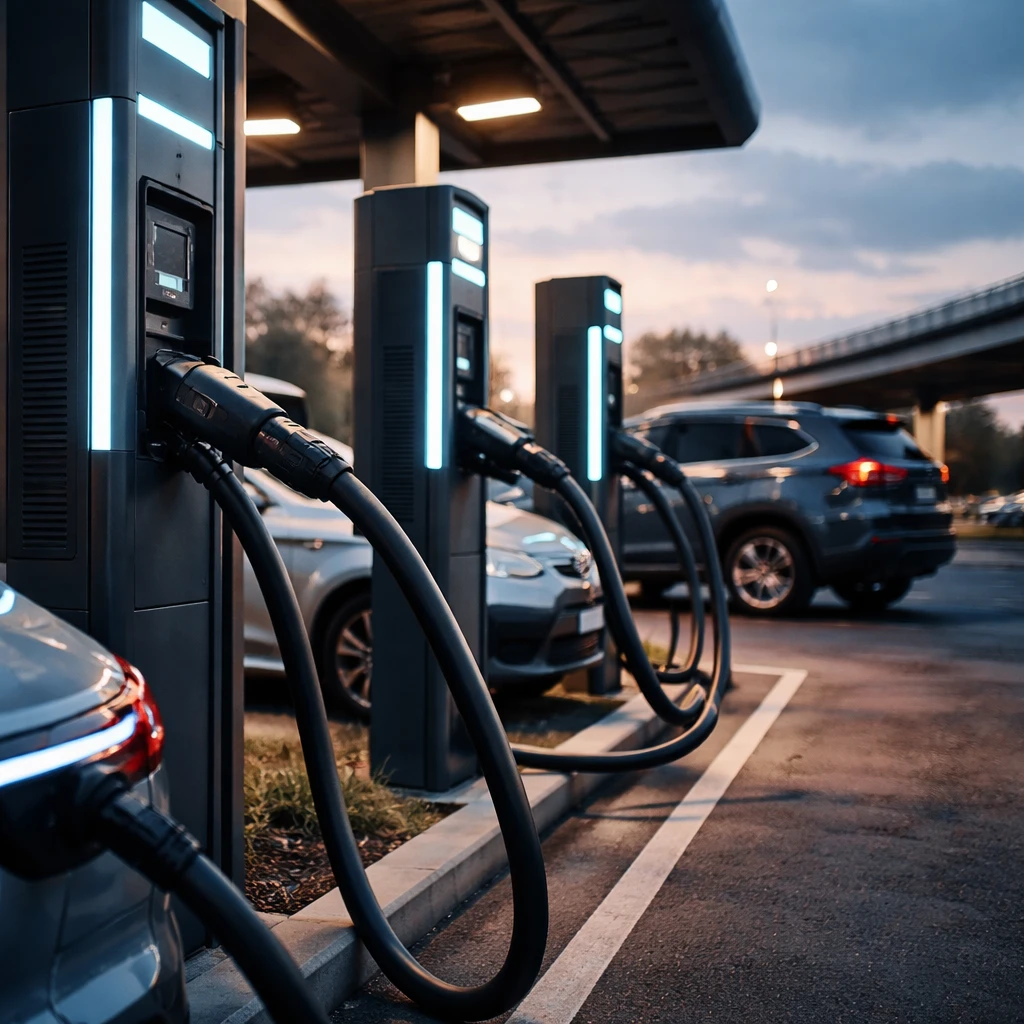
The United States experienced a notable increase in high-power electric vehicle charging capacity in 2025, as networks installed about 11,300 ultra-fast charging cords over the year. That figure represents a 48% increase compared with 2024, according to data compiled by Paren, a platform that tracks EV infrastructure.
Deployment of higher-capacity chargers accelerated late in the year. In the fourth quarter, nearly one in four newly installed chargers were rated at 250 kilowatts or higher. Chargers at that power level are considered ultra-fast and are commonly capable of adding roughly 100 miles of driving range in under 10 minutes under typical operating conditions.
From an operational perspective, faster charging rates offer clear advantages for both drivers and station operators. High-power chargers can transfer more electricity to a vehicle in a shorter span of time, which helps reduce dwell time at charging points and can lessen the risk of lines forming at busy locations.
At the same time, observers note that realized charging speed is not governed solely by the charger. Multiple variables influence how quickly a vehicle can accept energy, including the specific EV model being charged and ambient temperature at the charging site. Despite these variables, the charger itself remains the most important factor in determining a charging session’s maximum power delivery.
The 2025 buildout reflects a measurable shift toward ultra-fast infrastructure within the broader rollout of public charging. While the raw counts indicate rapid growth in cord-level capacity, the relationship between charger capability and on-the-ground charging outcomes continues to hinge on vehicle-side compatibility and environmental conditions that can affect charging performance.
Summary
- About 11,300 ultra-fast charging cords were added in the U.S. in 2025, a 48% increase from 2024.
- Nearly 25% of new chargers installed in Q4 2025 were capable of 250 kW or higher.
- Chargers at 250 kW+ typically can add about 100 miles of range in under 10 minutes; actual speeds vary by vehicle model and ambient temperature.