
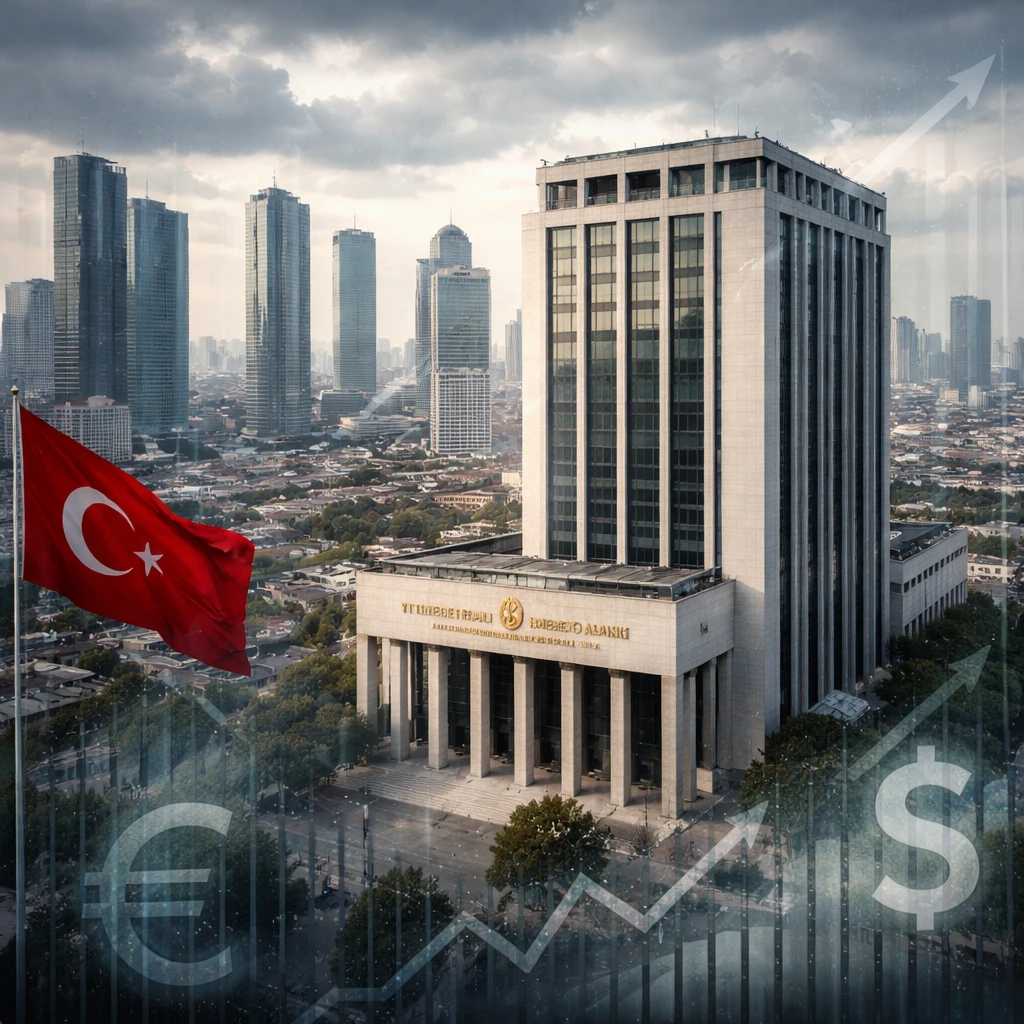
In a policy move that diverged from market expectations, Turkey's central bank decreased its key interest rate by 100 basis points, settling at 37 percent during its inaugural monetary policy meeting of 2026. This decision marked the fifth consecutive rate reduction since the previous summer's tightening phase.
Market analysts, according to a Reuters poll, had anticipated a more substantial cut averaging 150 basis points—aligned with December's reduction. However, emerging economic signals suggest that the process of reducing inflation, or disinflation, is increasingly fragile, prompting the central bank to exercise greater caution.
The bank's policy committee underscored this concern, noting persistent risks in inflation expectations and consumer pricing behavior that could hinder ongoing efforts to lower inflation rates effectively. While some indicators suggested a stabilizing trend in monthly consumer inflation for January, predominantly fuelled by food prices, the committee observed only limited progress in curbing the underlying inflation trend. The central bank also cited demand conditions projected at the end of 2025 as supportive of a moderated disinflation trajectory.
Data from December revealed a year-over-year consumer price increase of 30.9 percent, with a monthly rise of 0.89 percent. Both results were marginally better than anticipated, boosted in part by softening food prices. However, upward adjustments in various prices tied to the new year, compounded by a significant 27 percent hike in the statutory minimum wage for 2026, indicate that inflation data in the coming months are expected to fluctuate considerably.
Capital Economics offered an analysis suggesting that the decision to temper the pace of monetary easing may be a response to this anticipated fluctuation and a potential halt in disinflation efforts throughout January.
Shortly after the rate announcement, President Tayyip Erdogan highlighted the government's multi-faceted and coordinated approach to combating inflation. He indicated that tangible benefits from these measures would manifest in lower food, market goods, and rental prices, aiming to ease the cost-of-living pressures faced by the public.
Contrasting the monetary easing, the head of the Turkish Exporters Assembly expressed apprehension that prolonged tight economic policies—including elevated interest rates—have strained manufacturers. These factors contribute to heightened costs and represent risks to the country's ambitious export target of $282 billion.
The recent rate cut continues a series of monetary adjustments following a brief policy reversal earlier last year prompted by political turbulence. Starting in July, the central bank initiated a rate-cutting cycle with a sizable 300 basis points reduction, followed by further cuts of 250 points and 100 points in October, responding to rising food price pressures. More recent actions included consecutive reductions of 150 basis points in December and the 100-point cut this month.
Altogether, the bank's easing measures sum to a 900 basis points total reduction since last summer, and a significant 1,300 basis points cut since 2024, during which the benchmark rate was held at 50 percent for much of the year to combat entrenched inflation expectations.
Forecasts from the Reuters poll suggest an ongoing easing trend that could see the policy rate decline to 28 percent by the end of 2026. The central bank has set an interim inflation target of 16 percent for the end of this year and projects inflation to range between 13 and 19 percent. Nonetheless, skepticism persists in markets, with many anticipating inflation rates to remain higher at year-end.