
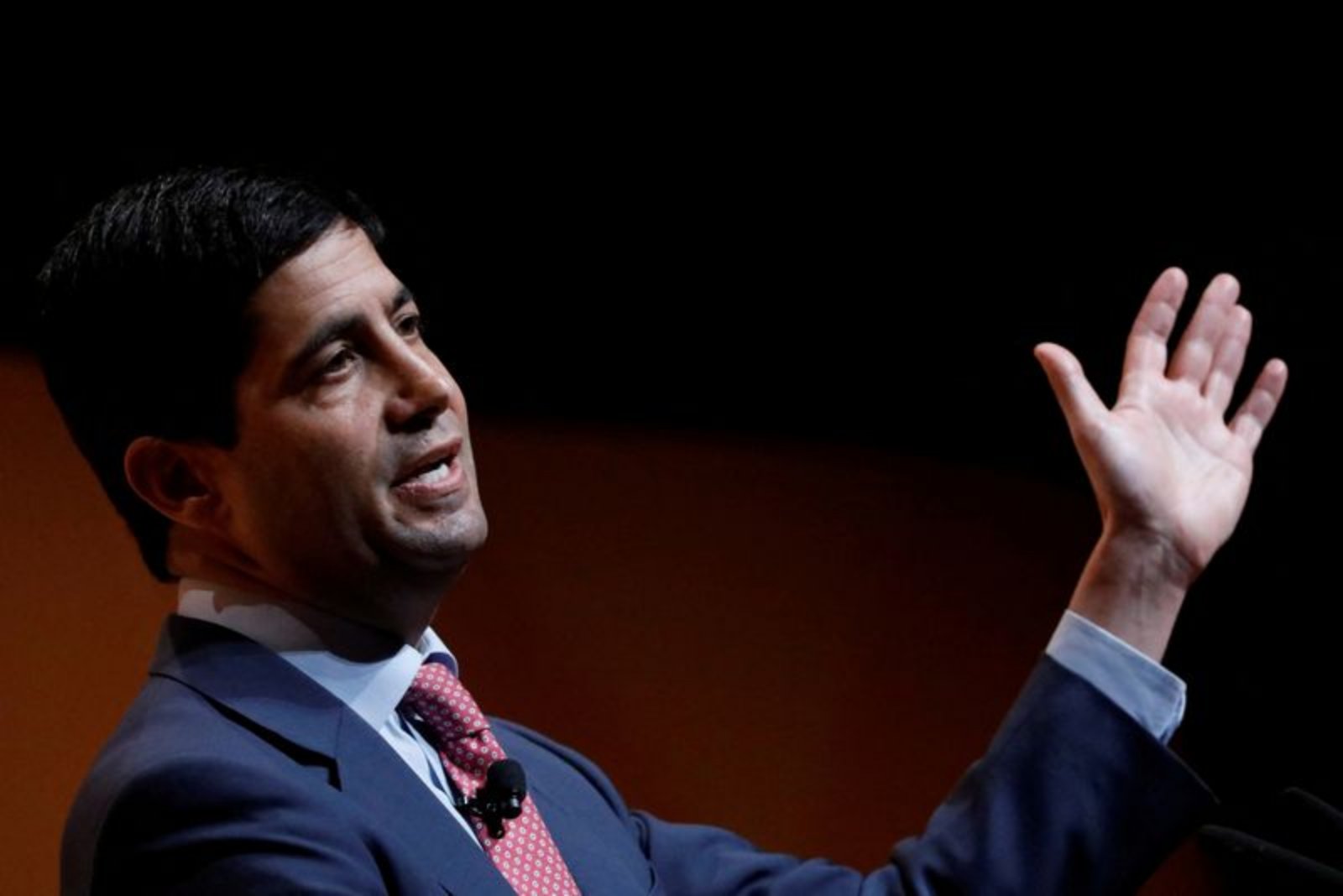
U.S. President Donald Trump said on Friday that he has chosen former Federal Reserve governor Kevin Warsh to become the next chair of the Federal Reserve, with current Chair Jerome Powell set to step down in May.
The move concludes a selection process that stretched over several months and often resembled a very public audition. Warsh, White House economic adviser Kevin Hassett and other leading candidates - among them sitting Fed governor Christopher Waller and Wall Street portfolio manager Rick Rieder - frequently appeared on television to present their credentials and outline their views on the economy and central bank policy.
Markets reacted modestly to the announcement. The dollar pared some of its earlier advance, U.S. Treasury yields rose and futures pointed to a weak opening for stocks on Wall Street.
Market and analyst reactions
Fiona Cincotta, senior market analyst at City Index in London, said markets had shown some volatility around expectations heading into the decision. She noted Warsh's reputation and his recent positioning:
"We have seen a little bit of volatility surrounding the expectations or in the anticipation of the decision. Warsh typically has fame for being of a more hawkish stance, but more recently has moved more in line with Trump and (taken) a slightly more dovish take. So the market is just now waiting to see what this might mean as far as the outlook for the Federal Reserve policy is concerned."
Cincotta added a reminder of the institutional constraints on any single Fed leader: "At the end of the day, the Fed has to remain data dependent and it has to remain independent. And I don’t think that will change under Kevin Warsh. Although we’re talking about a change at the head of the Fed, this is a committee and if the data doesn’t show the need to be adopting a more dovish stance, then it’s going to be very difficult for one person to drive that change."
Kirstine Kundby-Nielsen, an analyst at Danske Bank in Copenhagen, said the choice was supportive for the dollar and reduced some market nervousness about a potentially politicised or overtly dovish chair:
"I would say it’s dollar positive. He’s an experienced central banker with previous Fed experience. It alleviates some of the nervousness should we have got a Fed chair who was more politicised or that was a lot more dovish. In that sense, it is pricing out some of the risk that it would have been someone who’s been clear in communicating how dovish they would be, like (Stephen) Miran."
Philip Shaw, chief economist at Investec in London, said markets had already priced in much of the outcome ahead of the official announcement and that Warsh was not widely known as a dove:
"We heard serious rumours about Warsh taking over overnight. There doesn’t really seem to be much of a case to expect further market reaction. That was all but done last night. So it’s now a case of just assessing where Warsh stands on various factors, including rates and the balance sheet. He does not have a reputation for being an out-and-out dove at all. Of course, he’s a former Fed Governor and he’s known within the UK for conducting an analysis of (Bank of England rate-setting transparency 10 years ago or so. So he is well respected."
Shaw also reiterated concerns about the broader fiscal backdrop and the limits of this appointment to alter wider political dynamics: "The U.S.’s fiscal position is on an unsustainable path and Warsh’s appointment doesn’t necessarily stop President Trump from interfering with either the Fed or other areas of the U.S. government machinery. The risks of a lower dollar remain, (although) those risks are probably reduced with the news this afternoon."
Chris Beauchamp, chief market analyst at IG Markets in London, cautioned that an appointment is the start of a different phase and highlighted the potential tensions Warsh could face:
"We will see from here because it’s one thing to appoint somebody and it’s an entirely different to actually be chairman of the Federal Reserve."
Beauchamp noted competing pressures: "The president wants low rates to be the main priority.... the problem is that it could be that his (Warsh’s) position becomes just as difficult. The president doesn’t change and it’s recognition that the U.S. finds itself in a very difficult position right now in terms of inflation remaining stubborn, but economic data, as we should see in payrolls beginning to show signs of weakness with the unemployment rate moving higher."
Kallum Pickering, chief economist at Peel Hunt in London, described Warsh as a somewhat unexpected selection and questioned how much the chair's perceived hawkishness or dovishness will change policy in practice:
"Warsh...is somewhat of a surprise pick, not being among the recently speculated frontrunners. That’s why we got stocks and Treasuries coming back a little bit on the news earlier and the dollar picked up a little bit.
"In the end, I don’t think that the whole debate around whether you get a hawkish or a dovish Fed chair matters as much as the market thinks. Mainly because I think the U.S. is going to see inflation mostly in the safe zone this year, which means the Fed should be free to focus on the employment side of its mandate."
"And so even if we would have got the dove or the hawk, in the end, the difference is their view on inflation, not whether or not they should support employment. My hunch is they’re going to cut a little bit anyway just to try and support economic activity."
Nick Kennedy, currency strategist at Lloyds in London, said Warsh had been his preferred candidate and described aspects of his policy alignment:
"Warsh is my preferred candidate but it didn’t look promising for a while."
"From a policy perspective, his track record is more on the hawkish side and he is academically aligned with the administration on wanting a smaller balance sheet.
"In the interview process you have to be aligned with what Trump wants on policy rates. I don’t think this is a role you would want to step into if you were in conflict with that."
"So, that idea that this is good for the dollar is going to be short-lived."
What happened in markets
- The dollar trimmed earlier gains.
- U.S. Treasury yields moved higher.
- U.S. stock futures suggested a softer open on Wall Street.
Those moves reflect immediate market positioning as investors and traders reassess the likely trajectory of Fed policy under a new chair while awaiting further clarity on Warsh's policy priorities and the data the Fed will use to guide decisions.
Next steps and context
The appointment concludes a highly visible selection process. Observers and market participants will continue to parse interviews, speeches and any early policy signals from Warsh to determine how his views translate into team-wide Fed decisions. Several analysts emphasised that the Federal Reserve operates as a committee and that the data flow will remain a central determinant of policy direction, which may limit how much any single leader can change course on their own.
For now, market participants are weighing whether Warsh's record and recent positioning will translate into a materially different approach to interest rates and the Fed's balance sheet, and how quickly any such change would be implemented amid broader fiscal and economic pressures.