
Overview
President Donald Trump said on Wednesday evening that all U.S. ships, aircraft, and military personnel stationed around Iran will remain in place until a "real agreement" is reached with Tehran. In a social media post, the president warned that the "shootin' starts" if no agreement is achieved, while describing that outcome as unlikely.
Stated Conditions
Trump reiterated his core conditions for any settlement, writing that there must be "NO NUCLEAR WEAPONS and, the Strait of Hormuz WILL BE OPEN & SAFE," and asserting that such a deal had been "agreed a long time ago."
Ceasefire and Immediate Reactions
The president's remarks follow a tentative, two-week ceasefire agreement reached earlier this week between the United States and Iran. Almost immediately after the ceasefire was announced, Iranian officials accused the U.S. and Israel of violating elements of a 10-point peace proposal. Tehran also labeled planned ceasefire discussions scheduled in Pakistan as "unreasonable" and pushed for Lebanon to be included in any peace framework. Meanwhile, Israel continued military strikes in Lebanon late on Wednesday.
Claims and Counterclaims
Trump has repeatedly framed the situation as a strategic victory for the U.S. and its allies, asserting that American and Israeli forces had neutralized Iran's naval and missile capabilities and significantly impeded Tehran's nuclear ambitions. Iranian authorities, however, have maintained offensive actions directed at the U.S., Israel, and neighboring Gulf states. The Iranian government has also kept the Strait of Hormuz - described in official statements as a key shipping channel - largely blocked and has largely rejected U.S. demands to halt uranium enrichment activities.
Diplomatic Path
Direct talks between the United States and Iran - the first since their conflict began in late-February - are scheduled to take place in Pakistan on Friday. According to available information, the principal agenda for those talks and the precise terms of any potential ceasefire remain largely unclear.
U.S. Military Posture
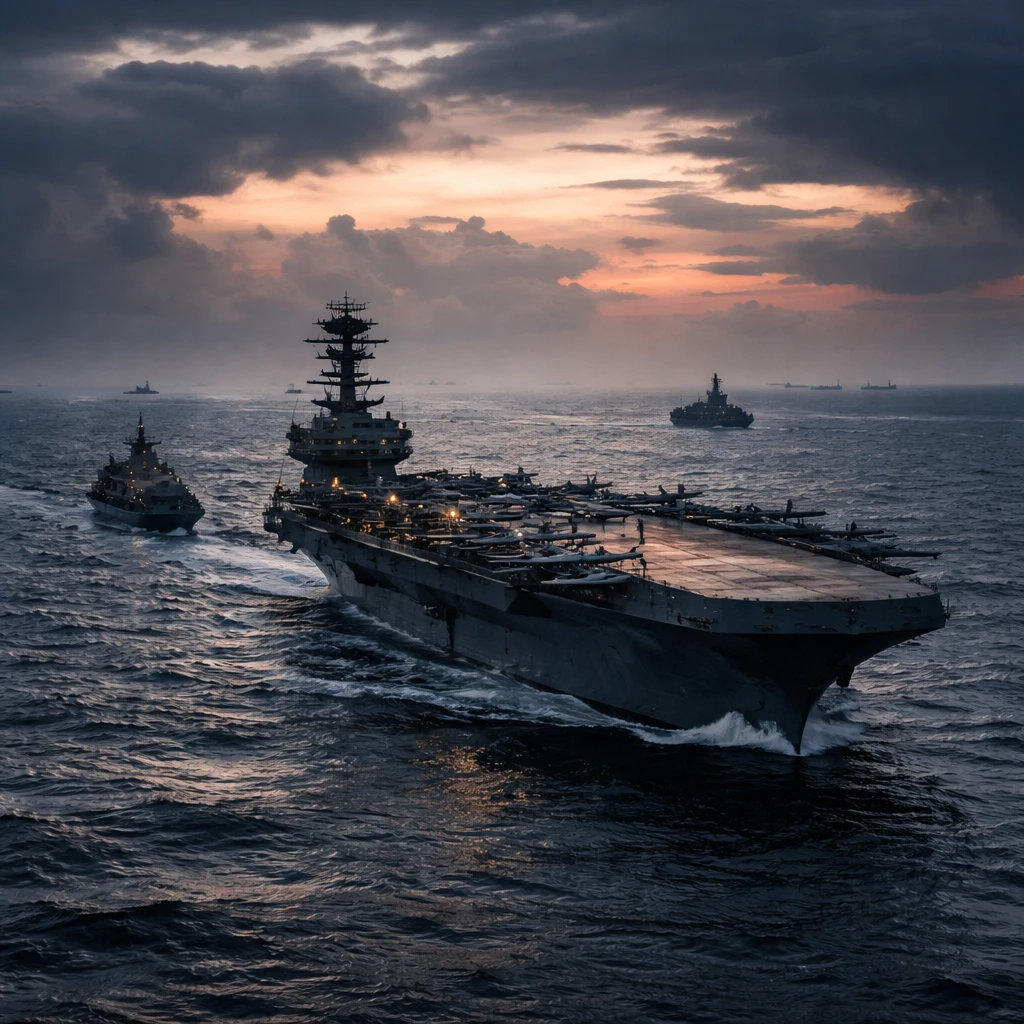
Earlier this year the U.S. undertook what officials described as its largest military buildup in the Middle East since 2003: two aircraft carriers and accompanying strike groups, together with roughly 50,000 troops, were deployed to the region.
Key points
- U.S. military forces - ships, aircraft, and personnel - will stay positioned around Iran until a "real agreement" is reached.
- President Trump demanded "NO NUCLEAR WEAPONS" from Iran and insisted the Strait of Hormuz be "OPEN & SAFE."
- A tentative two-week ceasefire was agreed earlier this week, but Iran quickly accused the U.S. and Israel of violating a 10-point peace proposal; direct U.S.-Iran talks are scheduled in Pakistan.
Sectors potentially impacted
- Shipping and maritime trade - linked to the status of the Strait of Hormuz.
- Defense - tied to the regional military buildup and ongoing operations.
Risks and uncertainties
- Escalation risk - the president warned that hostilities could resume if no agreement is reached, creating uncertainty for regional stability and military operations.
- Ceasefire durability - Iran has accused the U.S. and Israel of violating the 10-point proposal and described planned talks in Pakistan as "unreasonable," raising doubts about the ceasefire's prospects.
- Maritime disruption - Iranian actions have kept the Strait of Hormuz largely blocked, presenting ongoing uncertainty for shipping through a key channel.
This report reflects statements, actions, and scheduling described by officials and parties involved; key details about the agenda and terms for forthcoming direct talks remain unclear.