
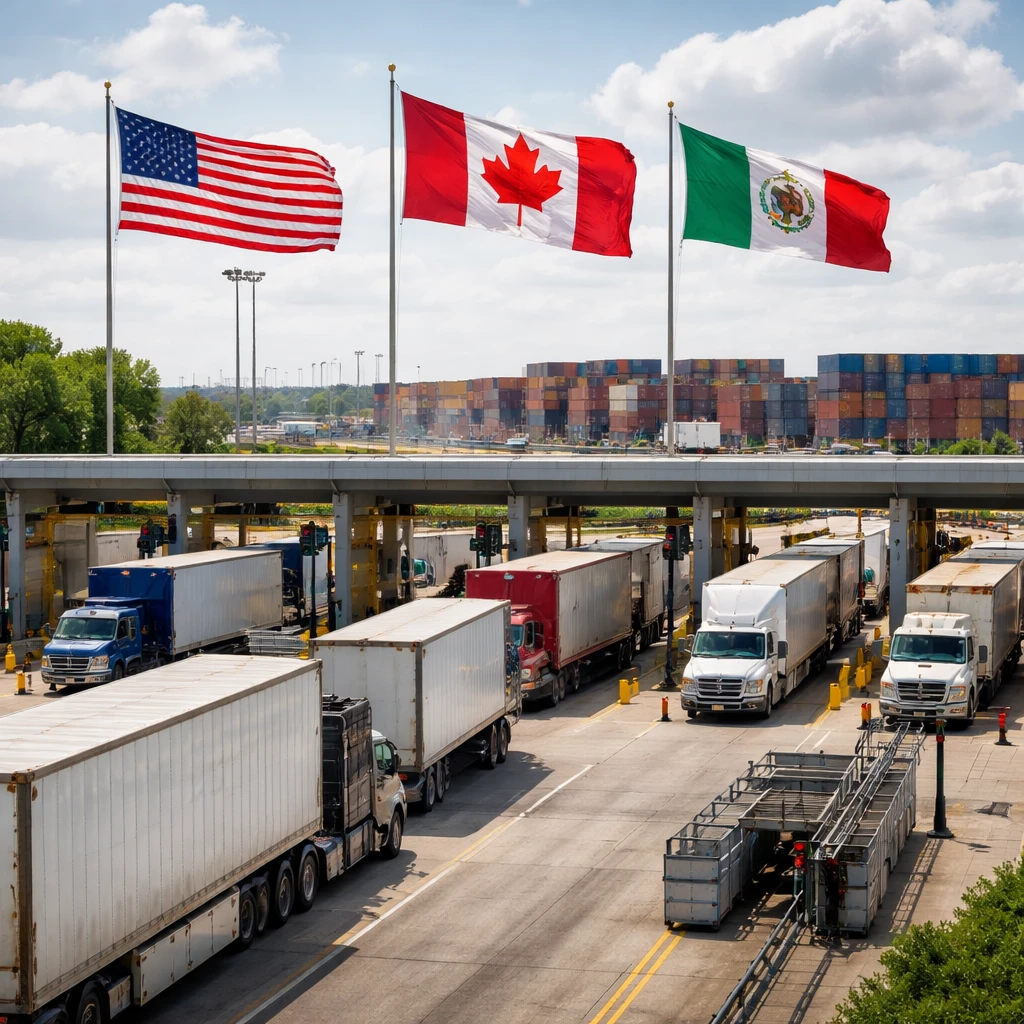
President Donald Trump said on Wednesday that he does not intend to reauthorize the United States-Mexico-Canada Agreement (USMCA) in its current iteration, a decision that will transition the trade pact into a pattern of ongoing annual reviews rather than a straightforward extension.
The move was announced shortly before a July 1 milestone that had been written into the agreement as the trigger to extend the pact for another 16 years. Instead of that automatic continuation, the three signatory countries now face the prospect of months or even years of renegotiation on key industrial provisions.
Trump framed his decision around a view that existing trade dynamics benefit Canada and Mexico more than the United States. "I’m not looking to renew it," he told reporters, saying his neighbors depend more on U.S. goods than the United States depends on theirs.
The president's comments introduce fresh uncertainty into North American markets and threaten supply chains that support close to $2 trillion in annual trilateral trade. To date, goods that meet USMCA terms have been largely exempt from tariffs, a status that has helped limit upward pressure on consumer prices across the three countries.
While Trump did not explicitly threaten a complete withdrawal from the agreement, the pact allows any participant to quit with six months' notice, a legal pathway that remains available to each country.
On the negotiation schedule, formal talks between the U.S. and Mexico are set to resume later this month. Discussions between the U.S. and Canada have not yet begun in a formal capacity.
Context and immediate implications
The administration's decision to forego reauthorization in its present form converts what had been a routine extension into an open-ended negotiation process. That procedural change creates uncertainty around continued tariff exemptions and the industrial rules that underpin cross-border manufacturing and distribution.
What remains unclear
The announcement does not create immediate changes to the agreement's text, nor does it record any formal notice of exit. It does, however, open the door to protracted talks and annual reviews that could alter how industrial provisions are administered and enforced.