
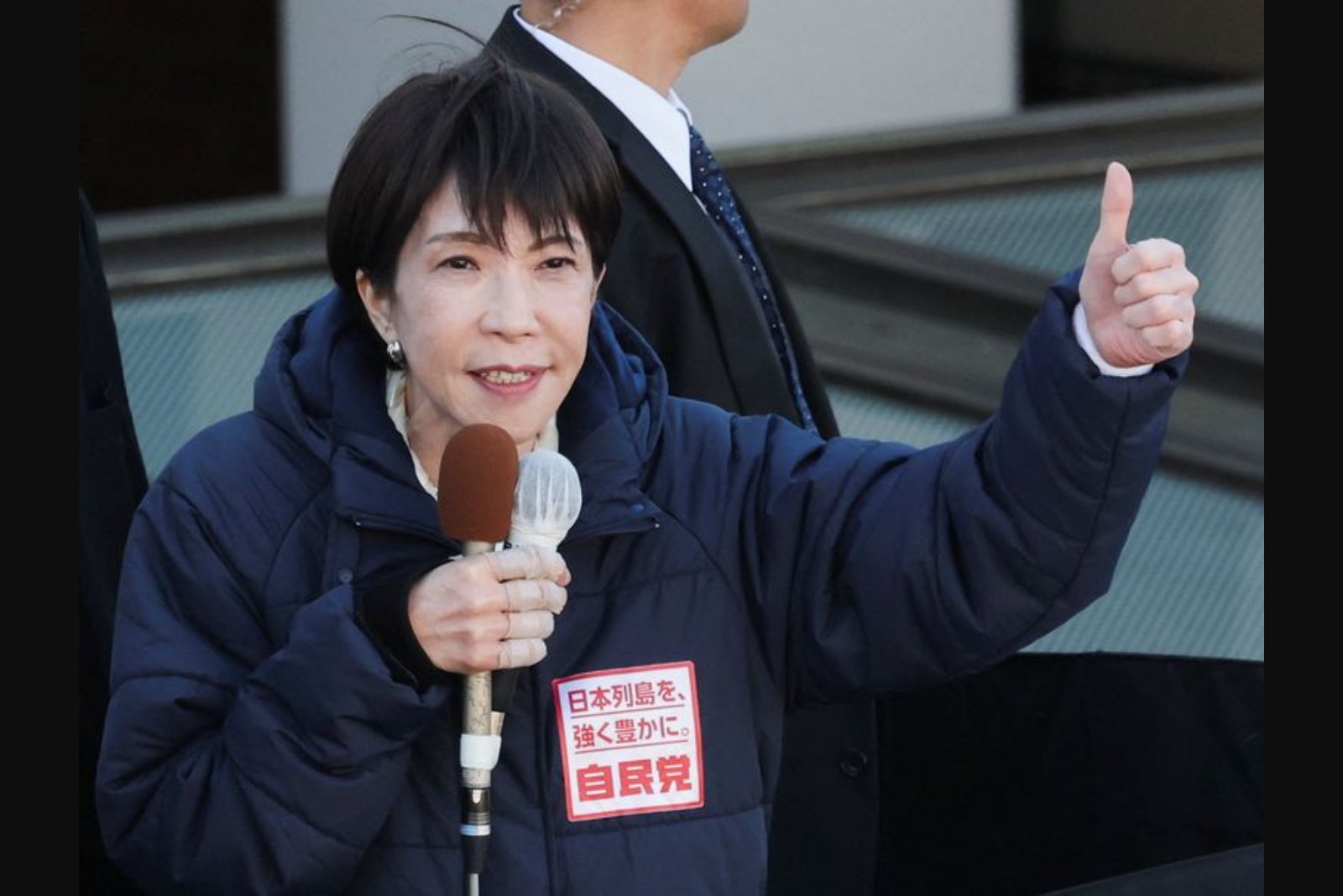
Prime Minister Sanae Takaichi’s off-the-cuff remarks about the upside of a weaker yen have forced a flurry of behind-the-scenes activity among Japan’s financial and diplomatic officials as she campaigns ahead of a snap election she is widely expected to win this Sunday.
The comments, made during a campaign speech earlier this week, helped trigger a fresh selloff in the yen. While the premier subsequently attempted to close the matter with a post on her X social media account, where she said she did not favour any particular direction for the currency and that her point had been to seek an economic structure resilient to exchange-rate fluctuation, monetary bureaucrats privately voiced concern that such mixed signals could set back efforts to stabilise the currency.
Government officials described a scramble to limit market fallout. "Officials were scrambling to respond through Takaichi’s X social media account to clarify her intentions over the weekend," one official at the prime minister’s office said. Her clarification was also relayed to U.S. authorities, officials added.
The yen’s recent weakness has become a political headache domestically as households bear the cost of higher import bills. The currency has also attracted attention abroad, with the Trump administration warning it could pose risks to U.S. markets. Officials fear that comments from the top political office could be read as a softer stance toward the currency, undermining Tokyo’s bid to steady the yen.
Those efforts had shown some effect after weeks of heavy downward pressure. Signs of close coordination between Tokyo and Washington - including rare rate checks by the New York Federal Reserve - had helped steady the currency, underpinning a message of joint vigilance against excessive moves.
Takaichi’s initial campaign assertions appeared at odds with the position taken by Finance Minister Satsuki Katayama, who has publicly warned that Japan stands ready to intervene in currency markets to support the yen and has noted shared concerns from U.S. Treasury Secretary Scott Bessent about excessive volatility in the currency. Katayama said in January she and Bessent shared concerns over what she called the yen’s recent "one-sided depreciation."
Market reaction to the premier’s remarks was tangible. After her comments, the yen relinquished roughly half of the 7-yen advance it had enjoyed amid speculation about joint U.S.-Japan interventions. Officials were subsequently engaged in diplomatic outreach to ensure their clarifications reached counterparts in Washington. So far, U.S. officials have remained publicly silent on the matter.
Japanese officials and analysts described the situation as evidence that the prime minister’s long-held views on the economic upsides of a weaker yen remain intact, undermining the sense of crisis that some in Tokyo feel is needed to tackle the currency’s weakness. "It revealed a complete lack of a sense of crisis over the historically weak yen," said Masafumi Yamamoto, chief currency strategist at Mizuho Securities. "Instead, it laid bare that Takaichi’s long-held belief that yen depreciation is beneficial to the economy remains unchanged."
Officials in Tokyo and Washington have broader market concerns. U.S. officials have been wary that surging Japanese government bond yields, which have coincided with yen weakness, could spill over into U.S. markets - pushing up Treasury yields and prompting selloffs in U.S. assets.
According to several Japanese government sources, Bessent told Katayama at their bilateral meeting on the sidelines of the World Economic Forum in Davos that Japan’s rising debt yields had triggered a triple selloff in the United States and urged Japan to respond. The U.S. Treasury Department did not respond to a request for comment outside business hours.
Japan’s bout of bond-market volatility was in part set off by Takaichi’s campaign pledge to temporarily waive the sales tax on food, a move that helped trigger a selloff in Japanese government bonds. That episode coincided with other international market turbulence, including volatility linked to U.S. President Donald Trump’s threats to reignite trade tensions with Europe over Greenland.
Within Tokyo the contrast between the government’s carefully worded policy stance and the prime minister’s public musings has prompted frustration. "I read the whole of Takaichi’s campaign speech, but I honestly wonder whether it needed to be said in the first place," one government official said. "She rambled on, off the cuff without notes, but it’s ultimately unclear what she was trying to say," he added. The officials who discussed the episode declined further comment, saying the matter was private.
This episode is not an isolated instance of the premier departing from scripted messaging. Weeks after she assumed office in October, she made remarks in parliament about how Tokyo might react to a hypothetical Chinese attack on Taiwan, a comment that sparked the most serious dispute with Beijing in more than a decade. Such offhand commentary has, paradoxically, been part of her political appeal, particularly among younger voters.
Political momentum for Takaichi’s Liberal Democratic Party appears strong. A survey by the Asahi newspaper suggested the party is likely to score a landslide victory in next week’s lower house election, a result that would raise the prospect of continued policies emphasizing large-scale spending and tax cuts.
Summary
Prime Minister Sanae Takaichi’s campaign remarks praising a weaker yen prompted a renewed selloff and prompted officials to scramble to clarify her intentions. Though she later posted that she had no directional preference and wanted resilience to exchange-rate swings, the episode highlighted tensions between the premier’s public statements and Tokyo’s official stance - which has included coordination with Washington to steady the currency amid concerns about rising bond yields and potential spillovers into U.S. markets.
Key points
- Takaichi’s campaign speech praising a weaker yen triggered market moves and required rapid clarification via her X account and diplomatic outreach to the United States.
- Tokyo had been seeing some stabilisation of the yen after signs of coordination with Washington, including rare rate checks by the New York Fed; the premier’s remarks ran counter to that effort.
- Market and policy concerns center on the interaction of yen weakness and rising Japanese government bond yields, which U.S. officials fear could reverberate through U.S. Treasury markets and asset prices.
Risks and uncertainties
- Mixed messaging from the prime minister could undermine efforts to stabilise the yen, affecting import costs and sectors sensitive to currency swings, such as consumer goods and trade-exposed industries.
- Rising Japanese government bond yields alongside yen weakness may transmit upward pressure to U.S. Treasury yields and trigger volatility in international asset markets, posing risks for fixed-income and global equity markets.
- Domestic policy moves tied to the election campaign - such as a temporary sales-tax waiver on food - have already contributed to bond-market turbulence, adding uncertainty for fiscal policymakers and debt markets.