
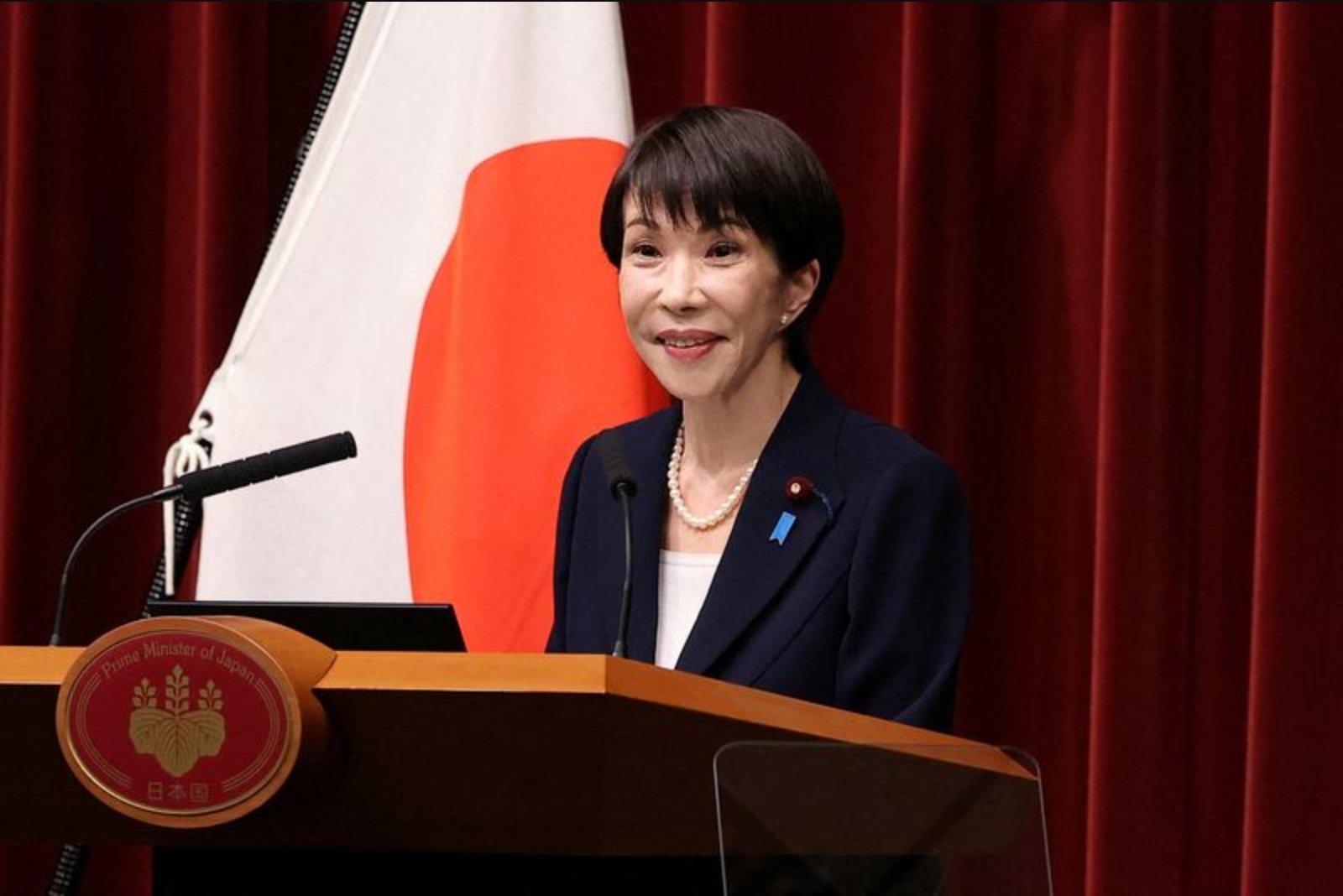
Japanese prime ministerial candidate Sanae Takaichi struck an upbeat note about the weaker yen during a campaign address, highlighting its role in supporting export industries even as her government maintains that it will not hesitate to counter excessive volatility in the foreign exchange market.
Speaking on Saturday ahead of a snap election on February 8, Takaichi said: "People say the weak yen is bad right now, but for export industries, it’s a major opportunity." She added: "Whether it’s selling food or automobiles, even though there were U.S. tariffs, the weaker yen has served as a buffer. That has helped us tremendously."
In the same remarks, Takaichi said she wanted to strengthen the economy's ability to withstand exchange-rate swings by encouraging greater domestic investment. Her comments came against a backdrop of the yen trading near 18-month lows against the U.S. dollar - a slide that has added to inflationary pressures and raised questions about potential policy responses from the central bank.
Officials in Tokyo, including Minister of Finance Satsuki Katayama, have repeatedly signalled that the finance ministry will step in to support the currency when necessary. Market participants and analysts widely read those statements as an indication that authorities are prepared to intervene in currency markets to counter disorderly moves.
Following initial remarks that appeared to emphasise the upside for exporters, Takaichi took a more neutral tone in a post on X on Sunday. "I did not say which is better or worse - a strong yen or a weak yen," she wrote. She added that the government is monitoring financial markets and that, as prime minister, she will refrain from commenting specifically on the matter.
In the same post, Takaichi stated: "My intention was solely to state that we aim to build an economic structure that is resilient to exchange-rate fluctuation, and not, as some reports have suggested, to emphasise the benefits of a weak yen."
The debate over the yen's direction has also drawn criticism from opposition ranks. Former prime minister and former finance minister Yoshihiko Noda, who now co-leads the largest and newly created opposition party, the Centrist Reform Alliance, told Nikkei that a weak yen is harming households. "No one feels pleased while looking at their household budget amid an excessive weakening of the yen," Nikkei quoted Noda as saying. "The perspective of ordinary people is missing, which has made me concerned once again."
Market nerves were evident when the yen briefly jumped after reports that the New York Federal Reserve had joined Japanese authorities in asking banks about exchange rates for yen purchases - a type of inquiry market participants often interpret as a sign that authorities are prepared to intervene.
Analysts point to the yen's lengthy decline and a recent surge in Japanese government bond yields to record highs as signals of investor concern about Japan's strained public finances. Takaichi is campaigning for a mandate to pursue policies aimed at reflating the economy, a central plank of her platform.
Context and implications
- Currency weakness can provide relief to exporters by boosting competitiveness in foreign markets - a point Takaichi emphasised in her campaign remarks.
- At the same time, a depreciating currency can contribute to higher domestic inflation and squeeze household budgets, a concern voiced by opposition figures.
- Authorities have repeatedly indicated they will act to stabilise the currency if required, and recent market signals suggested readiness to intervene.