
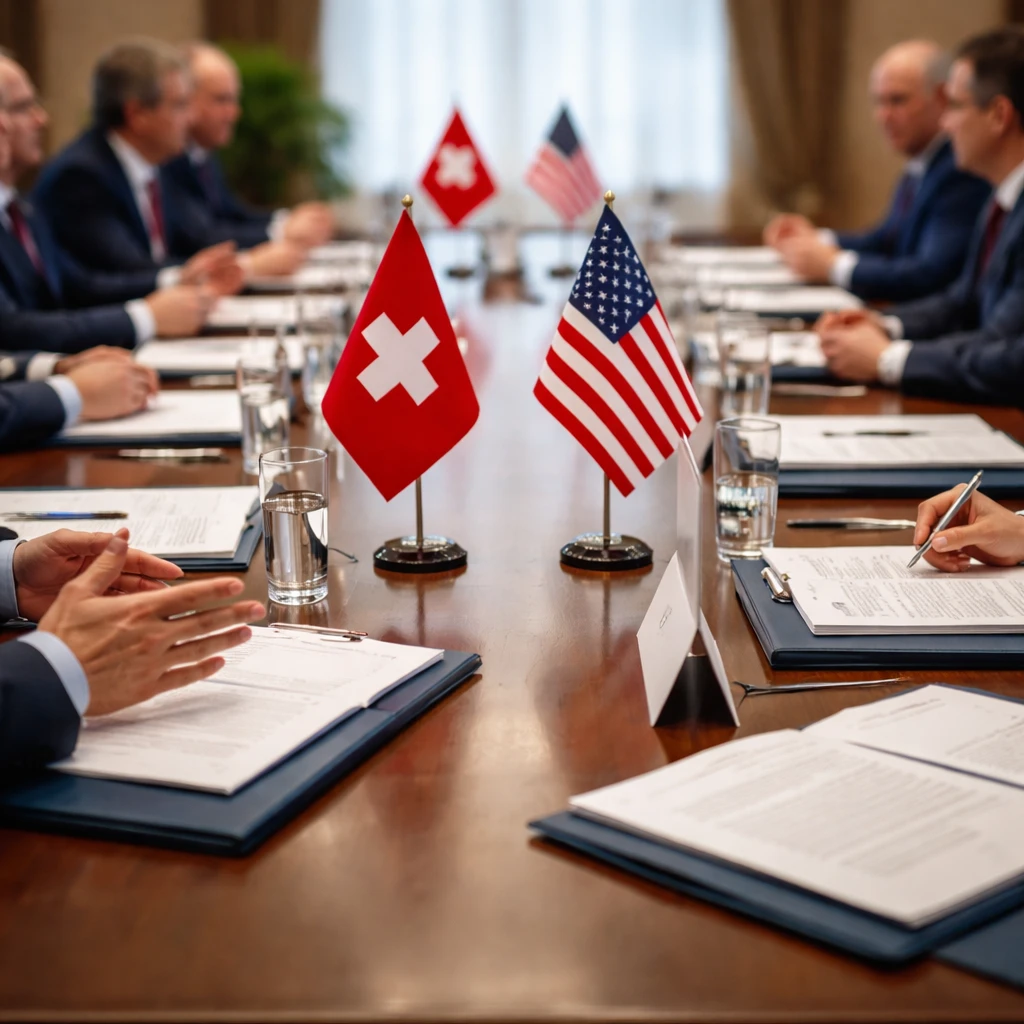
Switzerland is working to complete a trade agreement with the United States by the end of July, with Bern pressing for guarantees that Swiss exporters will not be subject to higher tariffs than competing nations.
Swiss authorities are prepared to sign a bilateral agreement that would set a fixed tariff rate, on the condition that the text contains a provision preventing any other trading partner from receiving a lower rate. The Swiss position specifically highlights concerns about parity with the European Union and the UK.
Negotiators from Switzerland expect to resume discussions in Washington this month, which would represent the third round of talks that began in February. The US has not confirmed the schedule for the upcoming negotiations. The stated objective of the talks is to convert an initial framework agreement into a binding treaty that would provide exporters with legal certainty - a priority cited for sectors such as Switzerland's pharmaceutical industry.
Swiss officials say they hope an agreement might be reached earlier than the end of July, interpreting signs that the United States is willing to finalise a treaty. A US official quoted in reporting said the United States looks forward to concluding a deal that would remove barriers to American goods.
A central issue holding up an accord concerns the United States' refusal to grant Switzerland a cap on tariffs that could result from ongoing Section 301 Trade Act investigations. The office of US Trade Representative Jamieson Greer has maintained that those probes are not linked to the bilateral trade negotiations.
The talks therefore seek to balance Switzerland's demand for tariff parity and legal certainty for exporters with US concerns tied to investigations under the Section 301 framework. With negotiators planning to reconvene in Washington and both sides expressing an interest in completion, the coming round of talks will test whether the parties can reconcile the outstanding disagreement over tariff caps.
Note: Information on scheduling of forthcoming negotiations was not confirmed by the United States in the available reporting.