
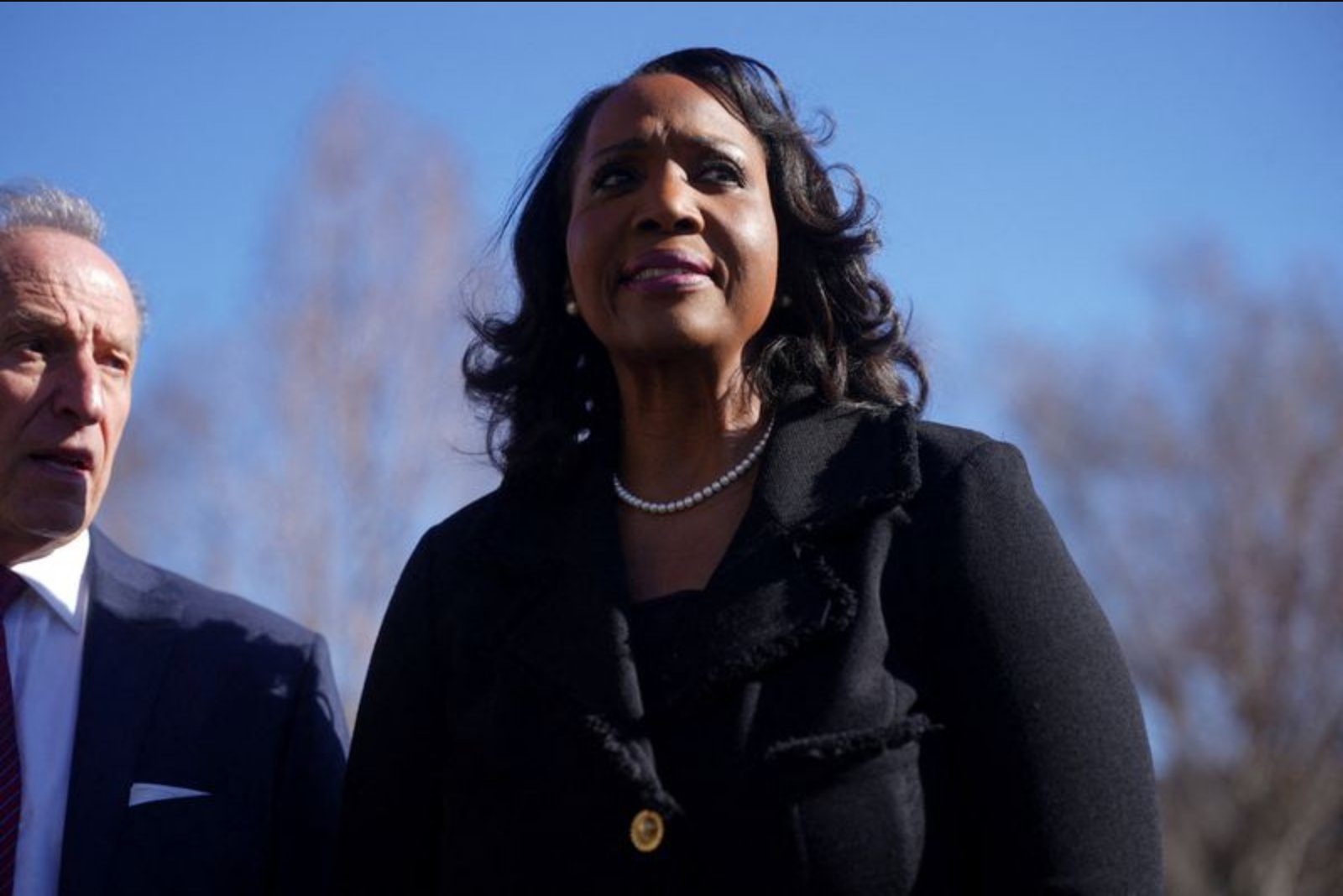
Summary of the dispute
The Supreme Court this week heard emergency arguments over President Donald Trump’s effort to oust Federal Reserve Governor Lisa Cook, but the justices signaled they may avoid a sweeping ruling. Instead of settling broad questions about whether the president has the authority to remove Fed officials or what constitutes "for cause" under the statute that created the Federal Reserve, the court appears to be considering a narrow approach that could return the case to lower courts for more factual inquiry.
What the court considered
At issue is a preliminary injunction issued in September by U.S. District Judge Jia Cobb that blocked Trump’s attempt to remove Cook after he announced the action the prior month. The Justice Department asked the Supreme Court to stay that injunction, a request the U.S. Court of Appeals for the District of Columbia Circuit previously denied. During oral argument, several justices expressed concern about the limited factual record and suggested the high court might prefer to punt on broader legal questions for now.
Legal academics noted the court’s inclination to issue a narrow decision focused on procedure and additional fact-finding. Peter Margulies, a law professor at Roger Williams University in Rhode Island, described the court as "clearly seems to be looking for a way to get the case back to the lower courts with as minimalist of a decision as possible," rather than issuing a broad pronouncement.
Statutory and constitutional contours
Congress created the Federal Reserve in 1913 and included a statutory protection allowing presidents to remove central bank governors only "for cause." That term is not defined in the statute, nor does the law set out removal procedures. President Trump, taking a broad view of executive authority, is the first president to attempt to remove a Fed governor under this statutory framework.
Economists and legal observers underscore the importance of central bank independence, viewing it as essential to prevent interest rate policy from being driven by short-term political considerations rather than long-term stability. The stakes are elevated by a parallel development: the Justice Department has opened a separate criminal inquiry into Federal Reserve Chair Jerome Powell, a move commentators say, together with the Cook removal attempt, constitutes the most serious challenge to the Fed’s independence since its founding.
Factual record and due process concerns
Several justices voiced concerns that the case arrived at the Supreme Court with a constrained evidentiary record. Conservative Justice Samuel Alito questioned whether the matter needed to be expedited across the executive branch and multiple courts "in such a hurried manner." He also noted that the trial court had not developed a full evidentiary record about the president’s stated basis for removal.
Judge Cobb concluded at the preliminary injunction stage that the president’s removal of Cook without notice or a hearing likely violated her due process rights under the Fifth Amendment. The district judge also found the mortgage fraud allegations cited by the president likely did not amount to sufficient cause under the governing statute to remove a Fed governor.
Alito observed that "no court has ever explored those facts," asking whether the mortgage applications central to the allegations were even in the record. Fordham University law professor Jane Manners said the justices appeared "wary of the relative paucity of the material for them to go on."
Administration's burden and public-interest considerations
The administration must show that it is entitled to a stay of the district court’s injunction by demonstrating irreparable harm if the injunction remains in place. The justices must also weigh broader public-interest considerations when determining whether to allow an immediate removal.
Conservative Justice Amy Coney Barrett pointed to briefs from economists warning that allowing immediate removal of Cook could have adverse economic consequences, including the possibility of triggering a recession, and asked whether that risk counsels caution. Margulies suggested the court could rely on the irreparable-harm factor to decline a stay, noting the public interest may not favor immediate removal given uncertainties about market effects.
Possible forms of a ruling
Observers outlined several plausible outcomes from the court. One likely path is a narrow order upholding Judge Cobb’s injunction while instructing the district court how to proceed toward a final judgment on the merits. That approach would leave the substantive statutory and constitutional issues unresolved and return the case to the lower courts for further factual development.
Boston University law professor Jed Shugerman said the court could issue a terse, limited order denying the administration’s emergency request without extensive legal reasoning - similar to its prior emergency rulings in other cases. Shugerman added that the oral arguments showed skepticism among the justices toward the administration’s legal arguments but not a consensus on how to interpret the statute that created the Fed or the phrase "for cause."
Alternatively, the court could deliver a more forceful ruling in favor of Governor Cook by finding the process she was afforded to contest the allegations was insufficient. Even such a decision, however, would likely be narrowly framed around procedural shortcomings rather than reaching broader questions about why Fed independence matters or precisely how it differs from protections afforded other agencies.
Andrea Katz, a law professor at Washington University School of Law in St. Louis, noted that a procedural ruling would "avoid the question of why independence is necessary and important for the Fed and just focus on procedure."
The president’s public reaction
After the arguments, President Trump told reporters aboard Air Force One that he did not walk away with an impression that the court was broadly skeptical of his effort to remove Governor Cook. He said: "I didn’t get that impression other than they thought maybe it should have gone through a more normal court system."
Outlook and next steps
The Supreme Court’s decision is expected by the end of June, although the court could act sooner. If the justices issue a narrow order remanding the case, lower courts will undertake additional fact-finding and legal analysis, leaving open the possibility that the dispute will return to the high court later with a developed record and clearer legal questions.
Until the court resolves these procedural and evidentiary questions, the preliminary injunction remains in place, maintaining the status quo regarding Governor Cook’s membership at the Federal Reserve.
Key legal themes underscored by the case
- Whether a president may remove a Federal Reserve governor - and on what grounds - remains an open question for now.
- The statutory phrase "for cause" that limits presidential removal of Fed governors is undefined, complicating judicial resolution without further factual development.
- Due process considerations - notice and an opportunity to be heard - are central to the district court’s analysis and figure prominently in the Supreme Court’s review.
Implications for markets and institutions
The dispute touches on financial markets and central bank independence. Economists filing briefs warned of potential market disruption and economic risk if the president were allowed to remove a Fed governor without a fuller record or deliberation. These concerns informed the justices’ cautious posture during argument.
Legal observers’ consensus
Law professors and commentators surveyed during and after argument converged on the view that the justices seem to prefer a minimalist approach that preserves judicial and evidentiary processes in the lower courts. The court’s final ruling may thus be limited in scope, leaving momentous questions about the balance between executive authority and institutional independence unresolved until a fuller record is developed.
Conclusion
The Supreme Court’s treatment of President Trump’s bid to remove Governor Lisa Cook suggests a reluctance to hand down a transformative ruling at this emergency stage. Instead, the court appears poised to maintain the injunction and direct further proceedings below, which could ultimately bring a more fully formed legal and factual record back to the high court at a later date.