
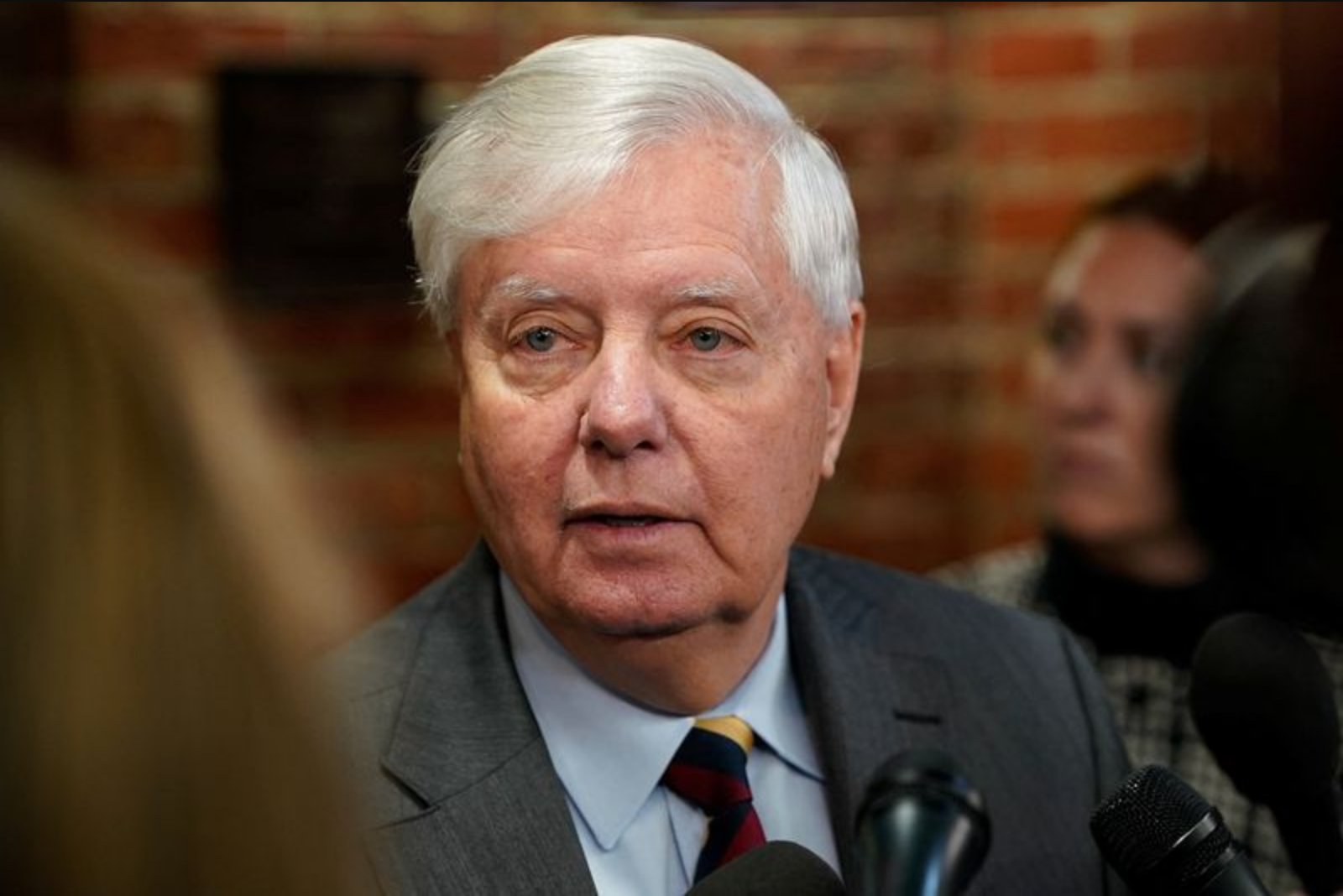
Senator Lindsey Graham on Friday moved to block Senate consideration of a bipartisan funding agreement intended to avert a government shutdown, insisting the chamber also vote on a provision that would allow certain individuals to sue the federal government for damages. The hold put immediate action on the stopgap spending measure on pause as lawmakers debated whether to accede to his demands.
The funding deal under consideration would keep federal agencies such as the Pentagon and the Department of Labor operating beyond the current funding expiration at midnight. Several senators objected to bringing the measure to a vote, but Graham was the most visible lawmaker pressing the issue on the Senate floor.
Graham said he would prevent the Senate from voting unless lawmakers also took up language that would let him and other members of Congress sue the Justice Department for damages. The proposed change targets officials whose phone records were seized during the Justice Department's probe of the January 6, 2021 attack on the U.S. Capitol.
The provision had been inserted into a large spending bill last fall and drew criticism from both Republicans and Democrats at the time, with opponents arguing the language amounted to an enrichment mechanism for public officials. Under current federal law, private individuals generally cannot sue the government for damages except in narrowly defined situations - for example, where a person was harmed by a federal employee or where the government takes private land for public use.
House Speaker Mike Johnson publicly said he was "shocked and angered" by the provision. The House included repeal language in the sweeping spending package that the Senate is now considering, a change that prompted frustration from Graham. On the Senate floor he said: "You jammed me. Speaker Johnson, I won’t forget this."
Graham previously vowed to sue for "millions of dollars," although Republican leaders have said any recovery under such a cause of action would be returned to the government rather than be kept personally by lawmakers. On Friday he said he planned to broaden the measure to allow outside groups that were targeted in the January 6 inquiry to pursue damage claims as well.
In addition to the lawsuit language, Graham said he was insisting on a commitment to bring to a vote a separate policy that would require local governments to cooperate with federal immigration enforcement. His dual demands - restoration and expansion of the damages provision and a commitment on immigration cooperation - complicated efforts to advance the stopgap spending bill.
It remained unclear how long Graham's objections would delay Senate action, and some colleagues predicted his push to restore the damages provision would ultimately fail. Republican Senator Thom Tillis of North Carolina told reporters that voters "may remember that more than a failed procedural vote," signaling potential political fallout from the move.
Separately, President Donald Trump filed a lawsuit on Thursday against the Internal Revenue Service and the Department of the Treasury seeking $10 billion in damages over the disclosure of his tax returns to the media in 2019 and 2020.
Context and implications
The dispute illustrates the tension between passing short-term funding to keep federal operations running and resolving partisan and policy fights embedded in larger appropriations packages. Graham's effort ties legislative action on urgent funding to demands that reach beyond the immediate mechanics of keeping agencies functional.