
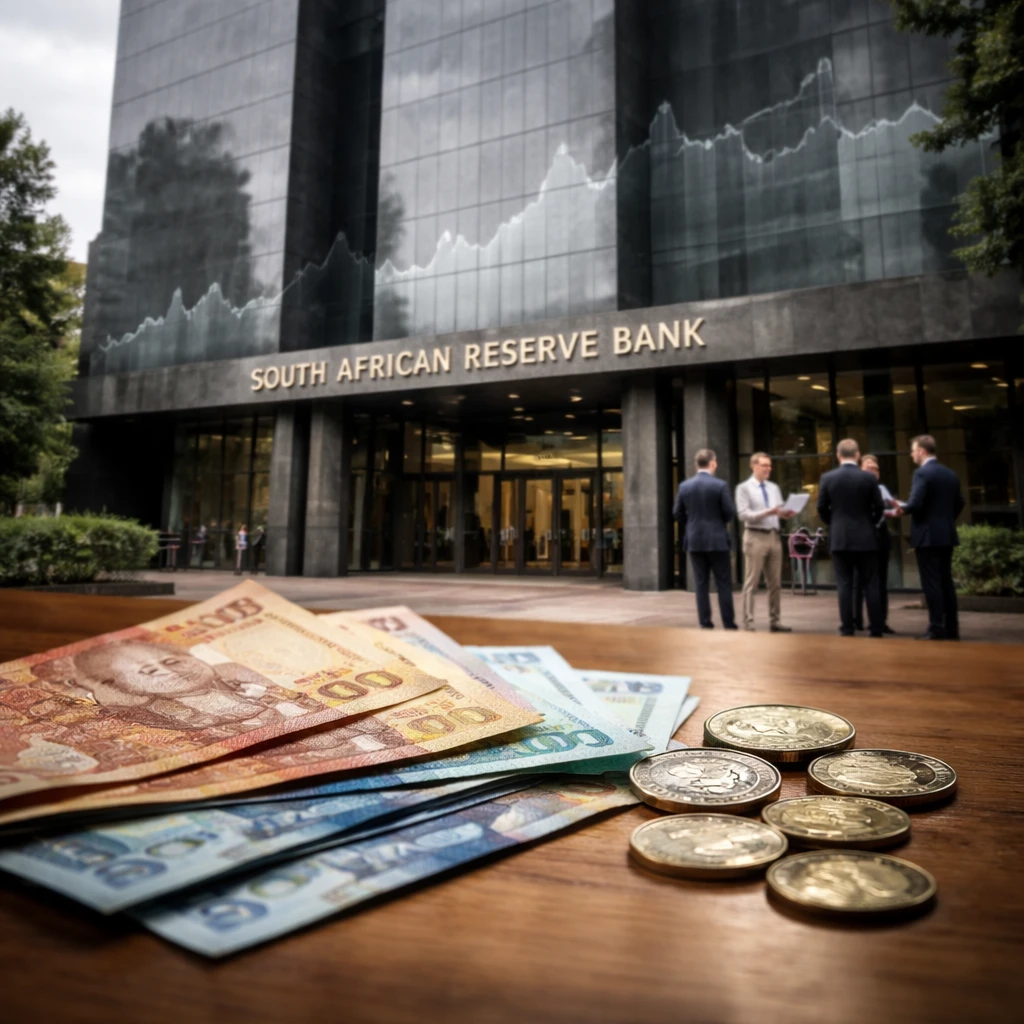
The South African Reserve Bank (SARB) confronts a finely balanced decision on interest rates this week: maintain the current policy rate or approve a 25 basis point reduction, according to an analysis published by UBS on Monday.
UBS analysts report that their expectations are "tilted in the direction of no-change," signalling that the central bank may opt to hold rates. Part of that rationale is a preference to await additional information at the March meeting, when policymakers will have had a chance to assess the government budget scheduled for February 12 and to review inflation data for January.
Another element weighing against an immediate cut is the SARB's recent initiative to bring down the effective lending cost for local banks, the prime rate, which is currently set 350 basis points above the policy rate. UBS suggests the central bank may be reluctant to ease policy again while that effort is underway.
Conversely, UBS notes factors that could support a 25 basis point reduction at the upcoming meeting. The bank expects the Quarterly Projection Model (QPM) inflation forecasts to decline, a shift that would be reinforced by the South African rand's 6.3% appreciation against the U.S. dollar since the November meeting. Ongoing declines in inflation expectations are also identified in the analysis as potential justification for easing policy at Thursday's session.
Despite these arguments in favour of a cut, UBS's overall judgement remains that the central bank is more likely to keep rates unchanged this week. The analysis frames the decision as contingent on a set of near-term data and policy considerations, including the pending budget review, January inflation adjustments, the trajectory of inflation expectations, and the authorities' recent steps to influence the prime lending rate.
Impacted areas highlighted in the analysis
- Banking sector - through the prime rate and efforts to reduce banks' effective lending costs.
- Currency markets - via the rand's 6.3% strengthening against the U.S. dollar since November.
- Monetary policy outlook - as reflected in QPM inflation forecasts and inflation expectations ahead of the March review.