
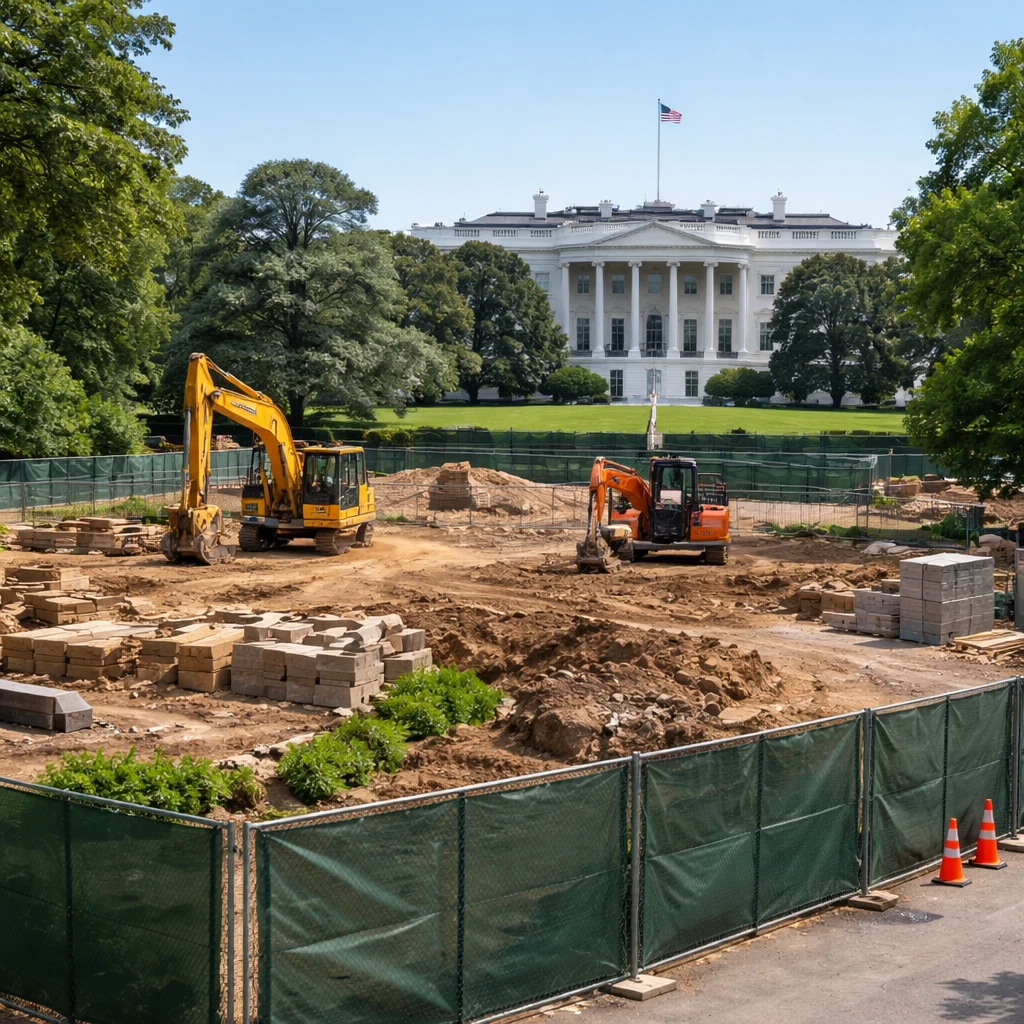
The proposal to build a $400 million ballroom on the grounds of the White House, replacing the demolished East Wing, is facing judicial scrutiny as a key hearing is set for Thursday. The dispute centers on whether the project has proceeded without appropriate legal clearances.
U.S. District Judge Richard Leon in Washington is scheduled to consider a request by the National Trust for Historic Preservation for a preliminary injunction to stop ongoing work on the 90,000-square-foot ballroom. The organization filed suit in December against President Donald Trump and multiple federal agencies, arguing the construction lacks necessary approvals, adequate environmental assessment, and congressional consent.
The National Trust contends that federal statutes prohibit building on federal parkland in Washington without explicit congressional authorization. Additionally, it asserts that the National Park Service erred by conducting only an environmental assessment rather than a comprehensive impact statement, and by issuing this assessment after demolition had already commenced on the historic 120-year-old East Wing.
Judge Leon previously declined to impose a temporary restraining order in December. Meanwhile, the White House and federal defendants are opposing the preliminary injunction, which would halt construction while the litigation proceeds. They maintain the project adheres to past presidential renovation precedents, including the original construction of the East Wing under Franklin D. Roosevelt.
The administration has justified the ballroom’s necessity for state events. They note that the design remains under development and that no above-ground construction is anticipated before April, arguing this timeline renders an injunction unwarranted at this stage.
This judicial proceeding comes shortly after the National Capital Planning Commission publicly convened to review the ballroom plans for the first time. The White House submitted formal applications to both the National Capital Planning Commission and the Commission of Fine Arts in the preceding month.
Key Points:
- The National Trust for Historic Preservation alleges that the ballroom project continues without mandated approvals, violating federal law concerning construction on parkland and environmental requirements.
- The White House defends the ballroom as in line with historic presidential renovations and highlights that visible construction will not commence until later this year.
- The National Capital Planning Commission has recently held public discussions about the project for the first time, reflecting increased scrutiny on the development process.
Sectors Impacted: Government construction projects, legal/administrative sectors overseeing historic preservation, environmental regulation, and public land management.
Risks and Uncertainties:
- Potential judicial rulings could halt or delay the ballroom construction, impacting project timelines and associated federal expenditures.
- Uncertainty over compliance with federal environmental and historic preservation statutes may invite further legal challenges or require additional procedural steps.
- Public and governmental scrutiny through bodies like the National Capital Planning Commission could influence the design approval and execution of the project.
Sectors Potentially Affected: Federal infrastructure development, historic preservation advocacy groups, legal professionals specializing in land use and environmental law.
Disclosure: This article is for informational purposes and does not constitute an endorsement or critique of the parties involved or their positions.