
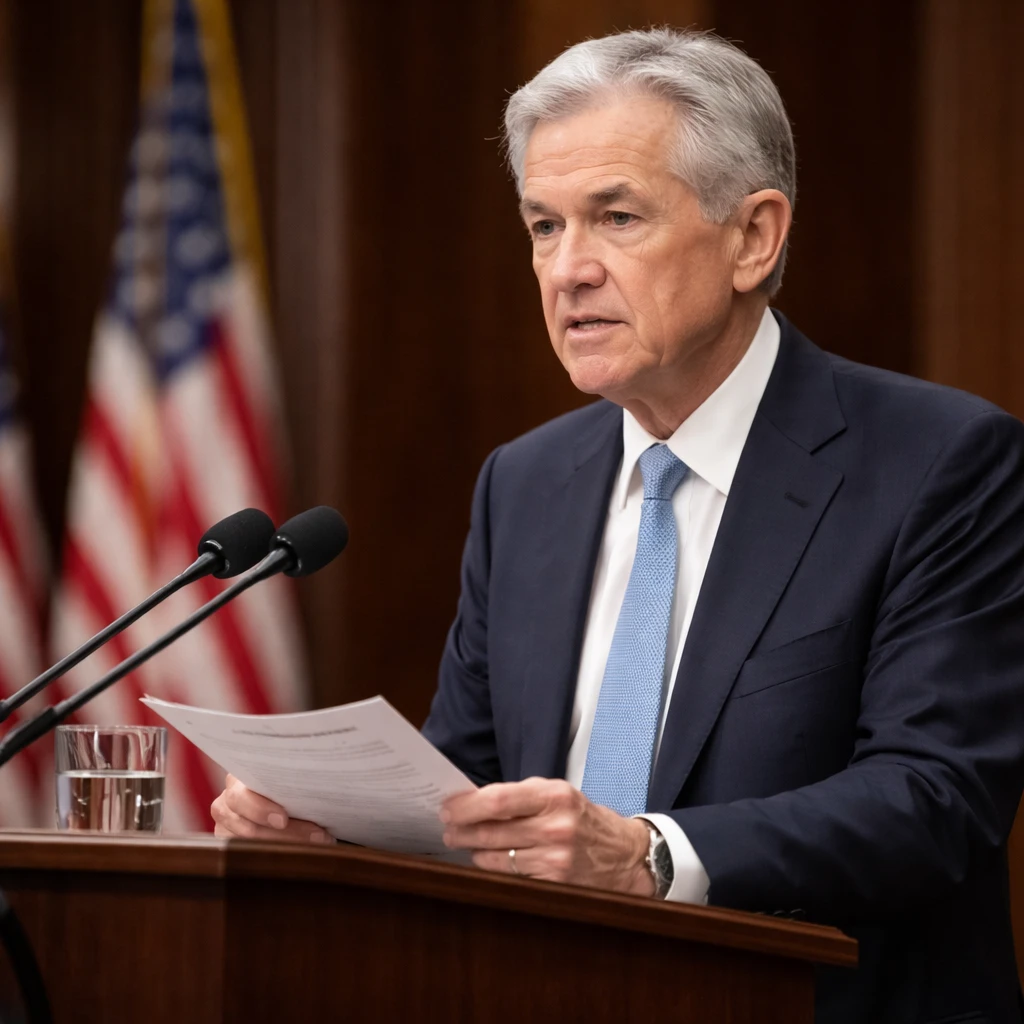
Federal Reserve Chair Jerome Powell warned on Wednesday that the United States is on an unsustainable fiscal trajectory as federal debt continues to grow, urging that the issue be confronted sooner rather than later.
Speaking at a news conference, Powell acknowledged that the current absolute level of federal debt remains sustainable for now, but stressed that the direction of travel is problematic. "The path is unsustainable and the sooner we work on it, the better," he said. That statement framed his central concern: that continued increases in federal borrowing, if left unaddressed, would create fiscal challenges down the line.
Powell elaborated on the fiscal backdrop, noting the combination of a very large deficit and conditions he characterized as essentially full employment. "Right now we’re running a very large deficit at essentially full employment and so the fiscal picture needs to be addressed, and it’s not really being addressed," he said, signaling unease about the current policy stance on federal finances.
Beyond fiscal policy, Powell discussed the dynamics of interest rates, drawing a distinction between movements at the short end of the curve and shifts in longer-term yields. "Many things move longer-term rates," he said, and added that such movements are "not mostly what happens on the short-end." He also emphasized that "there’s not a tight link between 10-year rates and the overnight rate," underscoring the idea that long-term borrowing costs reflect a broader set of influences than just the Federal Reserve's policy rate.
Despite expressing concern about the direction of federal debt and an apparent gap in fiscal response, Powell did not signal expectations of immediate market disruptions tied to the debt trajectory. He characterized the current debt level as sustainable in the near term, while cautioning that the longer-term path requires attention.
What Powell said - key takeaways:
- Powell described the growth path of U.S. federal debt as unsustainable and urged prompt corrective action.
- He stated the current debt level is sustainable at present, but stressed the importance of addressing the underlying fiscal trend.
- Powell highlighted that long-term interest rates are driven by many factors and are not tightly linked to the overnight policy rate or short-end movements.
Powell's remarks point to concerns about fiscal policy choices and their trajectory, while also clarifying his view on the mechanics of interest-rate movements. He drew a clear distinction between the immediate sustainability of the debt level and the longer-term risks posed by its path, and he noted gaps in how the fiscal picture is being addressed.