
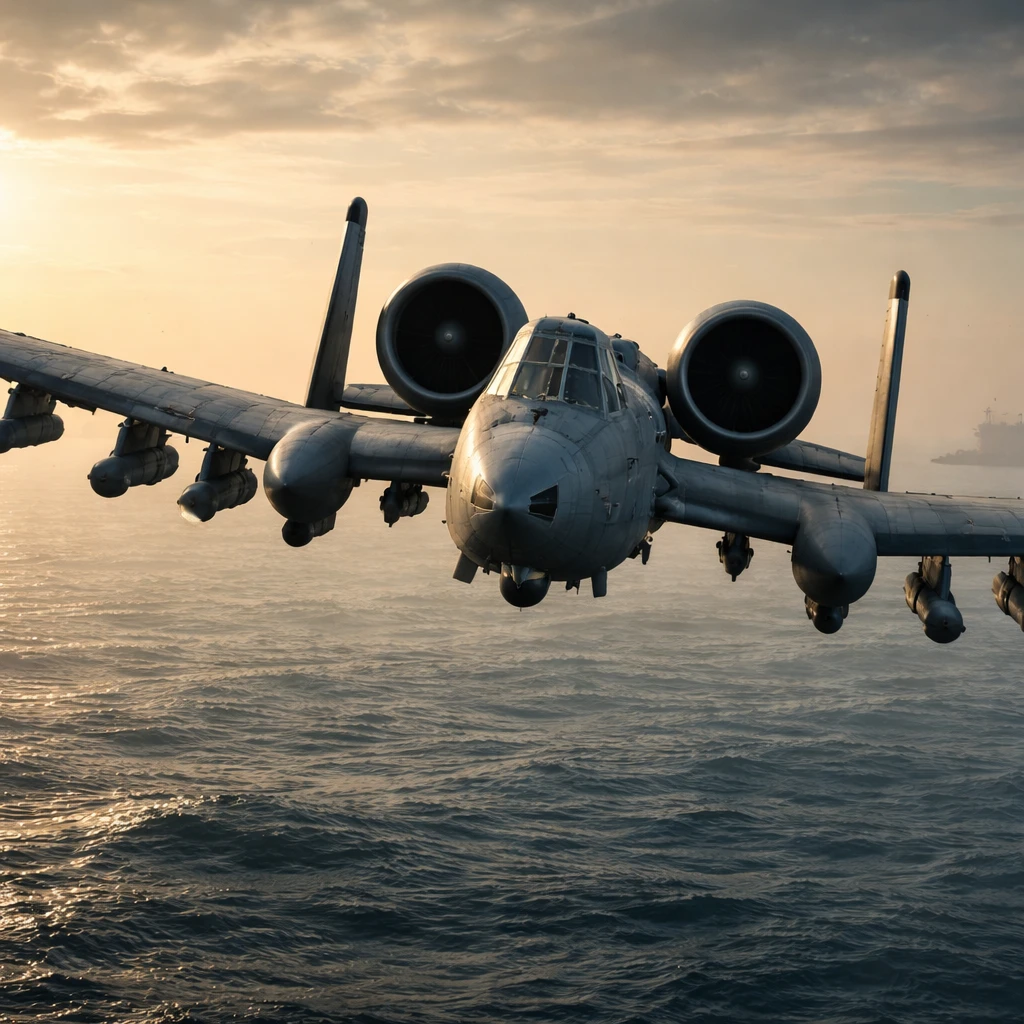
The Pentagon is increasing its A-10 attack-plane presence in the Middle East, sending 18 aircraft to the region, Pentagon officials said on Wednesday. The new deployment will approximately double the number of A-10s already in theatre, which officials said number roughly one dozen and have been used by U.S. commanders to strike Iranian boats and Iran-backed militias in Iraq.
The A-10, often called the Warthog, is a slow-moving close-air support aircraft equipped with a nose-mounted cannon capable of firing 70 30-millimeter rounds per second. Its operating profile - low altitude and slow speed - enables it to loiter above both land and sea targets for extended periods, a tactical characteristic that has been used in recent operations in the region.
Officials noted potential operational roles for the additional A-10s, including assisting U.S. ground forces seeking to seize territory near the Strait of Hormuz - the waterway Iran has effectively closed - or near Kharg Island, identified as Iran's primary oil hub in the northern Persian Gulf. The added aircraft are U.S.-based and have made stops at RAF Lakenheath in England while en route to the region, according to flight-tracking information and comments from Pentagon officials who spoke on condition of anonymity to discuss operational matters.
Observers interpret the deployment as an indicator of the current state of regional air-defence systems. The A-10's vulnerability to integrated air-defence systems means its forward operation typically requires that strategic air defenses be degraded or suppressed; officials said the plane is more exposed to such defenses than faster fighter aircraft.
The expansion of the A-10 fleet in the Middle East follows the aircraft's recent employment in strikes against Iranian maritime forces and militias in Iraq, reflecting its continued use for close-in support and maritime targeting in the current operational environment.
Summary of facts
- Pentagon officials said on Wednesday that 18 additional A-10s are being sent to the Middle East.
- Those jets will join about a dozen A-10s already in the region that U.S. commanders have used against Iranian boats and Iran-backed militias in Iraq.
- The A-10 is optimized for close-air support, flies low and slow, and carries a nose cannon that fires 70 30-millimeter rounds per second.
- The aircraft have been staging through RAF Lakenheath in England while transiting to the region.
- Their presence implies Iran's strategic air defenses have been diminished or suppressed, as the A-10 is more vulnerable to air defenses than fighters.