
March 30 - New Zealand's finance minister warned on Monday that inflation could move "much higher" in 2024 and remain outside the central bank's 1% to 3% target band if the conflict in the Middle East persists and creates deeper disruptions to supply chains.
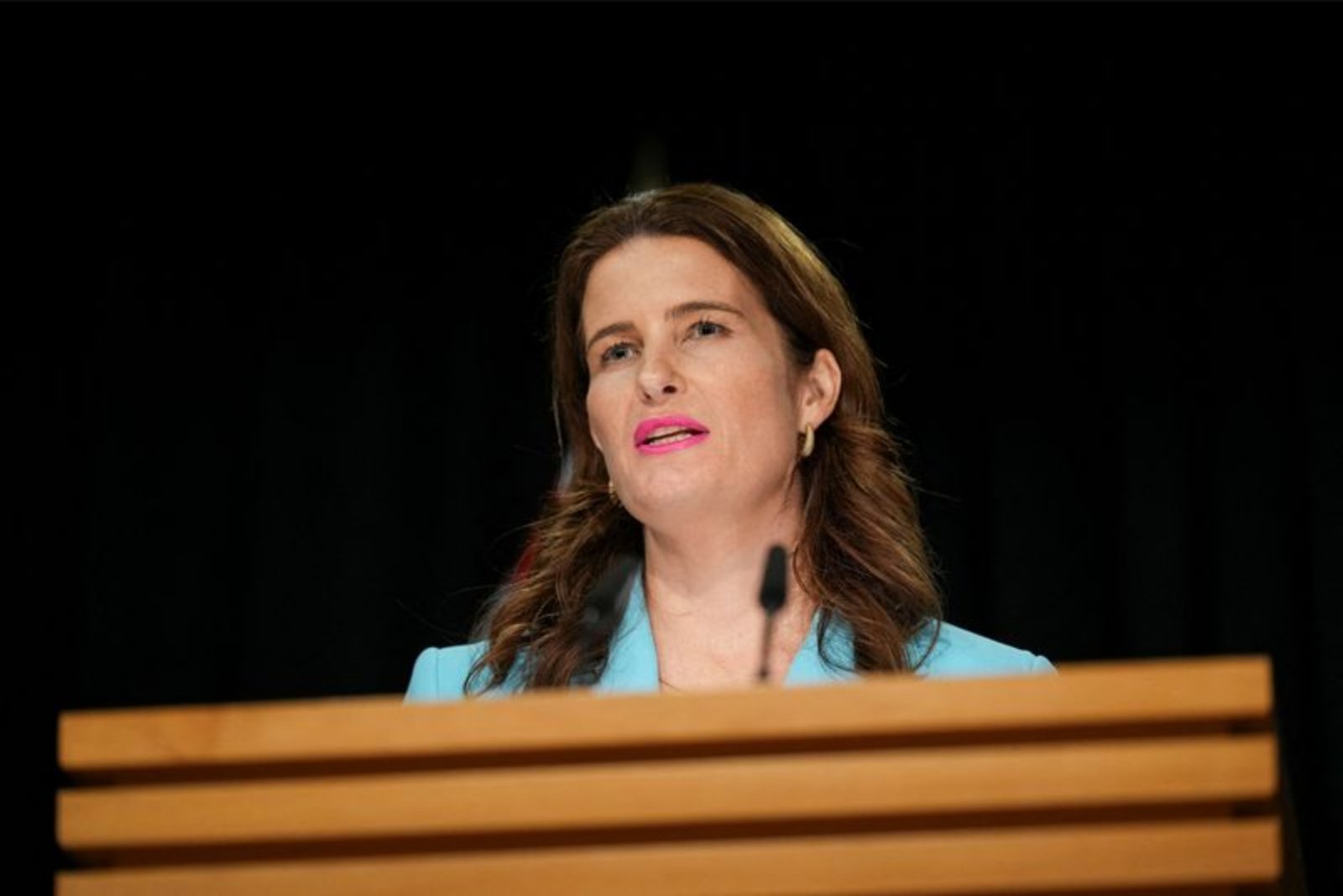
Finance Minister Nicola Willis said the Treasury's most recent modelling projects a higher inflation peak than previously expected under a scenario that assumes "a longer conflict with deeper disruption to supply chains." She relayed the Treasury view directly: "They think inflation will go much higher this year, and it will stay out of our target band," Willis told reporters.
That warning comes against the backdrop of January data showing fourth-quarter inflation of 3.1%, a level that breached the Reserve Bank's 1% to 3% target range. Willis highlighted that energy prices have been rising, a factor that market participants are responding to by increasingly pricing in an earlier tightening of monetary policy.
Willis said she would not disclose specific numeric projections from the Treasury modelling. She explained that the Treasury had not settled on a final or central scenario, and so concrete figures were not available to share at the time of her remarks.
The Treasury scenario flagged by the finance minister links a protracted international conflict and attendant supply-chain stress with higher inflation outcomes for New Zealand. The comment underscores the interaction between external geopolitical shocks, commodity and energy prices, and domestic inflation dynamics.
Markets have already been adjusting expectations in response to recent price movements, particularly in energy, by shifting the anticipated timing of potential policy moves. The finance minister's statement emphasizes uncertainty in official forecasting while signaling that policymakers are attentive to how international developments and supply-chain conditions may feed through to domestic inflation and monetary policy.
Key factual points:
- Treasury modelling shows a higher inflation peak under a scenario of prolonged Middle East conflict and deeper supply-chain disruption.
- Finance Minister Nicola Willis quoted Treasury as saying inflation could go "much higher" this year and remain outside the 1% to 3% target band.
- Fourth-quarter inflation released in January was 3.1%, exceeding the Reserve Bank's target band; rising energy prices are contributing to markets pricing in near-term policy tightening.