
Economy May 14, 2026 07:59 AM

Merz Opposes EU-Wide Borrowing, Calls for Deep Economic Overhaul

German chancellor backs structural reform and sets limits on financial integration while praising Mario Draghi

By Maya Rios
Share
Twitter Reddit Facebook LinkedIn

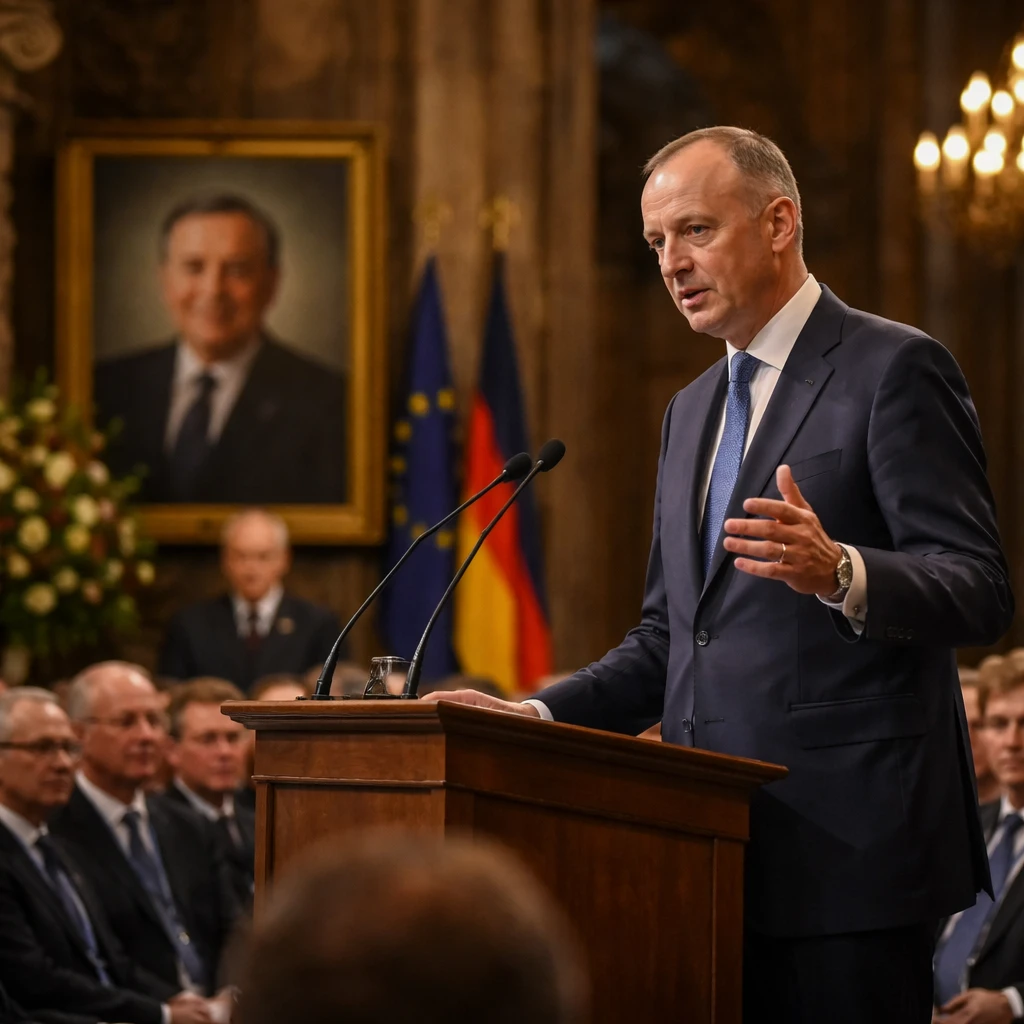
German Chancellor Friedrich Merz urged sweeping economic reforms for the European Union while rejecting proposals for joint EU borrowing. Speaking at a ceremony honoring Mario Draghi in Aachen, Merz stressed Germany's constitutional limits on taking on shared debt and warned that Europe faces a more hostile global environment after the return of Donald Trump to the White House.

Merz Opposes EU-Wide Borrowing, Calls for Deep Economic Overhaul
Summarize with
ChatGPT Perplexity Claude Grok Gemini

Key Points

  • Chancellor Friedrich Merz called for extensive economic modernization across the EU while rejecting proposals for joint EU borrowing.
  • Merz spoke at an Aachen ceremony honoring former ECB President Mario Draghi and praised Draghi's contributions while opposing his calls for common debt issuance.
  • Merz cited a more hostile global environment after Donald Trump’s return to the White House, noting developments he said have affected European economies - impacts relevant to policy on defense, energy transition, and competitiveness.

German Chancellor Friedrich Merz on Thursday framed the European Union as confronting its most testing period yet, urging significant economic reform while rejecting calls for increased common borrowing across the bloc.

At a prize-giving ceremony in Aachen for former European Central Bank President Mario Draghi, Merz said the EU has recognized the threats it faces and is beginning to assert itself as a geopolitical actor. He drew a firm line on how far Germany is prepared to go in deepening fiscal ties with other EU members.

"Some suggest now that we could evade this painful task by taking on new debt, European debt, by financing regular expenditures through borrowing," Merz said. "Germany cannot follow this path, including for constitutional reasons."

Merz linked the EU's deteriorating external environment to developments in Washington following Donald Trump’s return to the White House. He said Trump has reduced support for Ukraine, threatened to seize Greenland from Denmark, and launched a war on Iran that has affected European economies.

"We are now experiencing weekly crises," Merz added. "In this situation, Europe must maintain a clear course and a cool head. We must confidently define our own interests. And we must be prepared to take action to protect those interests."

While acknowledging Draghi's contributions to European integration, Merz explicitly rejected the former central banker’s advocacy for joint EU debt issuance. Draghi has argued that issuing common debt could finance investments in the transition to a low-carbon energy system, strengthen defenses, and raise economic competitiveness.

Merz reiterated the need for broad, fundamental change within the EU. "There is no alternative to a fundamental modernization," he said, framing reform as the preferred instrument for responding to the bloc’s strategic and economic challenges rather than pooled borrowing.


Context and implications

Merz's remarks set clear political boundaries around fiscal integration in the EU, emphasizing constitutional constraints that he said prevent Germany from endorsing shared borrowing to cover routine expenditures. He presented modernization and reform as the route for enhancing European resilience and competitiveness, while signalling skepticism toward proposals that would merge greater fiscal responsibility at the EU level.

Risks

  • Reduced willingness by Germany to support common EU borrowing could constrain financing options for bloc-wide investments - impacts sovereign debt and public finance sectors.
  • An increasingly fraught global environment, as described by Merz, introduces uncertainties for defense, energy transition, and trade-sensitive industries across Europe.
  • Regular, recurring crises cited by Merz increase policy volatility and could complicate planning for firms exposed to European economic conditions, including utilities and defense contractors.

More from Economy

Swiss Referendum on 10 Million Population Cap Raises Alarm Among Businesses Jun 8, 2026 Vietnam to Rely on Fiscal Support as Monetary Space Narrows, Deputy Central Banker Says Jun 8, 2026 BoE's Alan Taylor Says Current Rates Are Restrictive but Sees No Need to Raise Them Jun 8, 2026 China's May exports likely strengthened on front-loaded orders and chip demand, Reuters poll shows Jun 8, 2026 Goldman Sachs Pushes Expected Fed Rate Cuts Into 2027 After Strong Jobs Report Jun 8, 2026