
Market snapshot
Futures tied to the major U.S. stock indices pointed down on Monday as investors absorbed the ramifications of President Donald Trump’s announcement that the U.S. Navy would begin an "immediate" blockade of the Strait of Hormuz, paired with reports that talks between U.S. and Iranian delegations in Pakistan failed to produce a firm agreement. By 03:28 ET (07:18 GMT), the Dow futures contract had fallen by 239 points, or 0.5%, S&P 500 futures had slipped by 40 points, or 0.6%, and Nasdaq 100 futures had declined by 168 points, or 0.7%.
Trading in Europe and Asia showed signs of fragility, oil moved sharply higher, and the dollar strengthened as market participants reassessed geopolitical risk and energy market implications.
Context for the rout
Market caution followed a temporary two-week ceasefire that was announced last week. That fragile arrangement has not yet been translated into a longer-term end to hostilities and was followed by 21 hours of negotiations in Pakistan that did not result in a binding agreement. U.S. Vice President JD Vance, who led the American delegation in Pakistan, said Iran refused U.S. demands to refrain from developing a nuclear weapon. Pakistan, which acted as mediator during the talks, urged both sides to "uphold their commitment to ceasefire." Iran did not immediately comment on the discussions.
Investors were also processing inflation data for March that showed a sharp rise in consumer price gains, a surge driven largely by higher gasoline pump costs related to the energy shock from the conflict. Oil prices have risen since the onset of the Iran conflict in late February, a move pushed by what market participants described as an effective closure of tanker traffic through the Strait of Hormuz - a narrow waterway off Iran’s southern coast through which roughly a fifth of the world’s oil passes.
U.S. blockade of the Strait of Hormuz - announcements and clarifications
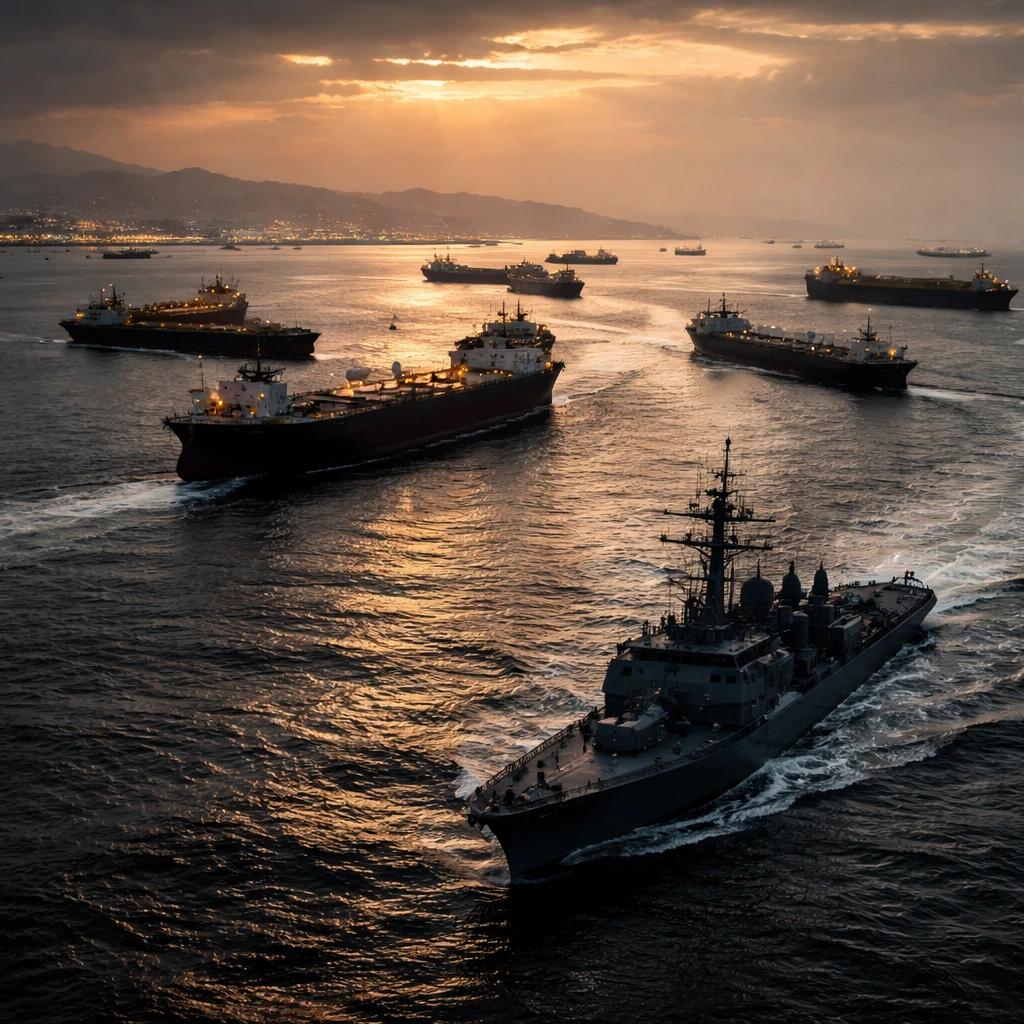
On Sunday, President Trump said the U.S. Navy would begin an "immediate" blockade aimed at preventing ships from entering or exiting the strait. He warned that no ship which had paid what he described as an effective toll charged by Tehran would have "safe passage on the high seas." A later Pentagon statement clarified that ships "entering or departing Iranian ports or coastal areas" would be blocked, while other vessels would be permitted to traverse the strait.
The blockade announcement followed the unsuccessful Pakistan talks and revived concerns that the temporary ceasefire could unravel. The negotiations in Pakistan, described as lengthy, did not produce a consensus to formalize the ceasefire into a durable settlement.
Oil market reaction
Oil prices reacted sharply to the latest developments, pushing Brent crude futures, the global benchmark, higher by 6.7% to $101.65 a barrel, and U.S. West Texas Intermediate futures up 7.1% to $103.42 a barrel.
Despite the sizable move in crude, some analysts saw the market response as relatively muted given the geopolitical stakes. Michael Brown, Senior Research Strategist at Pepperstone, said market participants largely view the blockade announcement as a negotiating tactic by the U.S. He wrote that while the week began with a clear risk-off tone, the overall market reaction could be summed up as "could be worse."
Earlier last week, after the initial announcement of the ceasefire - which followed an earlier threat by Trump to destroy all of Iranian "civilization" if the Strait of Hormuz remained closed - crude briefly fell below $100 a barrel. Prices, however, remain well above levels recorded before the outbreak of the conflict.
Corporate calendar - Goldman Sachs leads the U.S. reporting season
Major Wall Street bank results will help set the tone for the U.S. corporate earnings season this week, beginning with Goldman Sachs' quarterly report, due before the opening bell. Shares of Goldman Sachs have risen by about 3% year-to-date. The firm has seen trading activity influenced by investor concerns that new artificial intelligence tools could disrupt existing business models, prompting some clients to reshuffle positions. Investment banking revenues at Goldman Sachs have also shown growth in one of the bank's key divisions.
Market watchers noted that the conflict in Iran could have mixed effects on bank earnings. Heightened volatility and geopolitical-driven market moves can boost trading-related revenues, while rising commodity costs could lead companies to postpone or scale back expensive strategic transactions such as mergers and acquisitions, potentially reducing advisory fee income for banks like Goldman Sachs.
Other major U.S. banks scheduled to report this week include JPMorgan Chase, Wells Fargo, Citigroup, Bank of America, and Morgan Stanley.
Luxury sector - LVMH to report first-quarter sales
LVMH, the world's largest luxury goods group and owner of brands including Louis Vuitton and Dior, is due to report first-quarter sales today. The conflict in Iran is expected to factor into its outlook. Sales for brands within LVMH and peers such as Kering and Hermes have declined in markets like Dubai and Abu Dhabi because of the fighting, according to reporting, with notable weakness in high-traffic retail locations.
At the Mall of the Emirates in Dubai, luxury brand sales reportedly dropped by as much as 50% in March, with similar traffic declines noted at the Dubai Mall. Sales at the Galleria mall in Abu Dhabi were said to be down around 10% across the board. Analysts cited in reporting suggested that while the Middle East represents a relatively small portion of LVMH's overall revenue, the conflict's impact on quarterly sales may be limited, but its effects on profits - which LVMH releases on a half-year basis - could be more pronounced.
How these threads connect
In sum, markets opened the week with heightened sensitivity to geopolitical developments and energy market disruptions. The announcement of an immediate U.S. naval blockade of the Strait of Hormuz, the absence of a binding follow-up to a temporary ceasefire after extended talks in Pakistan, and a fresh upward move in oil prices together pressured futures and risk assets. At the same time, attention turns to corporate reporting that could either compound market moves or provide some stability, starting with Goldman Sachs and including major banks and a key luxury goods player in LVMH.
Investors and analysts will be watching whether the ceasefire endures, how maritime traffic through the Hormuz corridor is managed, and how firms across energy-sensitive sectors react to higher commodity prices and regional demand weakness.