
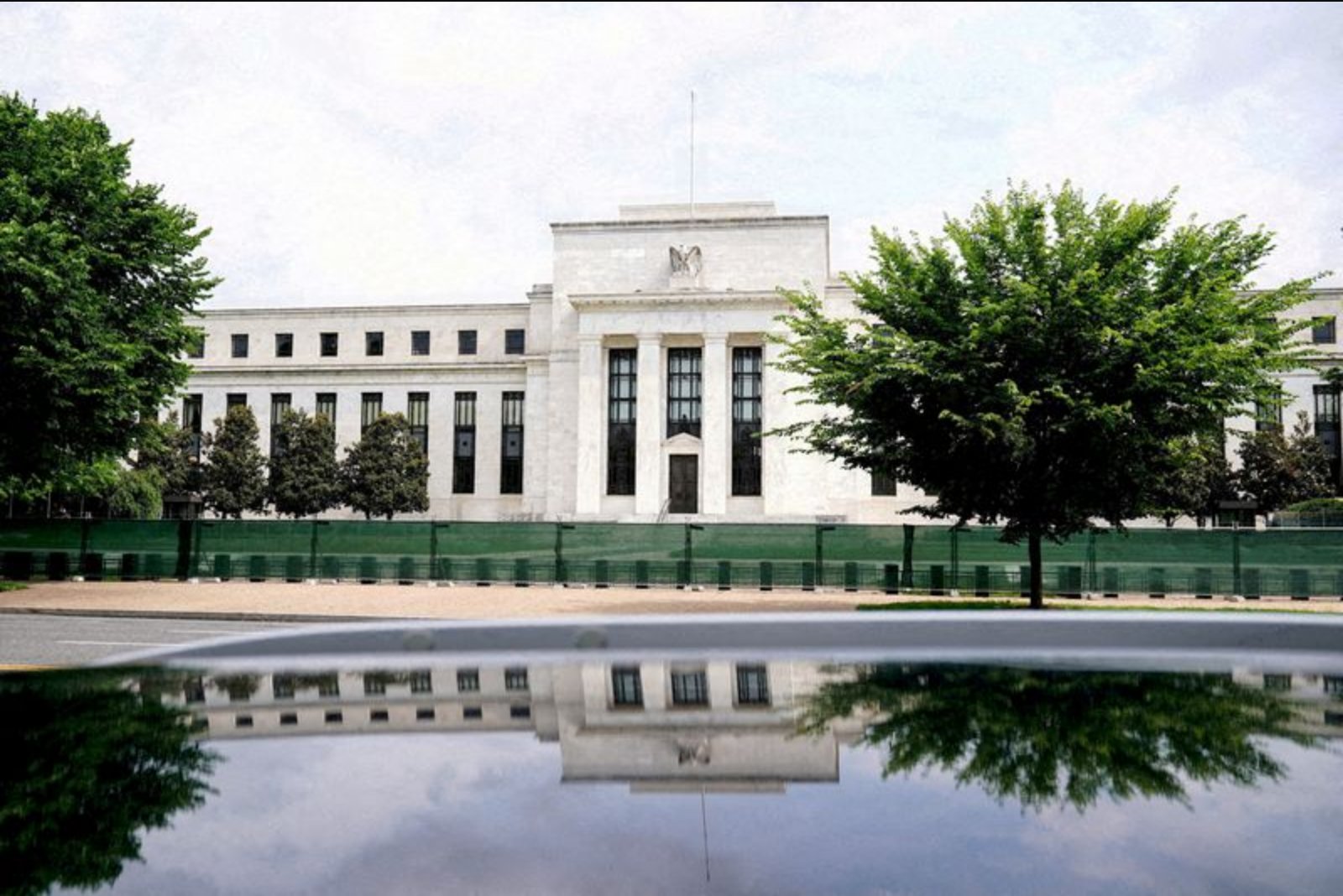
The Federal Reserve kept its benchmark interest rate steady on Wednesday at the conclusion of a two-day policy meeting, signaling a pause in the easing cycle that has supported U.S. equities. Investors now appear to be banking on further reductions in rates later in the year - likely after the Fed leadership changes in May - to sustain bullish positioning across markets.
Market pricing placed the next probable rate cut at the June meeting, which would occur under the authority of the incoming Fed chair. President Trump has said he expects to announce his selection for the central bank’s next leader soon.
Some market participants said the Fed’s decision to stand pat was appropriate given current data. "Our two cents is that the economy is doing okay, but inflation is a bit sticky, and the Fed was right to stand pat," said Tim Holland, chief investment officer at wealth management service provider Orion in Omaha, Nebraska. "We would be very surprised if we get another rate cut with Mr. Powell at the helm."
Investors had largely anticipated a pause at this meeting, yet many remain positioned for a dovish tilt later in the year that would support equities and broader economic momentum. While futures point to June as the most likely date for the next cut, views differ across market participants - some believe easing could arrive earlier, while others say lingering inflation could prevent any additional cuts this year.
Markets showed only modest reaction to the Fed’s announcement. The benchmark S&P 500 finished the day essentially unchanged after briefly climbing above the 7,000 mark during the session. The U.S. dollar index maintained most of its intraday gain following the meeting, recovering from a recent four-year low. The benchmark 10-year Treasury yield moved slightly higher on the day to about 4.25%.
"The market didn’t react much to this, largely because Powell has two more meetings," said David Seif, chief economist for developed markets at Nomura. "To the extent that Powell wants to give forward guidance, there’s a clear expiration."
MORE CUTS IN 2026?
A softer labor picture had earlier prompted the Fed to lower rates to their current level of 3.50%-3.75% last year. The policy committee reduced that rate by a quarter of a percentage point at its September, October and December meetings, following a nine-month pause.
At Wednesday’s meeting, Chair Powell said the labor market has shown "some signs of stabilization," while acknowledging that inflation "remains somewhat elevated." Michael Arone, chief investment strategist at State Street Investment Management, said: "You would need for those dynamics to change in order for the Fed to cut rates again during Chairman Powell’s term."
Fed funds futures indicated a less than 30% probability of a cut at either the March or April meetings, but reflected about a 65% chance of a reduction in June, according to LSEG data late on Wednesday. Markets continued to price in nearly two additional quarter-point cuts by December.
Still, some strategists see a path to earlier easing. Drew Matus, chief market strategist at MetLife Investment Management, said a cut could arrive in March and cautioned that market participants may be "a little overly optimistic that the outlook is very clear." Matus recommended that investors consider moving up in asset quality, including shifting away from high-yield fixed income and other higher-risk strategies.
NEXT CHAIR, NEXT CUT?
With Powell’s term ending in May, investors are trying to anticipate how monetary policy might evolve under a successor and whether the new chair will push the committee toward a more dovish stance. Concerns about the Fed’s ability to operate independently from political pressure intensified after revelations earlier this month that Powell faced a threatened criminal probe, a development the Fed chief described as part of a broader effort by President Trump to press the central bank for rate cuts.
Potential candidates discussed by market participants include Fed Governor Christopher Waller, former Fed Governor Kevin Warsh, BlackRock’s chief bond investment manager Rick Rieder, and Trump economic adviser Kevin Hassett, although the president has said he preferred to keep Hassett in his current role.
"We’re starting to think about what Fed policy looks like under a new chair, especially now that I think we’re really coalescing around a couple key candidates," said Michael Reynolds, vice president of investment strategy at Glenmede. Glenmede has an overweight position in small-cap stocks, and Reynolds said the possibility of one or two more rate cuts this year could "reinforce that thesis."
President Trump has said he will announce his Fed chair pick soon and predicted interest rates would decline after the new chair takes over. Yet some market observers caution that a change in personnel may not be the only factor determining policy.
Matthew Vegari, head of research at Clearwater Analytics, said he does not expect a rate-cut decision to rest solely with the incoming chair. "Would a more dovish Fed chair sway the other voting members? I’m not sure," Vegari said. "The chair can exert a lot of influence, but these are seasoned professionals at the top of their game."
Investors and strategists remain divided on timing and scope of future easing. For now, markets are priced for a pause through the end of Chair Powell’s tenure and for the next adjustment to occur under a new leader, with June emerging as the most likely meeting for an initial cut based on futures markets. The path forward will hinge on whether employment shows further deterioration, whether inflation settles or proves persistent, and how the Federal Open Market Committee responds to those developments under new leadership.