
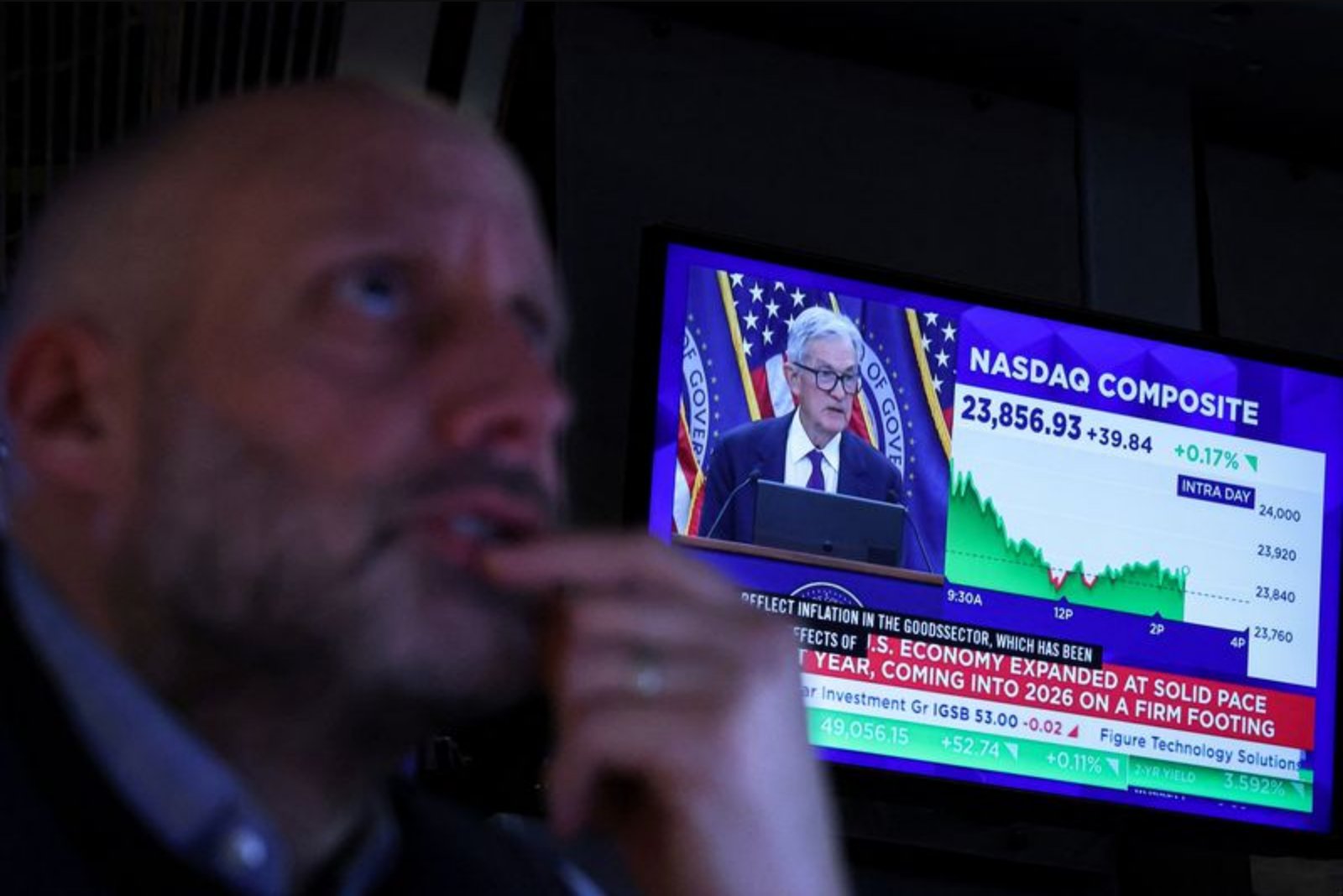
ORLANDO, Florida, Jan 28 - Equity markets and currency desks saw a volatile session on Wednesday as the S&P 500 pushed past the 7,000 mark for the first time, even while the Federal Reserve opted to leave interest rates unchanged and highlighted rising inflation risks.
The central bank's decision to keep policy on hold came with guidance that tilted modestly toward the hawkish side - inflation remains elevated and the labor market is somewhat firmer - but the immediate market response was muted. Traders still generally expect a quarter point rate cut by July, though they are less confident about subsequent cuts, consistent with the Fed's assessment that policy is likely near the upper end of the neutral range. Chair Jerome Powell said the likelihood of the next move being a hike is not the base case, a point that reinforced the central bank's current stance.
Currency markets were notably active. The dollar staged its best day since mid-November, reversing some of the recent selling pressure. The euro recorded its worst day since August. Observers noted that recent swings in foreign exchange volatility have been large, and more such moves should be anticipated.
Stocks had a mixed profile. While the headline S&P 500 milestone drew attention, other markets diverged - South Korea and Brazil extended strong rallies to new highs while many European equity benchmarks ended the day lower. In after-hours trade following corporate reports, Microsoft shares were down 7%, Meta rose 10%, Tesla added 4%, and IBM climbed 11%.
Fixed income also moved. Treasury yields increased by as much as 3 basis points and the U.S. yield curve bear steepened. In Japan, long-dated government bond yields dipped again.
Commodities reflected the day's risk tone. Oil reached a fresh four-month high. Precious metals were stronger on the session - gold gained 4% and traded through $5,300 per ounce, while silver was up about 3%.
Market context and commentary
Reaction to the Fed meeting was summarized by one market watcher as an "absolute snoozefest," reflecting the limited headline market fallout despite a subtly hawkish steer. That characterization came from Dario Perkins of TS Lombard, who voiced the sense that the event did not provoke the kind of immediate shifts seen in some earlier policy meetings.
At the same time, the Fed's remarks reinforced the view that policy is restrictive relative to certain measures of neutral, and that elevated inflation remains a concern. Markets continue to price in the possibility of policy easing later in the year, but not with full conviction beyond an initial cut.
Dollar dynamics drew attention from policymakers and market participants. There is concern that a sustained selloff in the dollar could evolve into a broader rout, prompting reaction from officials whose currencies gain in value. Although the dollar firmed on Wednesday, the prior days of selling pressure and the scale of recent swings have left investors on edge.
Corporate earnings and the tech picture
Tech earnings in the current reporting cycle delivered a mixed picture. So far, investors rewarded Meta, Tesla and IBM while penalizing Microsoft in after-hours trading. Broad belief in AI's transformative potential remains intact, which has underpinned demand for certain tech names. But the reporting season has also highlighted potential downsides of a productivity surge, including job reductions. Amazon has announced a reduction of 16,000 roles, and other firms such as UPS have flagged large layoffs, underscoring that workforce adjustments are a real part of the shift toward automation and efficiency.
Moreover, several leading technology stocks remain below their all-time highs. That gap can be read either as a sign of sector fatigue or as room for further upside if momentum returns.
Recommended reading and commentary
The following pieces were flagged today to help readers parse market developments:
- VIEW - Fed holds rates steady as expected, but sees elevated inflation
- Be careful what you wish for on a weaker dollar - Mike Dolan
- Dire year for dollar has little light at end of tunnel in 2026
- Amazon axes 16,000 jobs as it pushes AI and efficiency
- The future of AI will be written in nuts and bolts: Anuj Ranjan
What could move markets next
Investors face a packed calendar of potential catalysts. Among the items that could influence market direction in the near term are:
- Japan consumer confidence data for January
- A meeting between Chinese Premier Li Qiang and UK Prime Minister Keir Starmer
- Euro zone sentiment indices for January
- Sweden interest rate decision
- U.S. Treasury auctions totaling $44 billion of 7-year notes
- U.S. weekly jobless claims
- U.S. durable goods and trade data for November
- A busy slate of U.S. corporate earnings, including reports from Apple, Visa, Mastercard, Caterpillar, SAP and Blackstone
Takeaway
Wednesday's session combined a milestone on equities with heightened currency and bond volatility. The Fed's hold and its caution on inflation left markets to reconcile a cautious policy message with the prospect of later easing. Corporate results continued to underscore the uneven nature of the recovery and the mixed impacts of technology-driven productivity gains on jobs and sector leadership. For participants, the near-term challenge will be managing exposures across equities, FX and rates as fresh data and earnings arrive.