
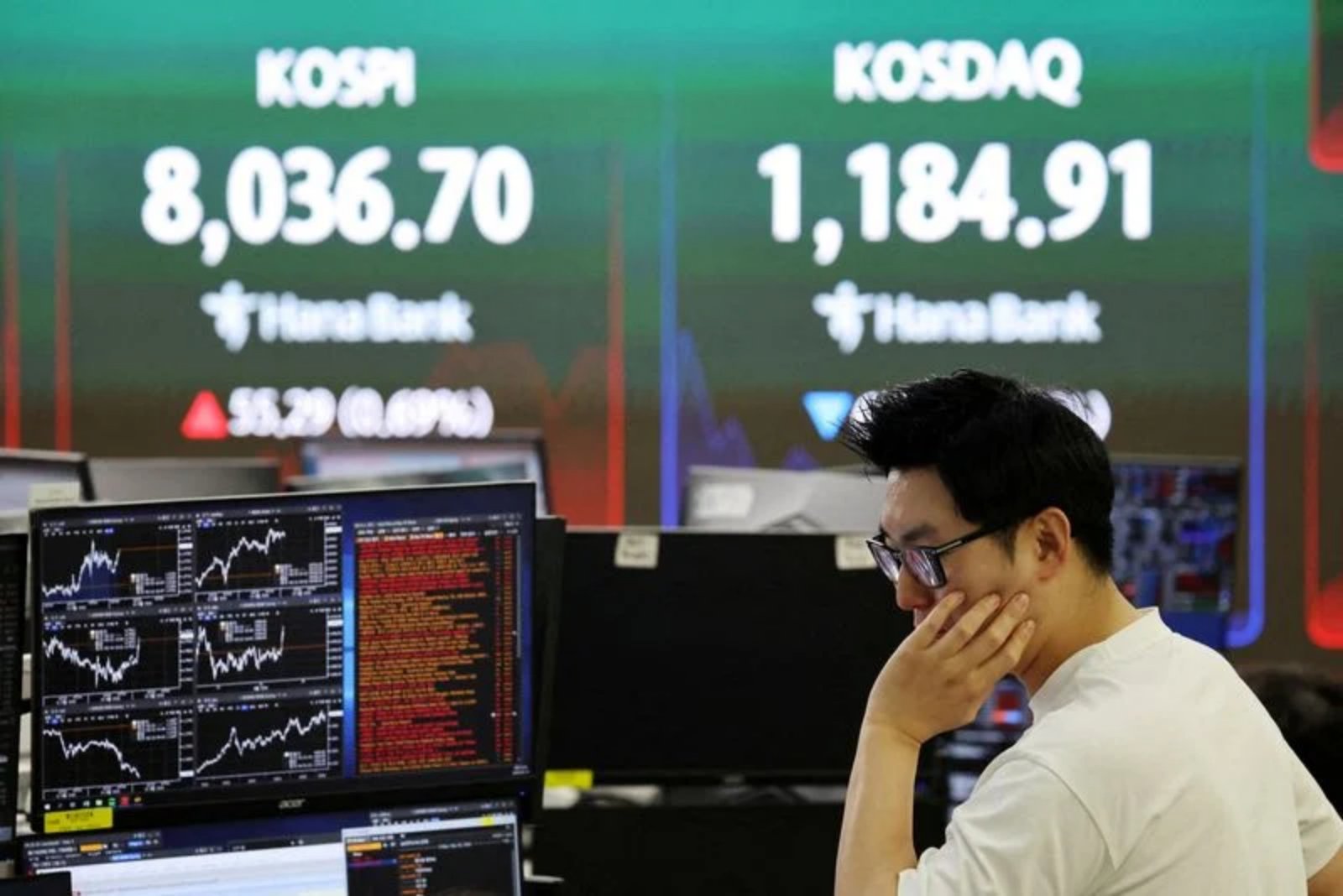
Seoul retail investor Laura Byun said she switched from U.S. mutual funds to Korean equities as the KOSPI raced ahead, and altered her tolerance for borrowing to participate. Byun used a short-term bank overdraft of about 15 million won, roughly $9,687 at the rate cited, to buy a leveraged fund linked to Samsung Electronics and initially saw a rise of about 20%.
That gain evaporated as global technology names came under pressure and the KOSPI slid by more than 8%. Byun’s position had turned to -17% by Monday morning, she said, after the leveraged ETF tied to the chip maker fell when renewed bets on a Federal Reserve rate increase ended Wall Street’s nine-week winning run.
"I’m not gonna do anything. I don’t know, I’m gonna wait for a rebound, unless like it halves or something," Byun said, describing her response to the sudden reversal.
Her experience illustrates a broader vulnerability building in South Korean markets. A surge in margin-based equity investment by retail participants has coincided with the KOSPI’s dramatic advance, and regulators and policymakers are wary that the combination of concentrated exposure in a few large chip names and rapid growth in leverage could intensify volatility in the event of further declines.
A Bank of Korea report released on Thursday showed leveraged investment into equities by retail investors reached a record 60 trillion won as of the end of May, at a time when the KOSPI had more than doubled in a six-month span to become the world’s best performing benchmark. The central bank cautioned that margin loans are heavily concentrated on chip shares and that reliance on leverage to chase gains can amplify market moves.
Part of the push into borrowed positions followed the May 27 launch of South Korea’s first single-stock leveraged ETFs linked to chipmakers Samsung Electronics and SK Hynix. These products aim to deliver double the daily return of the underlying stocks, and demand was intense enough that the Korea Financial Investment Association’s website reportedly failed under the initial volume of applicants registering for the mandatory training required to trade the new funds.
More than 350,000 people have completed the required course, KOFIA said. The ETFs’ structure, which amplifies daily moves up to a regulatory cap of twice a stock’s daily change, means gains can be sizable but losses are doubled as well - a feature that authorities say may be underestimated by many late entrants.
The Bank of Korea warned, "Investors should be cautious of amplified market volatility during potential downturns, particularly if late comers to the market increasingly rely on leverage to chase stock surges out of FOMO (Fear Of Missing Out)." Finance Minister Choi Sang-mok also highlighted rising leveraged stock investments, saying he would manage risks connected to "excessive herd-like behaviour." An official at the Financial Services Commission said the regulator is monitoring leverage levels, engaging with brokerages regularly, and had no immediate plans for new restrictions beyond the training requirement.
Market concentration has intensified: Samsung and SK Hynix now represent more than half of the KOSPI by market capitalization, and intraday swings of 5% to 10% on the index have become more common. That concentration means movements in a small number of names can have outsized effects on the broader market and on leveraged products tied to those stocks.
The broader metrics underscore how quickly leverage has expanded. Margin-based equity investment rose 72.5% in 2025 alone, outpacing growth in comparable markets: 36.3% in the United States, 36% in China, and 21% in Japan, according to Bank of Korea data cited. Daily trading volume hit a record 106.2 trillion won in May - nearly 60% higher than the average for January through April and roughly four times the 2025 average.
Authorities and participants point to an active demographic mix among buyers. A survey of local brokerages showed that investors in their 40s accounted for 28.9% of the inflow into single-stock leveraged ETFs linked to Samsung Electronics and SK Hynix between May 27 and June 1; those in their 50s made up 28.7%; and people in their 30s represented 22.2%.
A 40-year-old housewife in Seoul recounted moving from trading U.S. equities to buying SK Hynix shortly before conflict erupted in an unspecified context. She said many conversations at the time focused on leveraged ETFs. "SK Hynix had run up too high to buy outright, so I bought the double-leveraged ETF instead. But the volatility is extreme, and it makes me anxious. I’ll probably sell soon," she said.
Officials framed the leverage boom as part of ongoing efforts to repatriate investor interest from overseas markets back to South Korea - an objective that has succeeded in attracting many local investors but also produced heightened use of margin and concentrated positions. The Bank of Korea and finance ministry statements acknowledge this success while stressing the attendant risks if rapid leverage growth and concentrated holdings persist.
For individual retail participants like Byun, the swift shift from gains to losses illustrates the downside of amplified exposures. Many small investors who embraced the new leveraged products during the KOSPI’s ascent are now confronting heavy mark-to-market losses amid the recent pullback, raising the possibility of more turbulent trading and testing regulatory measures designed to temper herd-driven campaigns into single sectors or stocks.
Summary
- Retail investors in South Korea significantly increased leveraged exposure into chip-related equities as the KOSPI more than doubled in six months.
- New single-stock leveraged ETFs tied to Samsung Electronics and SK Hynix drew rapid demand starting May 27, with more than 350,000 people completing mandatory training to trade them.
- After a tech-led selloff pushed the KOSPI down more than 8%, many retail positions moved from profits to losses, prompting warnings and monitoring from financial authorities.
Key points
- Margin debt among retail investors topped a record 60 trillion won by end-May, concentrated in chip stocks - impacting equity and derivatives markets.
- The single-stock double-leveraged ETFs amplify daily moves, increasing both upside and downside for retail holders - relevant to market volatility and brokerage risk management.
- Regulators are monitoring leverage and engaging brokerages, while public officials signal intent to curb excessive herd-like behaviour - relevant to financial oversight and retail market conduct.
Risks and uncertainties
- Concentration risk - with Samsung and SK Hynix comprising more than half of the KOSPI by market cap, large moves in these names can disproportionately affect the index and leveraged products.
- Leverage risk - the double-leveraged ETFs and rising margin loans can amplify losses, potentially leading to forced selling and further market stress in a downturn.
- Behavioral risk - rapid inflows driven by FOMO among late entrants may increase the likelihood of volatile corrections and make market swings sharper and more sudden.