
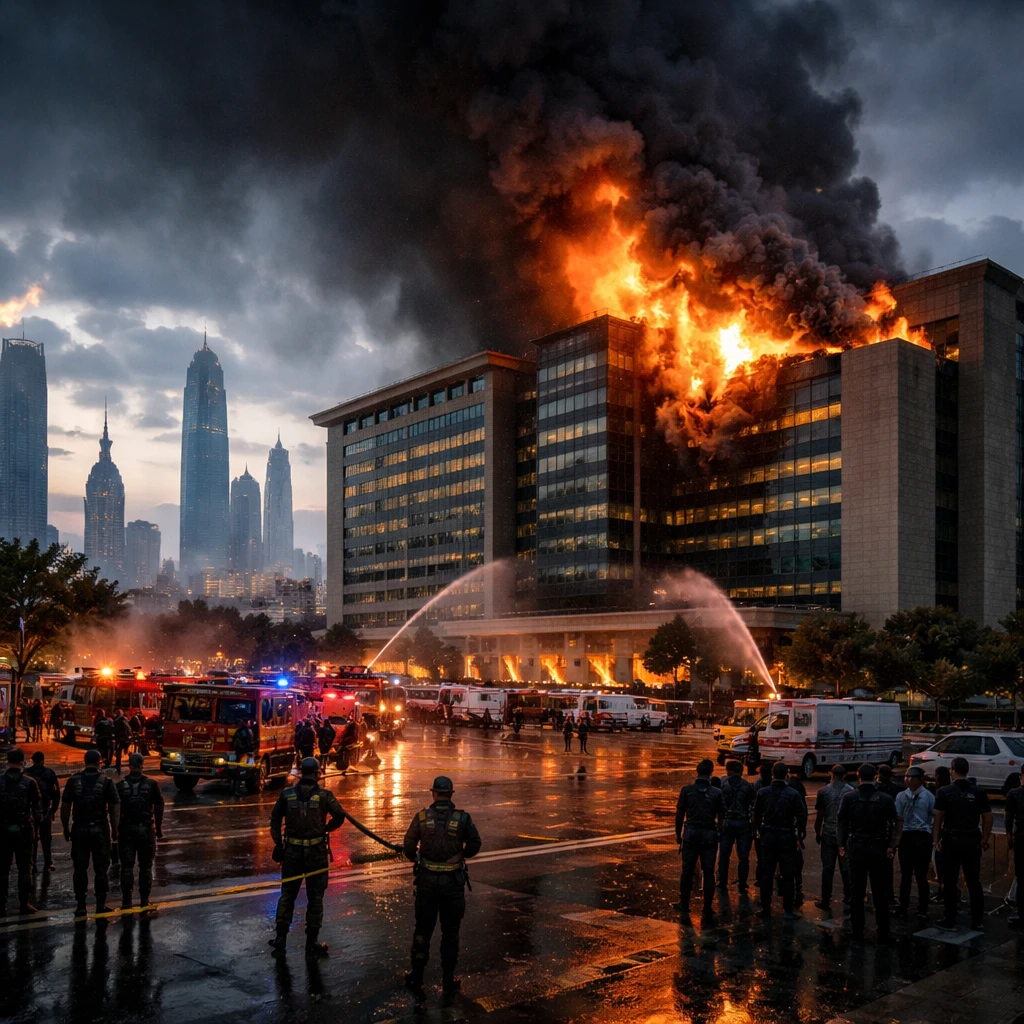
Early on Sunday, a targeted Iranian drone strike set fire to the Kuwait Petroleum Corp. (KPC) headquarters in Kuwait City, igniting flames at the compound that also houses Kuwait's Ministry of Oil. Authorities ordered an evacuation as emergency crews worked to contain the blaze and secure the site.
Officials described the incident as a marked escalation in regional tensions, moving the zone of operations from coastal and offshore energy infrastructure to an administrative and political nerve center for Gulf energy operations.
Sequence of recent strikes
The attack on KPC's headquarters follows a string of aerial bombardments over the last week that targeted the Mina Al-Ahmadi and Mina Abdullah refineries, together with Kuwait's primary international airport. KPC officials said that the "oil sector leadership" is currently coordinating with security forces to evaluate structural damage and to confirm the safety of personnel.
The timing of the incident appears to be linked to an earlier Israeli Air Force strike on Iran's Mahshahr petrochemical complex on Saturday. In the hours before the drones reached Kuwait City, Iran's semi-official Fars news agency published an updated "target list" that expanded potential targets to include critical civilian infrastructure - naming electrical, water, and steam plants alongside the oil, gas, and chemical facilities that had already been singled out.
Supply-chain implications and strategic shift
Market observers are particularly attentive to the inclusion of Kuwait's Petrochemical Industries Company (PIC), a principal manufacturer of fertilizers and polymers, on Tehran's expanded list. The addition of major chemical processors to potential targets heightens the risk to supply chains that support agriculture and industrial production across and beyond the region.
Analysts note that the Strait of Hormuz is effectively closed to about 90% of its normal traffic. Against that backdrop, the progressive targeting of administrative hubs and secondary processing facilities could further erode the remaining operational capacity of Gulf Cooperation Council (GCC) states.
The shift from striking "oil at sea" to striking "oil leadership on land" signals an evolution in target selection toward the administrative and command centers that manage the region's energy infrastructure. If central command-and-control sites such as the KPC headquarters remain under attack, Gulf governments' capacity to organize emergency repairs and to coordinate alternative export routes could be substantially weakened, maintaining a pronounced "war-risk premium" well into the second quarter.
Current status
Emergency crews continued firefighting and assessment operations at the scene while KPC and security forces coordinated to determine structural integrity and personnel safety. The broader market and logistical implications depend on the duration and scope of further strikes and on the ability of Gulf states to preserve operational command structures.