
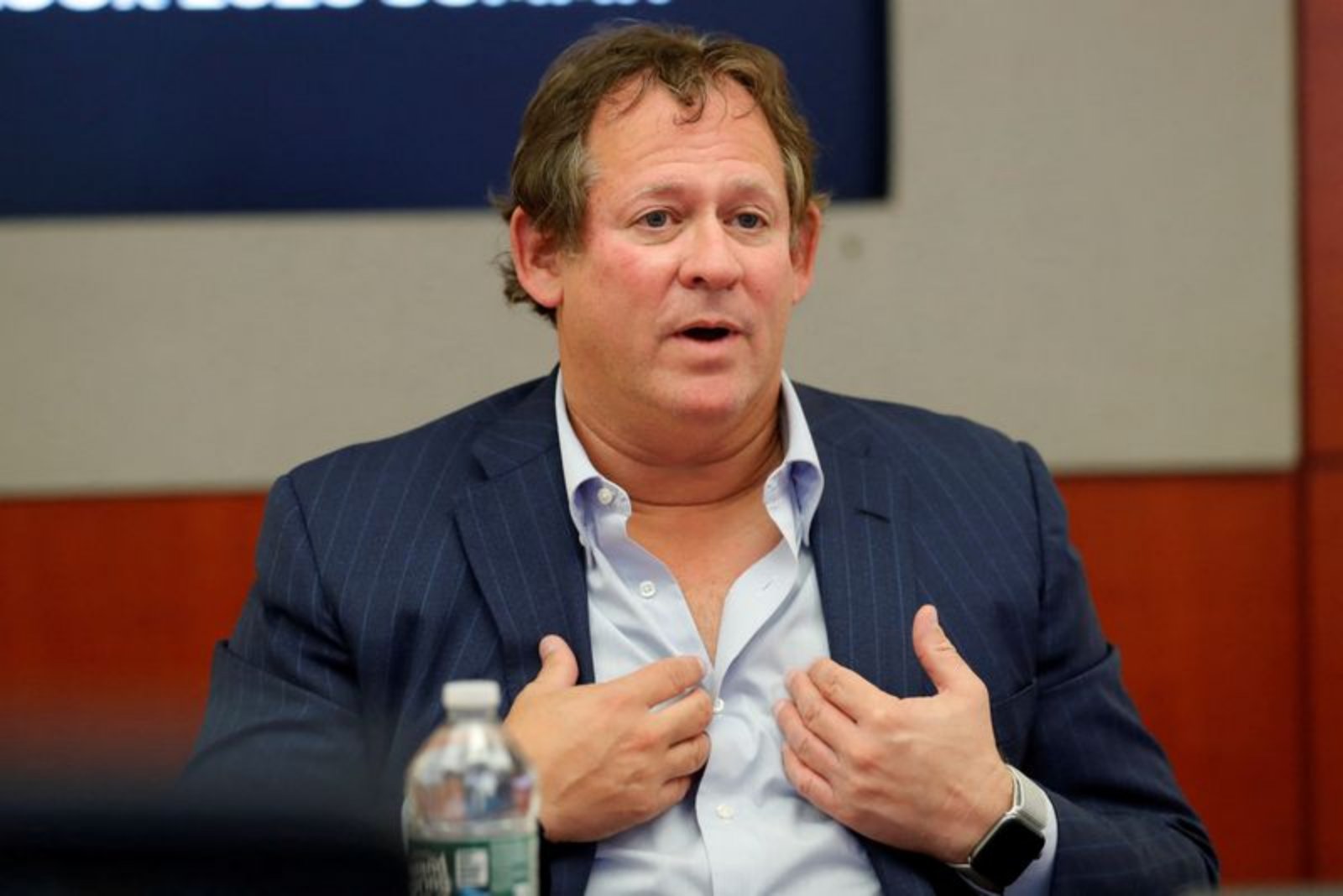
Prediction-market activity has shifted sharply in favor of BlackRock’s chief bond strategist, Rick Rieder, as the presumptive front-runner to succeed Jerome Powell as chair of the Federal Reserve when Powell’s leadership term expires in May.
On Tuesday, one day before the Federal Open Market Committee concluded its latest policy meeting, users of Kalshi who put real money behind candidates in the succession race showed a 48% probability that Rieder will be appointed the next Fed chair. The same market priced former Fed Governor Kevin Warsh at a 31% chance and placed current Fed Governor Christopher Waller at an 8% probability. Waller’s odds are similar to those of Kevin Hassett, who had been considered a leading candidate earlier in the process.
Rieder’s standing on Kalshi has strengthened noticeably since the beginning of the year. Powell, who has served as Fed chair since 2018, will reach the end of his leadership term in May, though he would remain eligible to occupy a governor seat on the Federal Reserve Board through 2028 should that option be pursued.
Market interpretation and policy expectations
Market participants who favor Rieder point to his alignment with the central bank priorities advocated by the president. Analysts at Evercore ISI summarized the view of those supporters in a note published on Sunday, saying Rieder "would be dovish on rates and likely press for three cuts this year based on his read that the micro data shows strong productivity dynamics, inflation pass-through from tariffs gradually moving into the rear-view mirror, and secular as well as cyclical pressures on labor and low-income consumers."
Those expectations about an easier policy tilt under Rieder reflect a reading of recent data that some interpret as supporting rate relief later in the year, even as inflation remains above the Fed’s 2% target.
Political backdrop and selection dynamics
Michael Strain, director of economic policy studies at the American Enterprise Institute, linked Rieder’s improved prospects to broader political calculations in the White House. Strain suggested that the president is disappointed with other potential nominees and that the president’s initial preference was Treasury Secretary Scott Bessent. "The president seems to have his heart set on Secretary Bessent, but Bessent seems uninterested for some reason. I think the question is, how long can Bessent hold out," Strain said.
The president has been openly critical of the Fed since returning to office, faulting the institution - and Powell in particular - for not cutting rates as rapidly as he would prefer. That criticism has occurred against a backdrop of inflation pressures that have, in the view of many observers, been exacerbated by the administration’s broad tariffs and taxes on imports.
Last year the Fed trimmed its policy rate target by three quarters of a percentage point. While officials were expected to hold policy steady at this week's meeting, the possibility remains that further cuts could be implemented later in the year if inflationary pressures continue to ease.
Independence concerns and institutional constraints
The president has publicly stated that a willingness to pursue rate cuts is a condition for his preferred Fed chair, a stance that could boost near-term growth and reduce government borrowing costs, but which carries the risk of higher inflation if pursued prematurely. The administration’s actions toward the Fed have at times been confrontational: the president has threatened to remove Powell and the administration launched a criminal probe into a renovation project at the central bank, raising concerns about the political independence of any future Fed leader.
By statute, the Federal Reserve is charged with keeping inflation low and stable while fostering maximum employment, and the institution is structured to fulfill those mandates insulated from political pressure. Many Fed officials, market participants and elected leaders argue that central bank independence is essential to making policy decisions grounded in data rather than politics.
Some market observers say the current political environment has turned the Fed chair role into a poisoned chalice, suggesting that a successor may face constrained independence and elevated scrutiny. Because monetary policy at the Fed is determined collegially, the incoming chair would still need to persuade the Federal Open Market Committee and could be outvoted if the committee’s majority disagreed with the new chair’s stance.
Minneapolis Fed President Neel Kashkari commented on the limits of the chair’s unilateral power on January 14, saying: "The next Fed chair will have to make their best arguments to the rest of the committee on what monetary policy is appropriate to achieve the dual mandate that we are all charged by Congress to try to achieve. That person gets one vote, and, you know, the best argument wins, and so I feel very...confident that the committee will continue to make the best decisions we can."
Implications for markets and policymakers
The evolving odds in prediction markets signal shifting market expectations for leadership and potential policy direction at the Federal Reserve. If market pricing continues to favor a candidate perceived as more likely to pursue rate cuts, that could influence Treasury yields, risk asset pricing and borrowing costs across the economy. At the same time, the political pressures surrounding the selection process raise questions about the governance and perceived independence of the central bank, issues that resonate with both fixed-income and broader financial markets.
As the succession debate continues, market participants and policymakers will be watching for formal nominations and the extent to which the confirmed chair can command support from colleagues on the FOMC to implement policy aligned with the Fed’s statutory goals.