
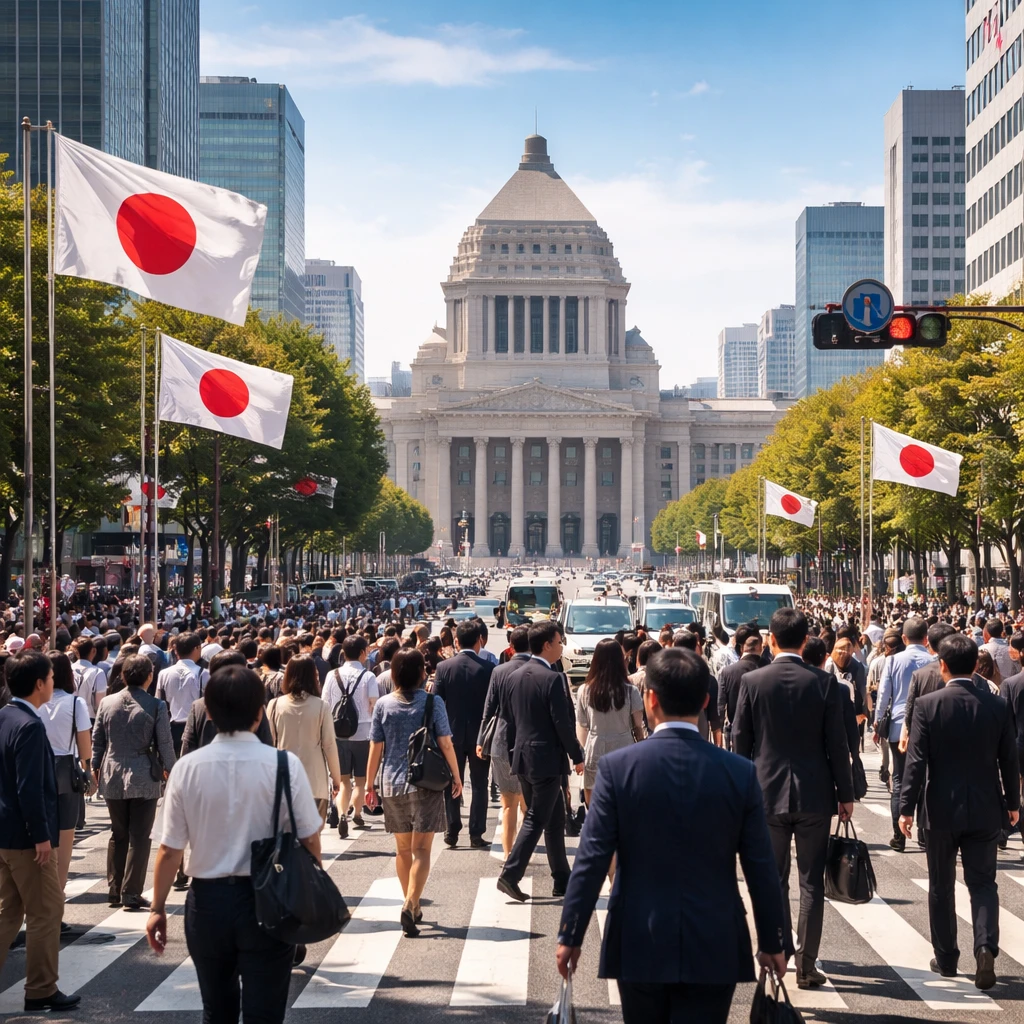
As Japan approaches a snap general election scheduled for February 8, Prime Minister Sanae Takaichi seeks voter endorsement for her reflation-oriented economic policies. This decision has coincided with a surge in bond yields to levels not seen in decades, fueled by investor unease about the nation’s deteriorating fiscal outlook.
Takaichi, having succeeded Shigeru Ishiba as leader of the ruling Liberal Democratic Party (LDP), is championing expanded government expenditure aimed at reversing Japan’s stringent fiscal austerity measures. Although she acknowledged the Bank of Japan's recent interest rate increase in December—which was intended to stem the yen's decline—her potential reelection is expected to reinforce pressure from her economic advisors against further monetary tightening, cautioning that such moves might dampen growth.
The prime minister has pledged to terminate what she characterizes as overly restrictive fiscal policy, including a temporary two-year suspension of the 8% tax on food sales. However, while rejecting calls for issuing new debt, details remain unclear on how the consequent revenue deficit would be managed. The LDP's manifesto articulates plans to expedite discussions, including with other political parties, to determine both the timing and funding mechanism for the tax suspension. Moreover, the party emphasizes achieving a robust economy alongside sustainable fiscal policies designed to maintain market confidence in the yen.
Economic analysts caution that Takaichi’s proposed fiscal easing may exacerbate inflation that already exceeds target levels, and argue that Japan’s current challenges stem more from labor shortages and supply chain constraints than from insufficient demand, indicating that increased spending might not address fundamental economic weaknesses.
The Japan Innovation Party (Ishin), a right-leaning group allied with the LDP after helping to secure Takaichi’s premiership in October, continues to advocate for deregulation and reduction of wasteful government expenditures. In alignment with the LDP, Ishin also supports a two-year suspension of the 8% food sales tax but insists on funding this measure without resorting to additional public borrowing.
The Centrist Reform Alliance (CRA), a coalition formed by the opposition Constitutional Democratic Party and Komeito, positions itself as a moderate force striving to find middle ground in a fragmented political landscape. The CRA calls for permanently abolishing the food sales tax from autumn onwards, proposing initial coverage of lost revenue via government reserves. To address longer-term fiscal gaps, they suggest instituting a sovereign wealth fund tasked with generating profits through investments including the Bank of Japan’s exchange-traded fund holdings. The alliance also prioritizes correcting the yen's excessive depreciation, which has accelerated inflation, while focusing on reducing costs for everyday essentials such as food and fuel.
The Democratic Party for the People (DPP), led by former finance ministry official Yuichiro Tamaki, has expanded its parliamentary presence by advocating for policies enhancing household purchasing power, including expanded tax exemptions. The party proposes issuing 5 trillion yen annually in "education bonds" to double funding for child care, education, and scientific research. Additionally, it supports reducing the consumption tax rate to 5% until wage increases consistently outpace inflation. Tamaki cautions that tax cuts should be conditional on economic downturns triggered by demand weakness and is skeptical of the immediate efficacy of such measures to alleviate rising living expenses. He further asserts that the Bank of Japan should continue raising rates if small and medium-sized enterprises can sustainably increase wages by approximately 5%.
Sanseito, previously regarded as a fringe far-right faction, emerged as a notable victor in the July upper house election via its "Japanese First" platform, which emphasizes improving citizens' livelihoods by opposing globalism. The party advocates the complete abolition of the consumption tax and a significant relaxation of fiscal constraints through increased spending. On monetary policy, Sanseito’s leader Sohei Kamiya warns that the Bank of Japan may be accelerating interest rate hikes too quickly, risking harm to a fragile economy. Kamiya underscores the importance of central bank independence but warns that an excessive focus on preserving it could hinder coordination with the government's expansionary fiscal agenda.
The divergent economic stances expressed by these parties underline key debates shaping Japan's fiscal and monetary policy future. As the election approaches, markets and policymakers alike are closely monitoring the potential implications for inflation, currency stability, and fiscal health.