
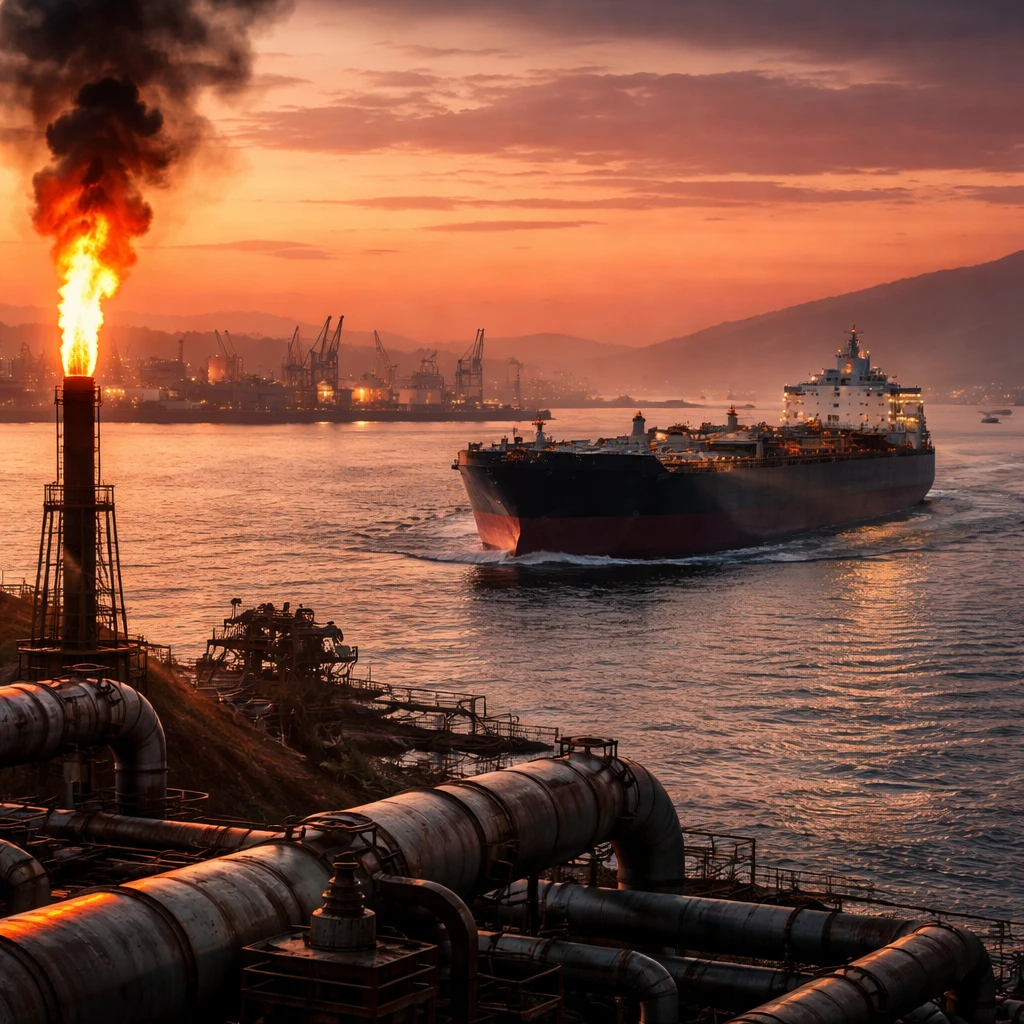
Bank of America characterizes the conflict involving Iran as an energy shock that stretches beyond crude oil, with consequences for multiple links in the energy supply chain and for input prices in industrial sectors.
Oil markets have reacted to disruptions around the Strait of Hormuz with price spikes, but BofA analysts emphasize that the global economy is not as tightly coupled to crude oil as it was in past crises. Instead, they say, the contemporary economy has shifted its exposure to a broader set of energy inputs - including natural gas, refined fuels and industrial commodities like fertilizers - which complicates the transmission of shocks and the policy response required to contain them.
According to the bank's analysis, declines in oil intensity per unit of GDP over past decades have not eliminated energy risk; rather, they have redistributed it. The wider range of energy inputs now essential to production and consumption means that disturbances to one segment can generate ripple effects through other segments, amplifying volatility and extending the economic fallout.
For example, the bank notes that higher natural gas prices have the potential to spill over into electricity markets, while elevated fertilizer costs can cascade into food inflation, particularly in emerging market economies that are more exposed to imported inputs. These second-order price effects could remain even if crude shipments return to normal relatively quickly.
Bank of America highlights uneven regional exposure. Europe and many developing economies are identified as especially vulnerable because they rely more heavily on imported energy and often possess limited domestic buffers. By contrast, the United States is seen as relatively insulated given its more diversified mix of domestic energy sources.
The interconnected nature of modern energy systems is a recurring theme in the bank's assessment. Supply shocks in one segment - whether in crude, gas, refined fuels or industrial feedstocks - can cascade into others, complicating inventories, creating distribution bottlenecks and making it harder for policymakers to engineer a swift return to equilibrium.
BofA warns that even a short-lived conflict could leave persistent economic scars. Supply chains require time to rebalance and inventories need replenishment; as a result, the bank expects potential for a more prolonged drag on growth and upward pressure on inflation than a conventional oil shock alone would imply.
The bank's conclusion underscores a structural shift in global energy risk: the hazards now extend well beyond crude oil into the broader ecosystem that supports modern economies, meaning policymakers and market participants must account for a wider set of vulnerabilities.
Key points
- Bank of America says the Iran conflict is an energy shock affecting natural gas, refined fuels and industrial inputs, not only crude oil.
- Secondary effects include higher electricity prices from gas spikes and food inflation from rising fertilizer costs; Europe and developing economies are most exposed while the U.S. is relatively insulated.
- Interconnected energy systems mean shocks can cascade across segments, complicating supply-chain rebalancing and policy responses.
Risks and uncertainties
- Persistence of second-order price effects even after crude flows normalize - impacts sectors like power generation and agriculture.
- Vulnerability of Europe and developing economies due to reliance on imported energy and limited domestic buffers - potential for greater inflationary and growth pressures in these regions.
- Supply-chain frictions and inventory rebuilding may prolong economic drag and sustain upward pressure on inflation beyond a classic oil shock.