
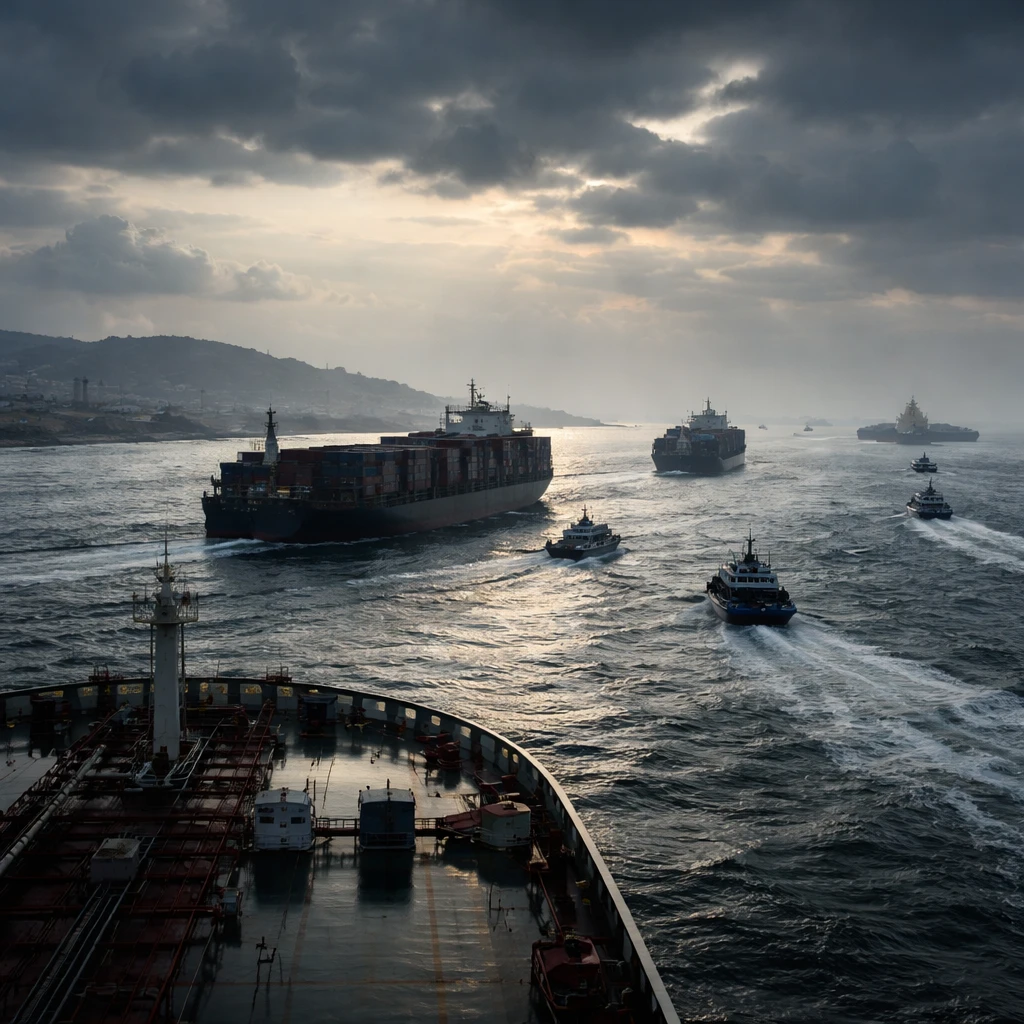
Iran has pushed back forcefully against recent U.S. threats to use force over the Strait of Hormuz, dismissing an ultimatum and adding a financial precondition for any resumption of traffic through the strategic waterway.
Parliamentary Speaker Mohammad Bagher Qalibaf characterized U.S. warnings as "reckless," saying in a post on X that "You won’t gain anything through war crimes. The only real solution is respecting the rights of the Iranian people and ending this dangerous game." The comment was offered in response to remarks by U.S. President Donald Trump that included an explicit threat of strikes on Iranian infrastructure.
Tehran's negotiators have clarified a new stipulation tied to reopening the Strait of Hormuz. Presidential spokesperson Seyyed Mohammad Mehdi Tabatabaei said transit could resume only if a portion of the strait's revenue is allocated to compensate Iran for damages related to the conflict. That condition links access to the waterway directly to financial concessions for Tehran.
Senior Iranian advisers also signaled that the confrontation could move beyond the Persian Gulf. Ali Akbar Velayati, a former foreign minister and adviser to Supreme Leader Ali Khamenei, warned the "resistance front" could target the Bab el-Mandeb Strait in the Red Sea. He said: "If the White House thinks of repeating its stupid mistakes, it will quickly realize that the flow of global energy and trade can be disrupted with a single signal."
The Bab el-Mandeb Strait is a critical chokepoint that handles roughly 12% of global trade and has previously been targeted by Iran-aligned Houthi forces in Yemen. Any disturbance there would exacerbate the effects of the near shutdown of traffic through the Strait of Hormuz, a disruption that has already been associated with sharp gains in oil and gas prices.
Iran's more assertive posture came as President Trump set a Tuesday deadline for Tehran to reopen Hormuz, warning of escalation if the strait remained closed. In an interview with the Wall Street Journal, the president said: "If they don't come through, if they want to keep it closed, they're going to lose every power plant and every other plant they have in the whole country."
While the U.S. president has indicated that a deal could be reached quickly, Iranian statements suggest a hardening position. New demands from Tehran and the broadened warnings about possible Red Sea action raise the prospect that the standoff could be more protracted than some U.S. comments have implied.
The unfolding exchange between Washington and Tehran has direct implications for global energy flows and maritime commerce. With the Strait of Hormuz effectively tied to compensation demands and the Bab el-Mandeb flagged as a potential second pressure point, market participants and logistics operators face an elevated risk environment as officials publicly trade deadlines, conditions, and warnings.
Summary
Iran refused a U.S. ultimatum to reopen the Strait of Hormuz, set a condition that part of transit revenue be used as compensation for war-related damages, and warned the conflict could spread to the Bab el-Mandeb Strait, which handles roughly 12% of global trade. U.S. President Donald Trump issued a deadline and threatened strikes if Iran did not comply.