
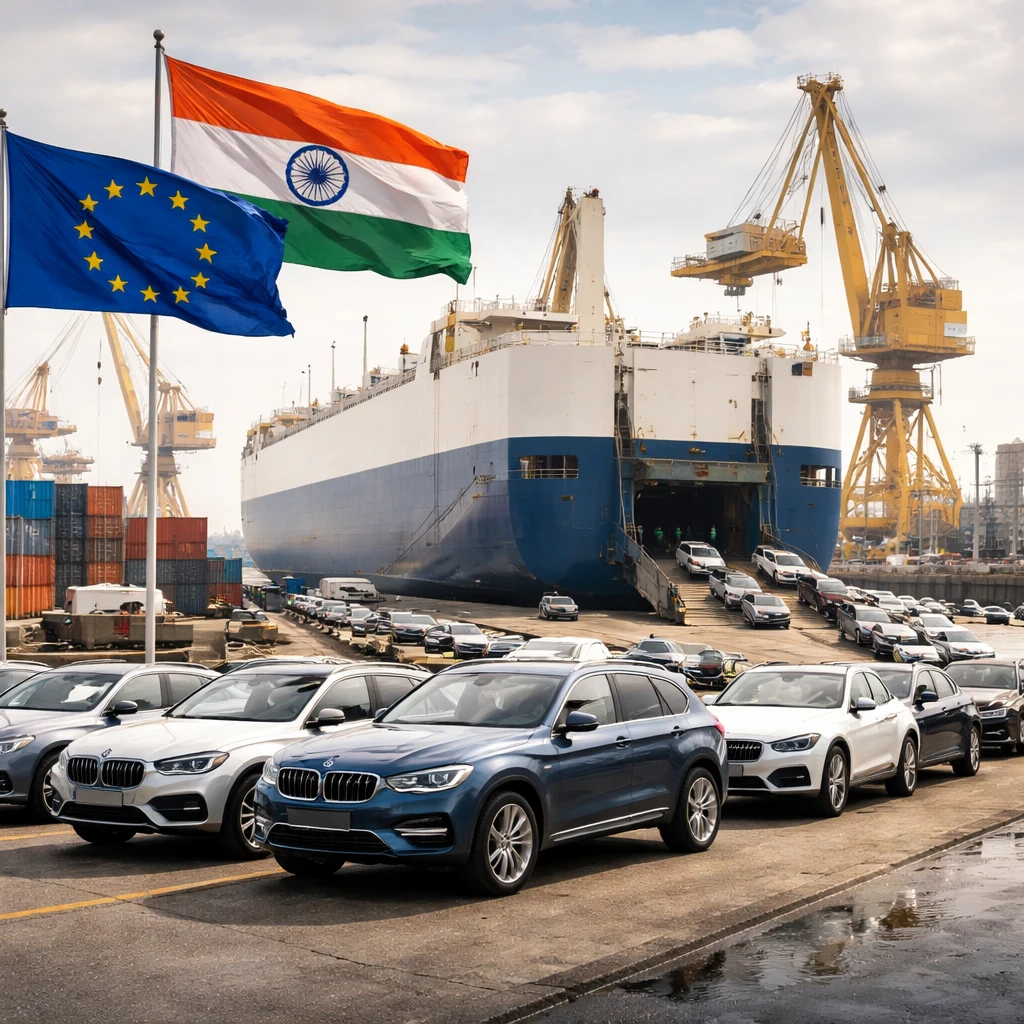
India plans to reduce tariffs on cars imported from the European Union to 40% from rates that can reach 110% under a free trade agreement that could be announced as early as Tuesday. The government under Prime Minister Narendra Modi has agreed to an initial cut applying to a limited group of vehicles from the 27-nation bloc whose import prices exceed €15,000 ($17,739).
According to the framework being discussed, the 40% tariff would be an interim level. Over a phased period the duty for eligible cars would drop further to 10%, a change that would make the Indian market more accessible to European brands such as Volkswagen, Mercedes-Benz and BMW.
The planned steps follow lengthy negotiations between India and the EU. Officials are expected to announce the conclusion of those talks as early as Tuesday, after which both sides would complete the remaining technical details and move toward ratification of the pact.
Beyond passenger vehicles, the agreement could lift overall bilateral trade flows. Indian shipments of goods such as textiles and jewelry stand to gain, the report notes, and those sectors have faced significant tariffs in other markets - the article references existing 50% U.S. tariffs that have been in place since late August.
India is the world’s third-largest car market by sales, trailing only the U.S. and China. Despite that scale, the domestic auto sector has long been protected by steep import levies. Current duties on imported cars are cited at 70% and 110% in different cases, levels that the proposed deal would begin to unwind for at least a subset of vehicles from the EU.
The outlined changes would be immediate for a narrowly defined set of imports and gradual for broader tariff reductions, with the sequence of cuts and the process for ratification left to be finalized after the anticipated announcement.
Context and implications
- The plan targets cars from the 27-nation EU bloc priced above €15,000 ($17,739), lowering initial tariffs to 40% and eventually to 10%.
- European automakers such as Volkswagen, Mercedes-Benz and BMW would gain improved market access if the reductions are implemented as outlined.
- The deal is positioned to boost bilateral trade and may increase Indian exports in sectors such as textiles and jewelry.
The proposal remains subject to the finalization of agreement text and subsequent ratification by both parties, steps that will determine the ultimate timetable and scope of tariff cuts.