
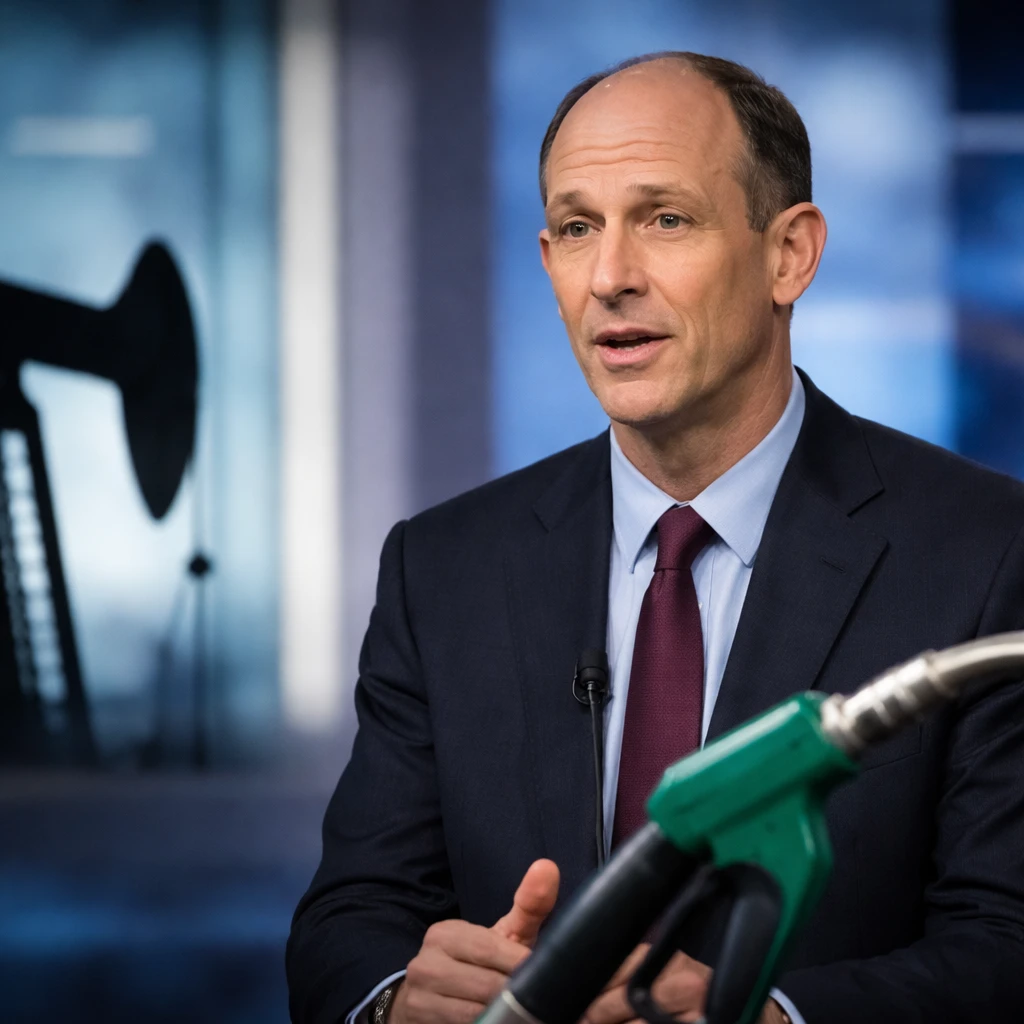
Chicago Federal Reserve President Austan Goolsbee said on Monday that financial markets are signaling a belief the recent increase in oil prices connected to the Iran War will be brief, and that if that view is correct the effect on the U.S. economy may be contained.
Commenting in an interview on Fox News, Goolsbee emphasized the central role of household spending.
"As long as the consumer remains strong, I think the economic growth is going to remain strong,"he said. He added that an extended period of high gasoline costs would change the outlook.
Goolsbee warned that a prolonged rise in fuel costs - for example, oil trading near $90 per barrel month after month, as he put it - would begin to push up other prices and could alter consumer behavior.
"If this were extended - if the price of gasoline were to remain at these kind of high levels or higher for a longer period - then we would have to reevaluate what does that mean for consumer spending; but if it goes how the market thinks it’s going to go, then it would be transitory,"he said.
The Fed president pointed to oil futures as evidence that traders expect the supply shock tied to the Iran War to be short-run. He said futures prices show market participants largely view the recent spike as temporary and not a sustained structural shift in oil markets.
Goolsbee also urged attention to measures of consumer sentiment, noting that a deterioration in those readings could foreshadow changes in spending patterns. He said observers should not be surprised to see a souring of sentiment, and described any such breakdown as a behavioral indicator worth monitoring.
Key points
- Market expectations: Oil futures indicate traders expect the price spike related to the Iran War to be short-lived.
- Consumer spending central: Strong household spending is essential to maintaining economic growth, according to Goolsbee.
- Potential spillovers: Sustained high oil - for example, roughly $90 per barrel on a prolonged basis - would push through to other prices and require a policy reassessment.
Risks and uncertainties
- Duration of price shock - If gasoline prices remain elevated for an extended period, consumer spending and inflation could be affected. Impacted sectors: consumer-facing industries, retail, and transportation.
- Consumer sentiment - A marked decline in sentiment may presage changes in household behavior and spending patterns. Impacted sectors: discretionary spending, services, and retail.