
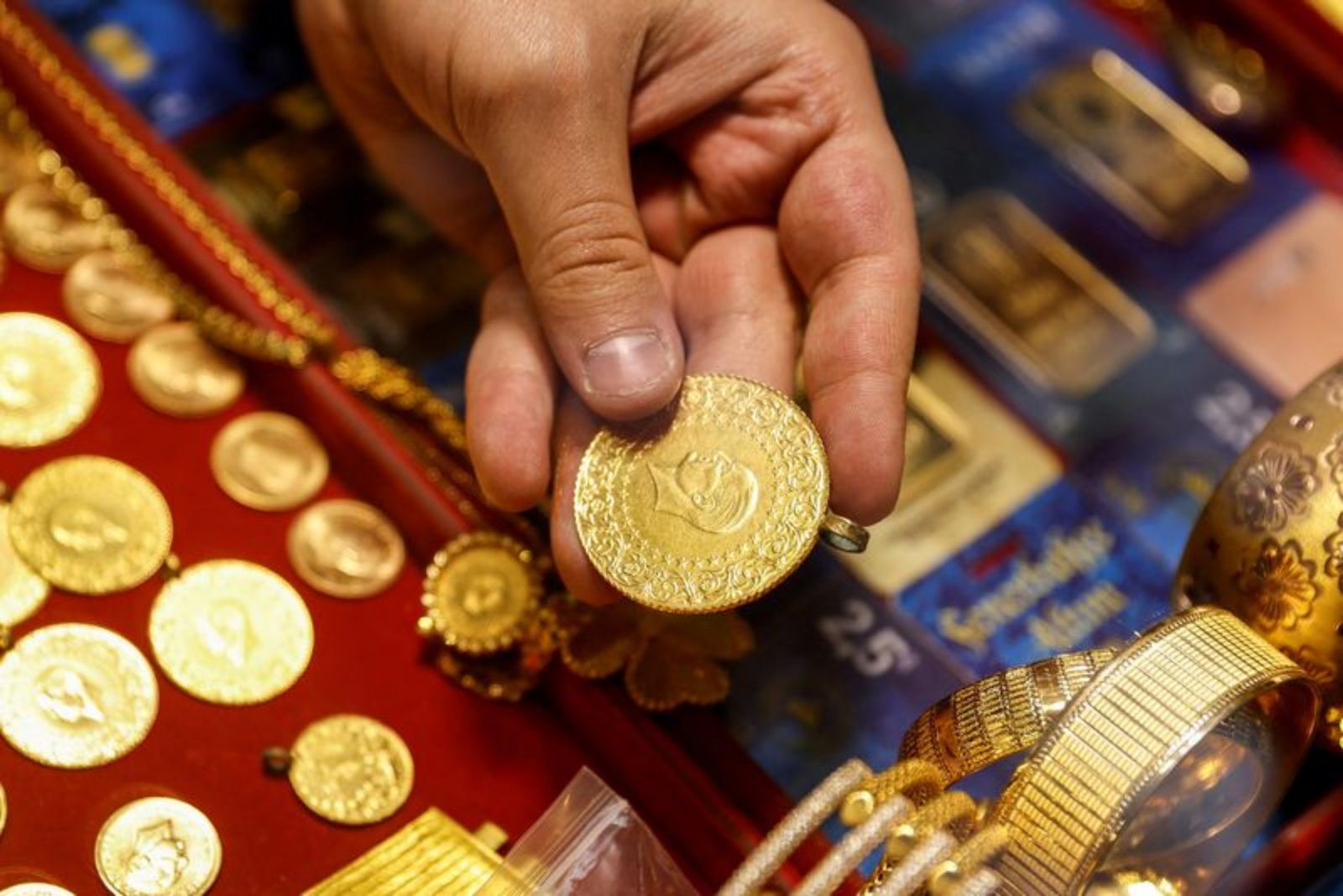
Global appetite for gold reached a new milestone in 2025 as buyers chased the metal for safety amidst geopolitical unease and declining confidence in the U.S. dollar, the World Gold Council (WGC) said on Thursday. Total world demand rose 1% year-on-year to 5,002 metric tons, the highest annual total on record.
Prices surged through the year and into 2026, breaking above $5,300 per ounce for the first time on Wednesday. That move followed a 64% increase in prices during 2025 and leaves gold up 22% so far this year, underscoring how elevated valuations and safe-haven interest pushed flows into investment vehicles.
Investment led the advance
Investment demand accounted for the bulk of the increase. The WGC reported that total gold investment jumped 84% in 2025 to a record 2,175 tons. Exchange-traded funds were a major conduit for that demand, with ETF inflows totaling 801 tons in 2025. Demand for physical bars and coins also strengthened markedly, rising 16% to reach a 12-year high.
The WGC highlighted that both institutional and retail investors directed capital into paper and physical forms of gold. The strength of these channels drove overall investment to levels not previously recorded in the Council's data.
Jewellery and central bank activity diverged
By contrast, jewellery demand contracted sharply in response to elevated prices. Jewellery purchases fell 18% across 2025, with China - the world's largest jewellery market - recording a 24% drop to its weakest level since 2009. The WGC expects record-high prices will continue to suppress jewellery sales in the near term.
Central bank buying, while still high relative to the pre-2022 period, is projected by the WGC to ease somewhat this year. The Council anticipates central bank purchases will slow to 850 tons, down from 863 tons in 2025. The WGC noted, however, that central bank demand remains elevated when assessed against earlier norms.
WGC commentary and methodological notes
John Reade, senior market strategist at the World Gold Council, emphasized the central question for the market in the coming year: whether investment demand will remain strong enough to underpin gold's elevated prices. He said, "The biggest question this year will be whether investment demand is going to be strong enough to maintain the strength of the gold market."
The WGC also drew attention to the changing role of gold in official reserves. After several years of significant purchases by central banks and the price rally that accelerated in 2022 through 2025, the share of gold within foreign currency holdings worldwide is now approaching levels seen in the early 1990s. The Council characterized that earlier period as one with more concentrated ownership and arguably fewer incentives for gold ownership than today.
In explaining its central bank estimates, the WGC said its figures combine officially reported purchases with an assessment of unreported buying compiled by consultancy Metals Focus. The Council added that many banks manage gold outside their formal reserve frameworks and that some likely target volumes rather than values. "This makes it ineffective to identify a single 'satiation point' for aggregate demand," the WGC said.
Market dynamics driving flows
The WGC's breakdown shows how different demand components moved in 2025. ETF inflows and physical bar-and-coin purchases were the primary sources of investment growth. Jewellery consumption and technology uses of gold behaved differently: jewellery fell sharply while technology demand was comparatively flat.
Recycling of gold also contributed to supplies, and the WGC's analysis draws on data from Metals Focus and the ICE Benchmark Administration. The Council's reporting combines these supplier-side inputs with demand metrics to produce the annual totals.
Implications for markets and sectors
For investors, the 2025 numbers underscore how gold continues to perform as a refuge in times of geopolitical friction and currency uncertainty. The shift toward investment vehicles suggests that market participants prioritized liquidity and ease of exposure - ETFs and coins/bars - over wearable forms of the metal. Meanwhile, jewellery retailers and parts of the consumer-facing luxury sector experienced demand headwinds as buyers scaled back purchases in response to record prices.
The WGC's projections for 2026 suggest continued vigilance: elevated prices will likely weigh on jewellery demand while investment inflows and central bank accumulation will determine whether prices hold.
Data source notes: The WGC's totals and commentary draw on officially reported central bank purchases and on assessments of unreported buying by Metals Focus, together with price data from ICE Benchmark Administration and the World Gold Council's own market analysis.