
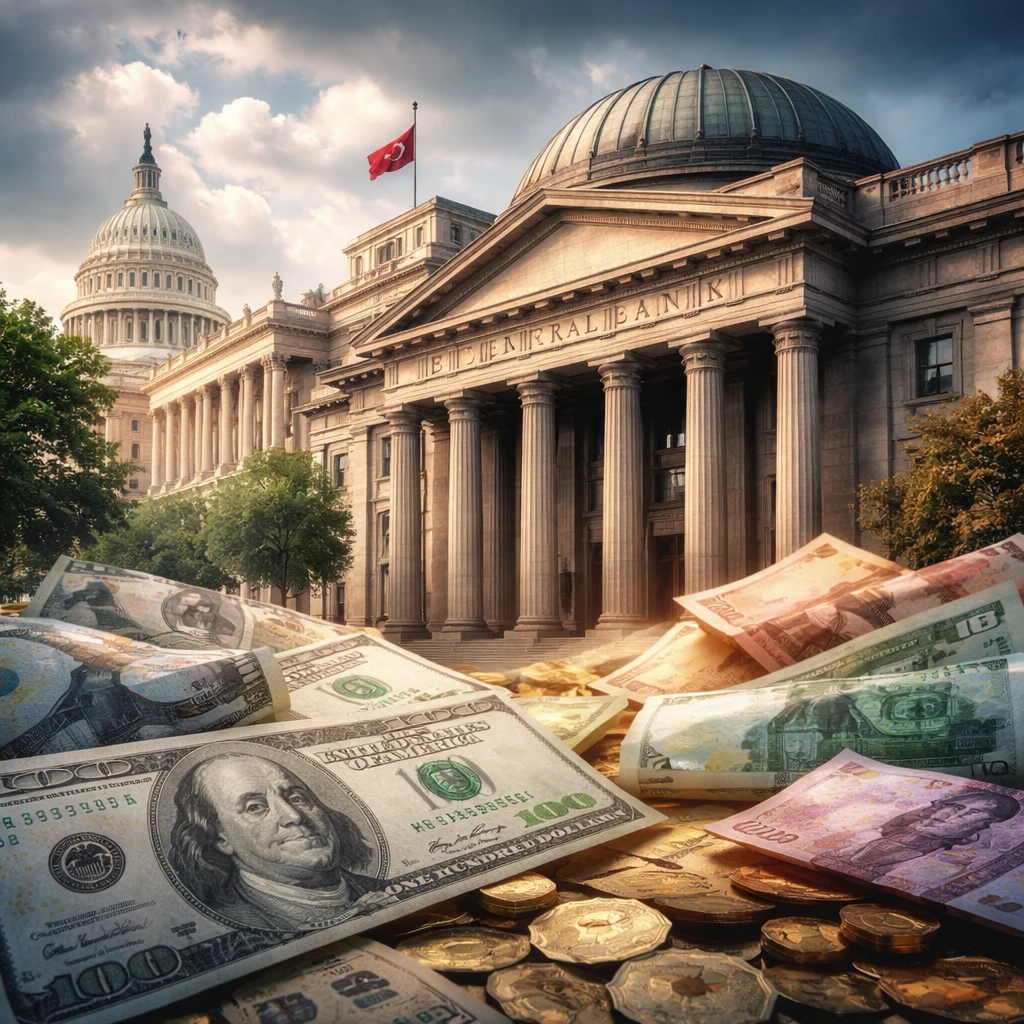
Central bank independence—the ability to determine interest rates without political interference—is widely regarded as a fundamental pillar for a country's economic health. This principle shapes the credibility of monetary policy and helps maintain price stability. However, political pressures on central banks persist across various nations, sometimes undermining these objectives. Recent controversy surrounding an attempt to remove a Federal Reserve Governor in the United States highlights these tensions.
Decades of academic research have demonstrated that central banks operating under political compliance tend to perform worse in controlling inflation and fostering economic growth. Conversely, those with independent authority generally succeed in preserving price stability. Several international examples illustrate the consequences of politically influenced central banking.
Turkey
Turkish President Tayyip Erdogan has openly expressed opposition to high interest rates, branding himself an "enemy of interest rates." Between 2019 and 2023, Erdogan dismissed four central bank officials who either increased borrowing costs or resisted proposed rate cuts that he argued would curb inflation. Contrary to expectations, inflation escalated dramatically, the Turkish lira depreciated significantly, and ordinary citizens faced hardships affording essentials like housing and food.
In a notable policy reversal in 2023, Erdogan appointed Hafize Gaye Erkan, a U.S.-based finance executive, who raised the key interest rate sharply from 8.5% to 45%. Subsequent leadership continued with a policy tightening before recently easing rates again. Inflation, which had peaked at 85% in late 2022, has declined but remains at double-digit levels.
Argentina
Argentina's long history of central bank politicization dates back to former President Juan Peron's 1946 nationalization of the institution. Since then, frequent economic crises have accompanied government reliance on money printing to finance expenditures, repeatedly triggering inflation and hyperinflation cycles.
Between 2000 and recent years, 14 central bank governors served, several removed from office due to policy disagreements with political leaders. For example, Martin Redrado was dismissed in 2010 after refusing President Cristina Fernandez de Kirchner's directive to use substantial currency reserves for debt repayment.
Venezuela
The Venezuelan constitution provides a measure of central bank independence, prohibiting deficit financing through money printing. Nonetheless, under President Nicolas Maduro, the legislature enacted laws placing full control of the central bank under the president's authority, with leadership appointed solely by him.
After the 2014 collapse of global oil prices, the central bank resorted to printing money to cover massive government deficits, which fueled hyperinflation. Inflation reached staggering levels estimated above 1,000,000% in 2018. Maduro's political and legal challenges continue, including pending drug charges in New York following his recent capture by U.S. forces.
Zimbabwe
Zimbabwe's Reserve Bank followed a similar path under former President Robert Mugabe, printing currency to fund government expenditures, including election-related costs, transfers to state-controlled entities, and subsidized equipment for agriculture. This excessive money supply growth triggered hyperinflation so severe that, in January 2009, the central bank issued a 100-trillion-dollar note. The International Monetary Fund documented these fiscal policies in their assessments.
United States
Unlike some other nations, no Federal Reserve official has been dismissed explicitly for resisting presidential demands on interest rate policy, as was controversially attempted recently in the case involving Governor Lisa Cook. The allegations involved unproven accusations unrelated to monetary policy.
Nevertheless, U.S. presidents have tried to influence Federal Reserve decisions indirectly. In 1972, President Richard Nixon pressured Fed Chair Arthur Burns to maintain low borrowing costs despite rising inflation to aid his re-election campaign. This interference contributed to inflation accelerating, requiring later Federal Reserve Chair Paul Volcker to implement aggressive interest rate hikes into double digits to regain price stability.
Volcker's stringent approach caused a recession but re-established the Federal Reserve's credibility by demonstrating its independence and dedication to controlling inflation. Earlier, in 1965, President Lyndon Johnson confronted Fed Chair William McChesney Martin Jr. physically and verbally during a dispute over interest rate increases related to fiscal stimulus. Although Martin resisted initially, he later eased policy in exchange for a presidential commitment to raise taxes, a move that reportedly contributed to accelerated inflation.