
Overview
Chancellor Friedrich Merz entered office pledging a significant fiscal push aimed at reviving growth in Europe’s largest economy after two consecutive years of contraction. The policy pivot has raised expectations of a clearer expansion in 2026, yet analysts and business groups warn that several reforms considered essential for long-term vitality are still unresolved. Given Germany accounts for roughly a quarter of euro zone output, its economic trajectory will be closely watched for implications across the bloc.
Growth expectations and official forecasts
After a modest expansion of 0.2% in 2025, forecasters anticipate a healthier pace this year as the government’s fiscal measures begin to take effect. The International Monetary Fund projects 2026 growth of 1.1%, while the government’s official target stands at 1.3% - a figure that a source familiar with the projections told Reuters is likely to be pared back to 1.0%. Ulrich Reuter, president of Germany’s savings banks association DSGV, summarized the mood: "A moderate upswing is a good sign, but the recovery remains fragile," and he himself is forecasting 1.0% growth.
Investor sentiment has responded positively to the policy shift. The ZEW economic research institute reported investor morale in January climbed to its strongest level since August 2021. Echoing that restrained optimism, Geraldine Dany-Knedlik, an economist at DIW Berlin, said: "It is reasonable to look ahead to 2026 with cautious optimism: If the fiscal measures that have already been decided take full effect, a noticeable pickup is possible."
Fiscal stimulus vs execution hurdles
Parliament approved a landmark special fund of 500 billion euros for infrastructure last March. Yet the translation of that commitment into deployed capital has been slow: by year-end only 24 billion euros had been invested. The sluggish pace reflects broader frictions within Germany’s federal decision-making apparatus and growing impatience among the public, which had already been building by mid-2025. Now, with Merz more than eight months in office, concerns that the government may struggle to operationalize its agenda are intensifying.
While the special fund is intended to underpin infrastructure and longer-term capacity, some elements have instead been used to support routine spending needs, diluting the amount directed specifically at growth-enhancing projects. That reallocation has weakened an early wave of optimism about the potency of the fiscal switch.
Structural reforms lag amid political friction
Many commentators argue Germany’s challenges are structural and will not be quickly remedied. Carsten Brzeski, global head of macro at ING, said the economy "almost needs a complete makeover," pointing to a broad menu of reforms from cutting red tape and advancing e-government to easing the fiscal burden of demographic trends. However, Merz’s centre-left coalition partners, the Social Democrats, remain cautious about measures they believe could undermine workers’ rights. Disputes over pension adjustments and tax policy have already complicated progress.
To manage contentious changes, the government has deferred some of the most politically sensitive decisions - including pensions, health insurance financing and revisions to fiscal rules - to commissions tasked with reporting by the end of 2026. That timetable means many of the large, systemic decisions that could reshape Germany’s growth potential remain pending.
Industry: signs of stabilization but capacity is idle
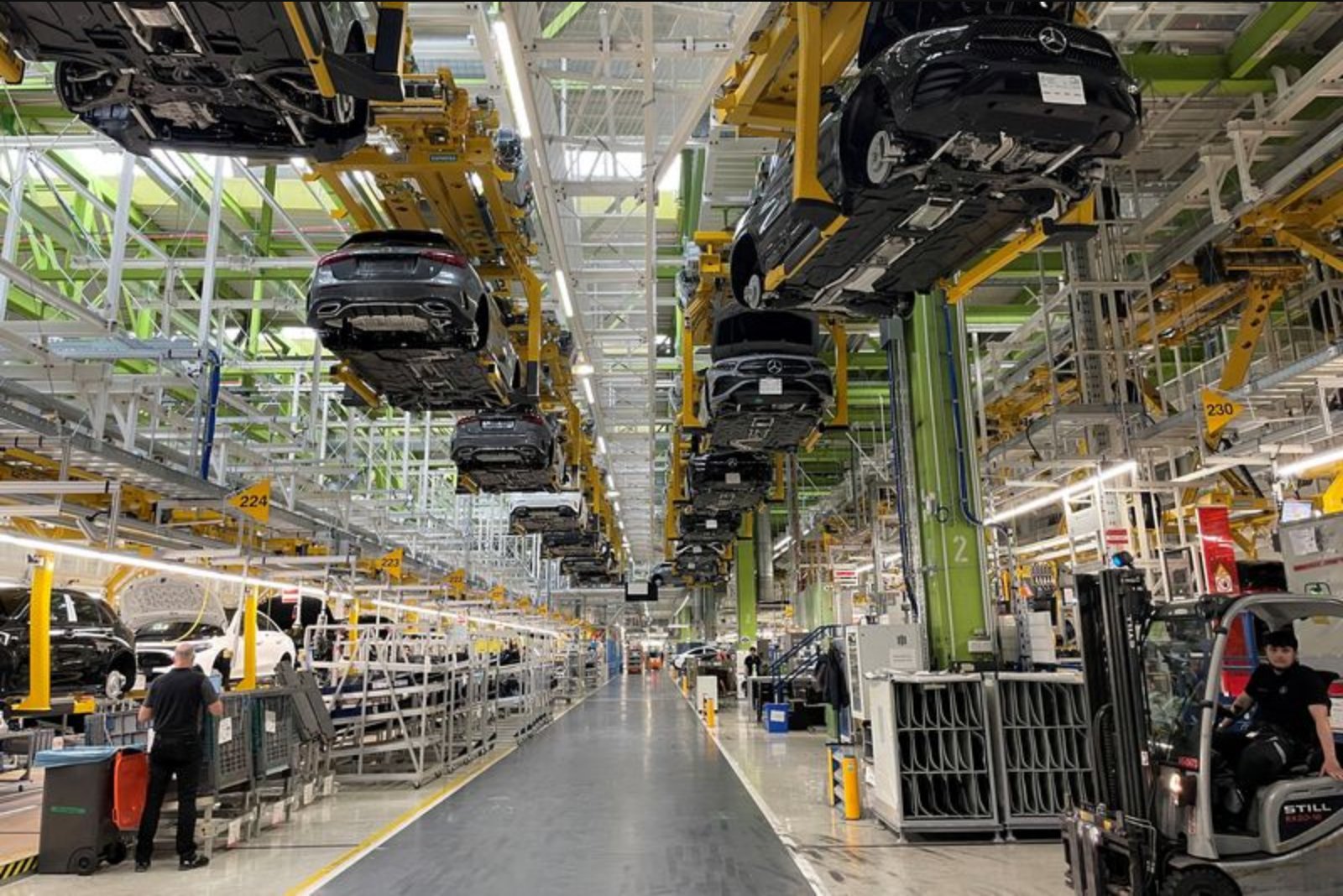
Fiscal support should bolster the industrial sector, which has shown tentative signs of stabilizing. Industrial production rose 0.8% in November, marking a third consecutive monthly increase. Orders improved sharply as well, with industrial orders climbing 5.6% month-on-month in November. Private sector business activity expanded at its fastest pace in three months in January, according to the flash composite purchasing managers index.
Even so, analysts caution that industry will probably grow more slowly than the overall economy this year. The BDI industry association highlighted the prolonged period of underutilised capacity, noting utilisation stood at 78% in October, significantly below the long-term average of 83.3%. "This means machines are standing still, production potential remains unused, investments are being postponed and employment is being reduced," said BDI Managing Director Tanja Goenner, underscoring the scale of idle resources that will take time and investment to reactivate.
Franziska Palmas, senior Europe economist at Capital Economics, summed up the data-driven case for guarded optimism: "This makes us more confident that, after six years of stagnation, Germany will grow again in 2026. However, we would not get carried away." Her remark captures the prevailing view that a recovery may be underway but remains vulnerable.
Household demand and corporate stress
On the demand side, household spending looks fragile. Consumer sentiment fell in January as the propensity to save rose to its highest level since the 2008 financial crisis. Elevated saving rates, combined with an expected uptick in unemployment tied to the labour-market lag from prior stagnation, suggest consumer outlays will remain muted this year.
Corporate distress has also increased. Bankruptcies and insolvency-related business closures reached their highest level in 11 years, reflecting strains across segments of the economy. DIHK chief analyst Volker Treier warned that structural problems facing firms must be addressed urgently to reverse this trend.
"It is up to Chancellor Friedrich Merz and his government to implement these reforms this year and turn a long-awaited rebound into a sustainable recovery," Treier said, framing the policy imperative that underpins much of the debate among business groups and economists.
Conclusion
The fiscal pivot led by Chancellor Merz has altered the near-term growth outlook for Germany and provided a basis for guarded optimism about a rebound in 2026. Yet the pace of spending deployment, political obstacles to deep structural reform, significant idle industrial capacity and weak household demand all temper confidence that the recovery will be durable. With several major reform packages deferred to commissions reporting by the end of 2026, much of the heavy lifting required to secure long-term growth still lies ahead.
Exchange rate note: ($1 = 0.8434 euros)