
Economy April 9, 2026 11:25 AM

Georgieva Urges Completion of Quota Review to Bolster IMF’s Crisis Capacity

IMF chief says finalizing the 16th quota review will make the Fund’s lending capacity immediately more potent and provide a strong financial buffer against future shocks

By Caleb Monroe
Georgieva Urges Completion of Quota Review to Bolster IMF’s Crisis Capacity

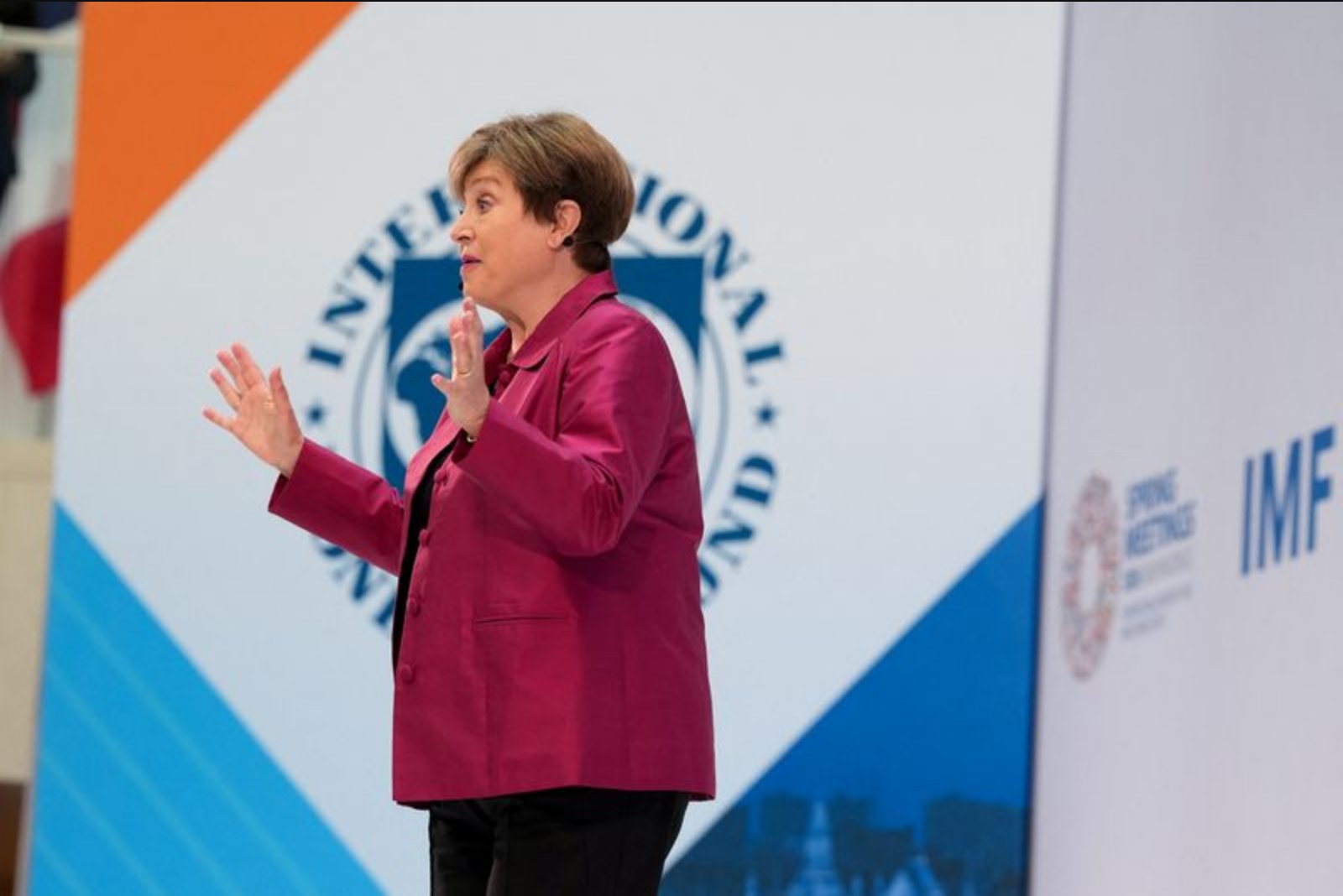
International Monetary Fund Managing Director Kristalina Georgieva said the IMF must finalize the 16th quota review approved in 2023 to ensure it has sufficiently large and immediate lending capacity. She expressed optimism that the review will secure approval from the U.S. Congress this year, noting the change raises quota lending resources by 50% and makes more of the IMF’s $1 trillion lending capacity immediately available. Georgieva described the objective as creating a powerful financial deterrent to crises and emphasized the need for reassurance despite an existing cushion of resources.

Key Points

  • The 16th quota review, approved in 2023, must be completed to expand the IMF's lending toolkit; this affects global financial stability and sovereign borrowers.
  • The review would boost quota lending resources by 50% and make more of the IMF's roughly $1 trillion lending capacity immediately available, impacting international financial markets and institutions.
  • Georgieva is optimistic that the U.S. Congress will approve the review this year; the United States is the IMF's largest shareholder, so U.S. political support is consequential for the Fund's ability to act.

WASHINGTON - International Monetary Fund Managing Director Kristalina Georgieva said on Thursday that the IMF needs to complete the 16th quota review approved in 2023 so the institution will have what she described as "scary" financial firepower to respond to future crises.

Georgieva said she was optimistic the IMF will obtain approval from the U.S. Congress this year for the quota review. The change, she noted, increases quota lending resources by 50%, which in turn makes a greater portion of the IMF's roughly $1 trillion in lending capacity immediately available.

She underscored that the United States is the IMF's largest shareholder and signaled hope that congressional approval will follow within the year. According to Georgieva, the Fund already maintains a "big cushion" of resources, but finalizing the quota increase is necessary to provide financial reassurance "because we don’t know what the future may bring."

Reflecting on the intended effect of greater capacity, Georgieva said the goal was not merely to avoid running out of funds but to be so robust that a crisis would effectively be deterred. "It is not like we run out of money, but we want to be so strong that the crisis comes, looks at us, puts its tail between its legs and goes away. Scary," Georgieva said.


Summary of the key elements in Georgieva's comments:

  • The IMF needs to finalize the 16th quota review, approved in 2023, to strengthen its lending position.
  • The quota review would raise quota lending resources by 50% and broaden immediate access to the IMF's approximately $1 trillion lending capacity.
  • Georgieva is optimistic about U.S. congressional approval this year; the United States remains the IMF's largest shareholder.

The comments reiterate the Fund's intent to ensure it can act decisively if systemic or country-specific shocks emerge. Georgieva framed the quota increase as a form of financial reassurance for global markets and policymakers, even as she acknowledged the IMF's present resource cushion. She emphasized the unpredictable nature of future shocks as a reason for ensuring maximum, immediately deployable capacity.

Risks

  • Approval by the U.S. Congress is not guaranteed - a failure or delay would leave the quota increase incomplete and limit the IMF's near-term enhanced lending access. This poses risks to sovereign borrowers and global financial markets.
  • Uncertainty about future shocks - Georgieva noted "we don’t know what the future may bring," highlighting the unpredictability of crises that could test the Fund's resources and readiness, with potential effects on emerging markets and the banking sector.

More from Economy

Freddie Mac: U.S. Mortgage Rates Ease Slightly This Week Apr 9, 2026 Greenland's Premier Rebukes Trump Labeling It a 'Piece of Ice' Apr 9, 2026 IMF Sees Immediate Demand for $20-$50 Billion in Support as Middle East Conflict Disrupts Markets Apr 9, 2026 OpenAI Suspends Major UK Data Centre Plan Citing Regulation and Energy Costs Apr 9, 2026 White House Says Warsh Set to Assume Fed Chair in May, Questions Remain Over Powell's Role Apr 9, 2026