
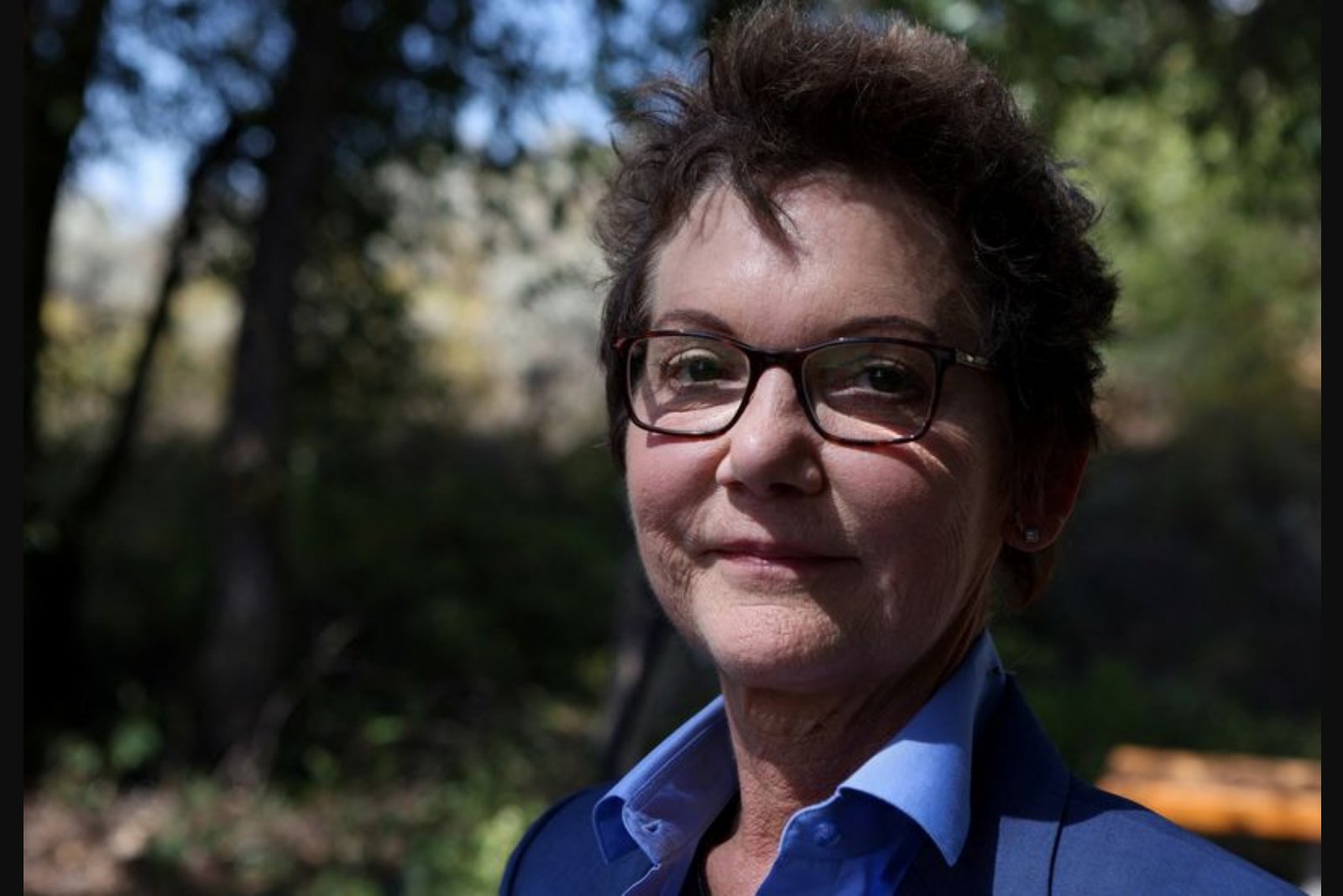
San Francisco Federal Reserve President Mary Daly described the U.S. economy as fundamentally solid and the labor market as having steadied, while characterizing current monetary policy as "in a good place" - restrictive enough to exert downward pressure on inflation without undermining employment.
Speaking in an interview late Thursday, Daly said the recent oil shock associated with the Iran conflict has prolonged the process of bringing inflation back to the Fed’s 2% objective and may leave the central bank in a holding pattern on short-term interest rates.
"We had work to do before we had the oil price shock; with the oil price shock, the work just takes longer," Daly said, adding that although oil prices fell after the U.S. and Iran announced a ceasefire deal earlier in the week, "no one’s really sure how long that will last."
The Fed has kept its short-term policy rate target at 3.50%-3.75% at both of its meetings so far this year. Many policymakers, Daly among them, had anticipated that tariff-related inflation would ease later in the year, which in turn could have allowed the central bank to resume cutting rates - perhaps once, possibly twice. Daly had expected one cut might be needed, maybe two.
Those expectations were upended by the Iran conflict, which pushed oil prices sharply higher and lifted gasoline costs above $4 a gallon. Daly emphasized the direct transmission channels from sustained oil shocks to broader price measures and to growth.
"Oil shocks push up inflation if they persist, and they will tug at growth, and what we would have to do as policymakers is balance those risks and make the best decision to get to both of our goals as quickly and easily as we can," she said.
On balance, Daly said risks to the Fed’s dual mandate - full employment and price stability - are currently balanced. She outlined possible paths forward and the implications each would have for monetary policy.
In the first scenario she outlined, the situation resolves quickly: a ceasefire holds, shipping lanes reopen, oil prices decline again and consumers and firms observe falling gasoline and energy costs. Under that outcome, Daly said the economy would likely resume the prior trajectory of solid growth, a steady labor market and gradually declining inflation as tariff effects dissipate.
"Scenario one: this resolves quickly, the ceasefire extends, the conflict is more or less over, oil prices come back down, and firms begin to see and consumers see that gas prices and other energy costs are coming back down - and we resume the trajectory we were on, which is good growth, steady labor market, and gradually falling inflation with the tariffs rolling off," she said. "Then a rate cut to continue on our path of normalization is not out of the question."
In contrast, Daly said a second scenario - one in which disruptions to oil delivery persist or the conflict produces lingering supply complications - could keep inflation elevated longer than anticipated. Under that outcome, the Fed would likely remain on hold until there was clearer evidence that inflation was moving back toward 2%.
"If that’s the case, then of course we would be just holding steady until we know that we are getting the job done," she said.
Daly placed a lower probability on a policy rate increase than on either a cut or a hold. She noted that a prolonged conflict producing persistently higher oil prices would create the difficult combination of higher inflation and slower growth, complicating the Fed’s choices.
"I’m really putting a lower probability on a rate hike than the other two," she said, adding that a protracted conflict and persistently higher oil will boost inflation and slow growth at the same time, and "the Fed will face a complicated calculus of figuring out how to respond."
Reiterating the importance of returning inflation to the 2% target, Daly stressed the need to avoid achieving that goal at the expense of jobs.
"I do think that inflation is extremely important to bring back to 2%. But if we do that at the expense of jobs, then we put families behind the eight ball in a way that they do not deserve," she said.
Daly spoke ahead of a government report that was widely expected to show consumer prices surged in the prior month at the fastest pace in nearly four years. She said the higher energy costs were already visible across the economy: consumers are paying more at the pump, farmers are concerned about sharply higher fertilizer prices, and travel and tourism activity is being affected as people factor in the cost of drives or flights.
"The new news is that it looks like the conflict could stabilize and that the shipping lanes can open and that we can start to return to something that looks more reasonable for people," Daly said. "But, you know, that’s the uncertain piece."
Implications for markets and the real economy center on how long elevated oil prices persist. Energy and consumer-facing sectors may feel direct pressure from higher fuel and input costs, while labor markets and broader growth metrics will shape the Fed’s eventual policy path.