
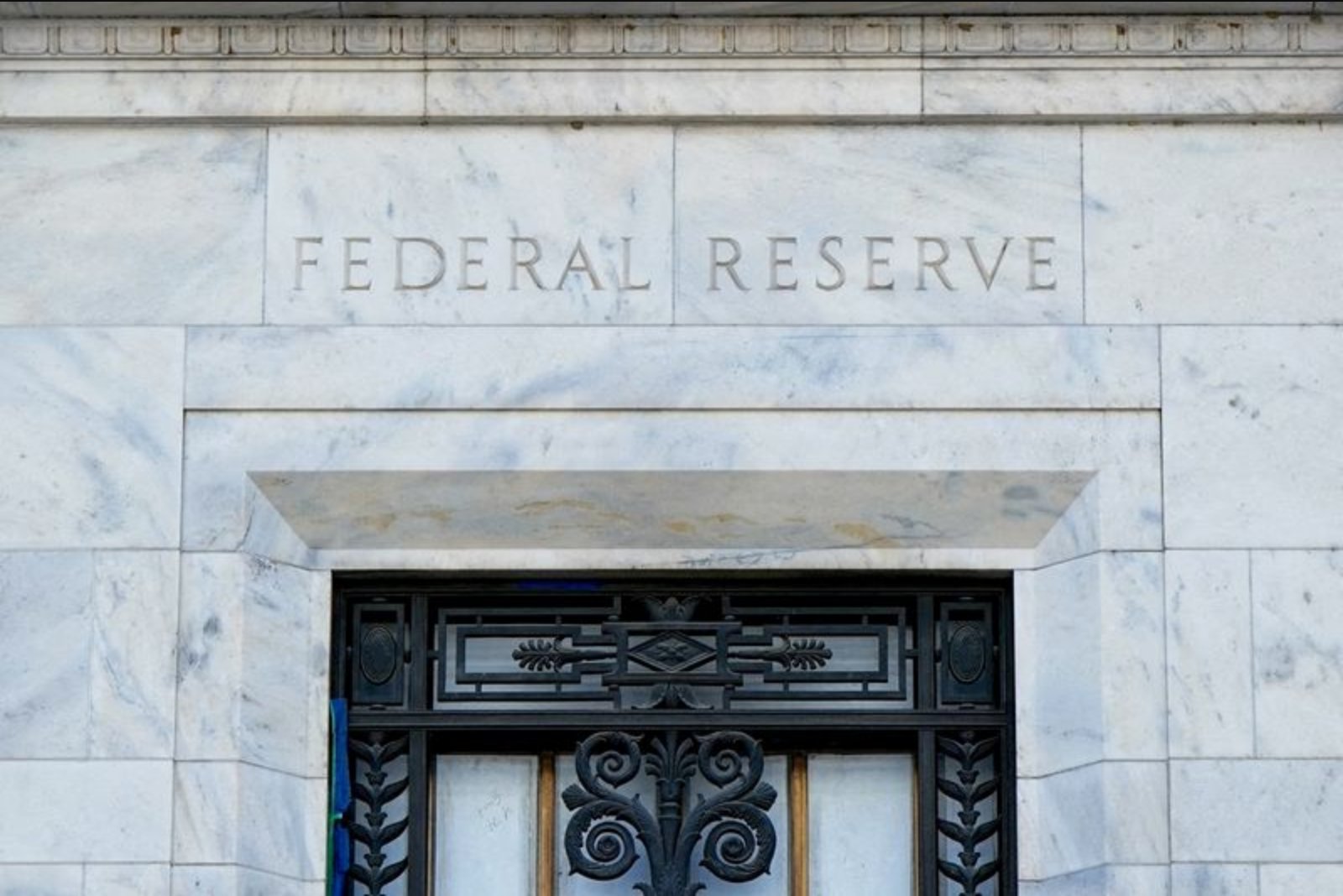
Federal Reserve officials convened on March 17-18 aware that the U.S.-Iran war was likely to push inflation higher over the coming year, and minutes from that two-day meeting - scheduled for release at 2 p.m. EDT - are expected to shed more light on how policymakers and central bank staff view the economic risks stemming from the conflict.
When the Federal Open Market Committee met, the international energy market was in the midst of a developing shock: benchmark crude had climbed from roughly $70 a barrel to about $100 a barrel in the three weeks leading up to the session. That surge is reflected in policymakers' updated economic projections, in which virtually all participants raised their forecasts for inflation in 2026.
Fed Chair Jerome Powell said at the March press conference that discussion at the meeting included a range of scenarios. "We did talk about alternative scenarios a little bit," he said, adding that the path ahead was highly uncertain. "It’s very uncertain...We shouldn’t assume it’s going to be one thing or another" with respect to the duration of the conflict and its impact on U.S. and global growth and prices.
Minutes often include the substance of staff presentations on the outlook and can provide a clearer view of how the Fed is framing and analyzing an unpredictable situation. In this case, the details could reveal the degree to which officials were focusing on upside risks to inflation versus downside risks to growth and employment if higher energy costs dent consumer spending and broader momentum.
At the March meeting the Fed left its policy rate unchanged at the current 3.5% to 3.75% range. The statement gave little indication that a policy change was imminent, as what had been expected to be a sequence of rate cuts this year increasingly looks like it could turn into an extended pause. Market pricing reflected that shift, with investors seeing no change in the Fed's policy rate until late 2027.
Some Federal Reserve officials had already been expressing concern about persistently high inflation before the conflict intensified. As of January, several policymakers signaled that inflation looked to be roughly a percentage point above the central bank's 2% target and that the Fed might need to indicate the possibility of further rate increases. The March policy statement, however, did not alter its language to signal hikes.
The minutes could nevertheless illuminate whether sentiment among decision-makers was moving toward a greater willingness to tighten policy if the oil shock raised the risk of inflation running well above target. Conversely, the discussion may show how much concern there was that higher energy costs could sap overall demand and labor market momentum, posing a risk to jobs and growth.
Projections and staff analysis
Policymakers revised up their outlook for 2026 inflation during the March meeting by about a quarter of a percentage point. The Fed's preferred gauge, the Personal Consumption Expenditures price index used to assess progress toward the 2% target, was projected to end 2026 at 2.7%, up from a 2.4% projection made in December.
Core inflation, which excludes food and energy and is considered a less volatile measure of underlying price pressures, was also projected to increase. The outlook for core PCE rose from a 2.5% projection in December to 2.7% in the March update.
Research from economists at the Federal Reserve Bank of Dallas highlighted how sensitive those outcomes could be to developments in oil markets and shipping through the Strait of Hormuz. Their analysis presented a range of scenarios that hinge on whether the strait is reopened by the end of April and on the peak price of oil.
In the Dallas Fed scenarios, if oil remains below $110 a barrel and shipping resumes through the Strait of Hormuz by the end of April, the projected inflation uptick sits at the low end of possible outcomes. Alternative scenarios that assume the strait remains closed for an additional three months or six months would drive oil to about $132 a barrel or $167 a barrel respectively, and could add as much as 1.47 percentage points to headline U.S. inflation.
Labor market and risk perceptions
More than five weeks into what had been expected to be a short-lived conflict, officials' unease about inflation intensified. A surprise surge in hiring in March, however, at least temporarily eased concerns about a weakening job market.
Chicago Fed President Austan Goolsbee, speaking before the most recent ceasefire announcement, described the evolving situation in stark terms. "I was optimistic that we would get back to this path to 2% inflation, but yikes, it’s going from orange to red lately," he said. He noted that tariffs had pushed prices up and had not entirely worked out of the system, and that the new energy-driven shock compounded the challenge, calling it "a troubling moment."
Oil prices fell back below $100 a barrel early on Wednesday after President Donald Trump announced a two-week ceasefire intended to allow negotiations on a longer-term peace agreement. That development may moderate some of the immediate upside pressure on headline inflation, but the minutes could show how officials are balancing the short-term volatility with longer-run risks.
The Fed minutes will provide the public and markets a more granular account of the committee's deliberations, including how staff modeled alternative paths for oil prices, shipping disruptions, inflation, and the labor market. Those details will be scrutinized for clues about whether policymakers are leaning toward signaling additional tightening, or whether they view the predominant danger as a growth slowdown that argues for maintaining the current policy stance.