
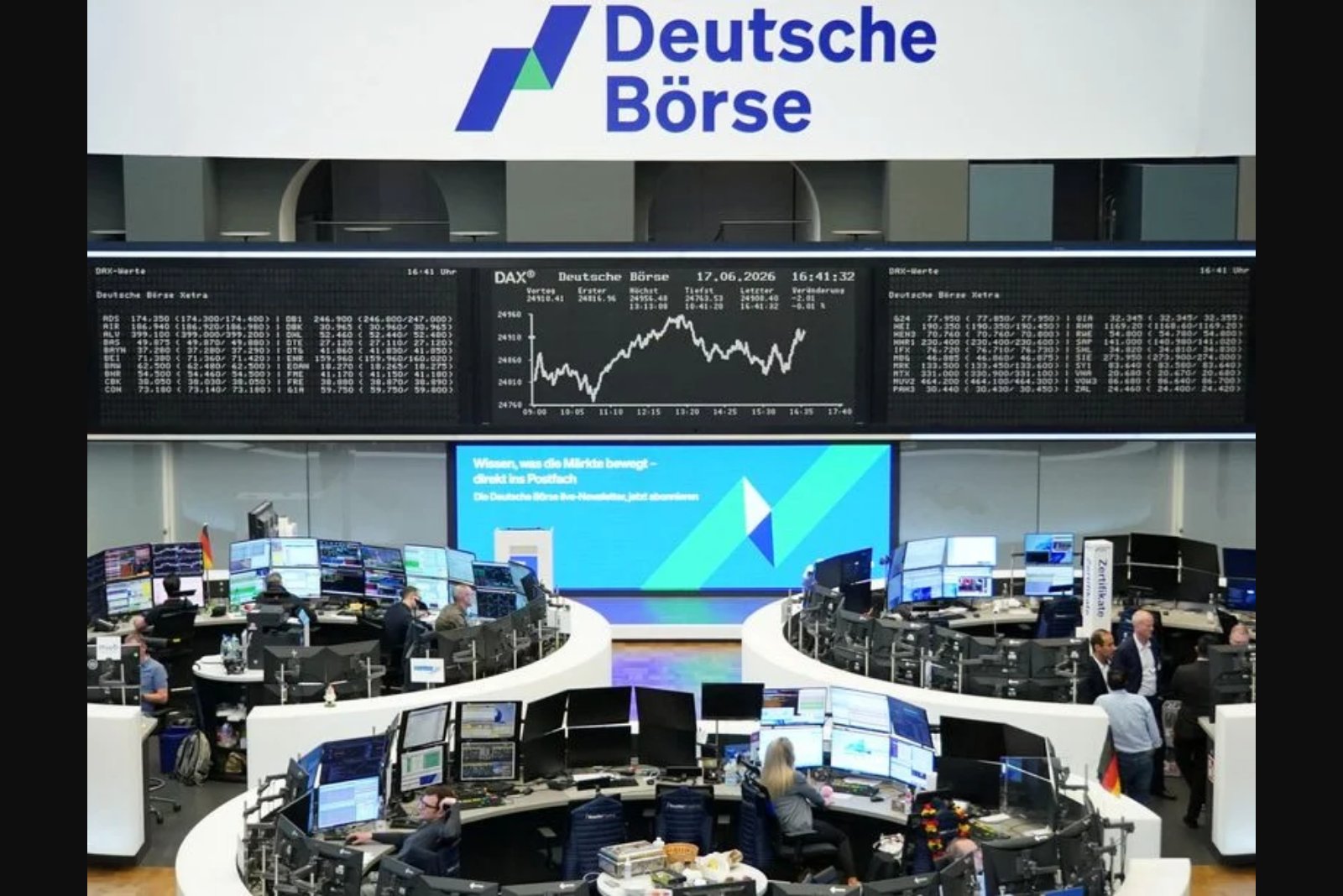
European equities started the trading day on a cautious footing on Thursday as market participants reacted to hawkish projections from Federal Reserve officials that increased the likelihood of a rate rise later this year, while declining oil prices helped reduce immediate inflation pressures.
By 0812 GMT the pan-European STOXX 600 index was down 0.15% at 638.35 points. The Fed left interest rates unchanged at its meeting on Wednesday, but nine policymakers signalled they expect one rate hike this year, a stance that shifted investor expectations.
Traders used the CME Group's FedWatch tool to assess those expectations, placing the probability of a September rate increase at about 49.5%. Market pricing showed an anticipation that, after a possible September move, rates would remain steady through the remainder of the year.
Energy markets provided a countervailing force to some inflation concerns. Brent crude extended its losses on Thursday and was trading near $77 a barrel after the United States and Iran signed an interim agreement to end the war, reopen the Strait of Hormuz and waive U.S. sanctions on Tehran's oil. The decline in oil supported sectors sensitive to energy costs; airlines responded positively to the shift.
Major carriers gained on the day, with Lufthansa up 0.9% and Air France rising 2.7% as investors factored in lower fuel expenses. Technology stocks outperformed the broader market, advancing 0.6%, while European chipmakers benefited from rallies in Asia - Infineon and Aixtron each rose by more than 4%.
In financial and corporate moves, Assicurazioni Generali climbed 2.6% following a report that UniCredit is seeking to double its stake in the insurer through Delfin, the Del Vecchio family holding company. UniCredit's own shares were modestly higher, up 0.3%.
Retail and consumer names showed mixed reactions to regional developments. Britain's largest food retailer, Tesco, slipped 3.3% after reporting a slowdown in first-quarter sales growth that the company attributed in part to impacts from the Middle East conflict. By contrast, French voucher and prepaid services group Edenred surged 13.9% after media reports indicated that Britain's BC Partners is considering a takeover of the company.
Market participants are negotiating a balance between central bank signals and commodity-driven inflation dynamics. While the possibility of a Fed rate hike has tightened sentiment, easing crude prices have softened some short-term inflationary pressures - a combination that is producing selective gains across sectors rather than a broad market move.