
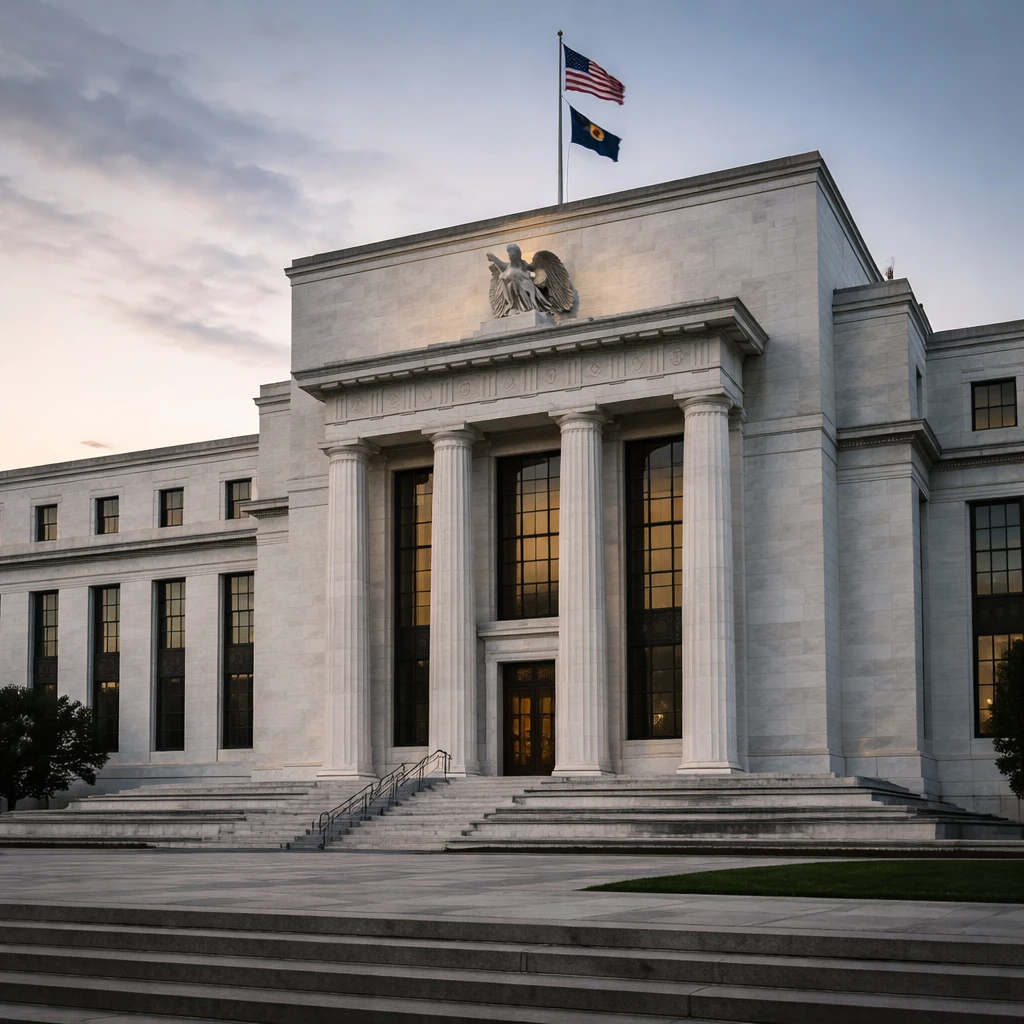
Economists tracking the Federal Reserve say an anticipated move to install Kevin Warsh as chair will probably not produce a meaningful shift in U.S. monetary policy this year. Both Barclays and Morgan Stanley emphasize that the Federal Open Market Committee - not the individual who occupies the chair - will determine the path for interest rates.
Marc Giannoni, an analyst at Barclays, pointed to a combination of factors that limit the room for policy easing. He cited a "resilient economy, elevated inflation, and a divided FOMC" as reasons why there is "limited scope for easing" over the remainder of the year.
Giannoni added that any effort by Warsh to press for deeper rate cuts "will face resistance - both within the divided FOMC and given tension with Warsh's own inclinations." He also flagged the logistical and political timeline, saying: "Despite temporary roadblocks in the Senate, we expect him to be confirmed by May 15, the end of Powell's term."
Giannoni reminded readers that the Fed chair has only one vote on the committee, and with policymakers split over the appropriate path for rates, building consensus is likely to be slow. Barclays continues to forecast two rate reductions this year - one in June and another in December - but cautioned that if inflation stays elevated and unemployment remains near 4.4 percent, the committee "will be unwilling to cut rates more than twice."
Morgan Stanley's chief global economist Seth Carpenter offered a concordant assessment, saying the transition "will not change the Fed's reaction function materially, particularly in the near term." He argued that deviations from the committee's current framework would invite significant opposition, noting such moves would meet "more than a couple of dissents."
Carpenter further observed that while Warsh has argued for a smaller balance sheet, any alteration to the Fed's balance-sheet policy would require broader agreement among policymakers, "pushing any such decision to next year."
Implications and context
- Policy direction is likely to be driven by the collective FOMC vote rather than by the views of a single chair.
- Economic indicators - notably inflation and unemployment near 4.4 percent - are central to whether the committee limits itself to the two cuts Barclays forecasts.
- Changes to the Fed's balance sheet are considered possible in principle but would require consensus and therefore could be deferred beyond the current year.