
Economy March 19, 2026

ECB Holds Rate at 2% and Flags Middle East Conflict as Downside Risk

Lagarde says services and private consumption are supporting growth, but energy disruptions from the war cloud the outlook

By Sofia Navarro
ECB Holds Rate at 2% and Flags Middle East Conflict as Downside Risk

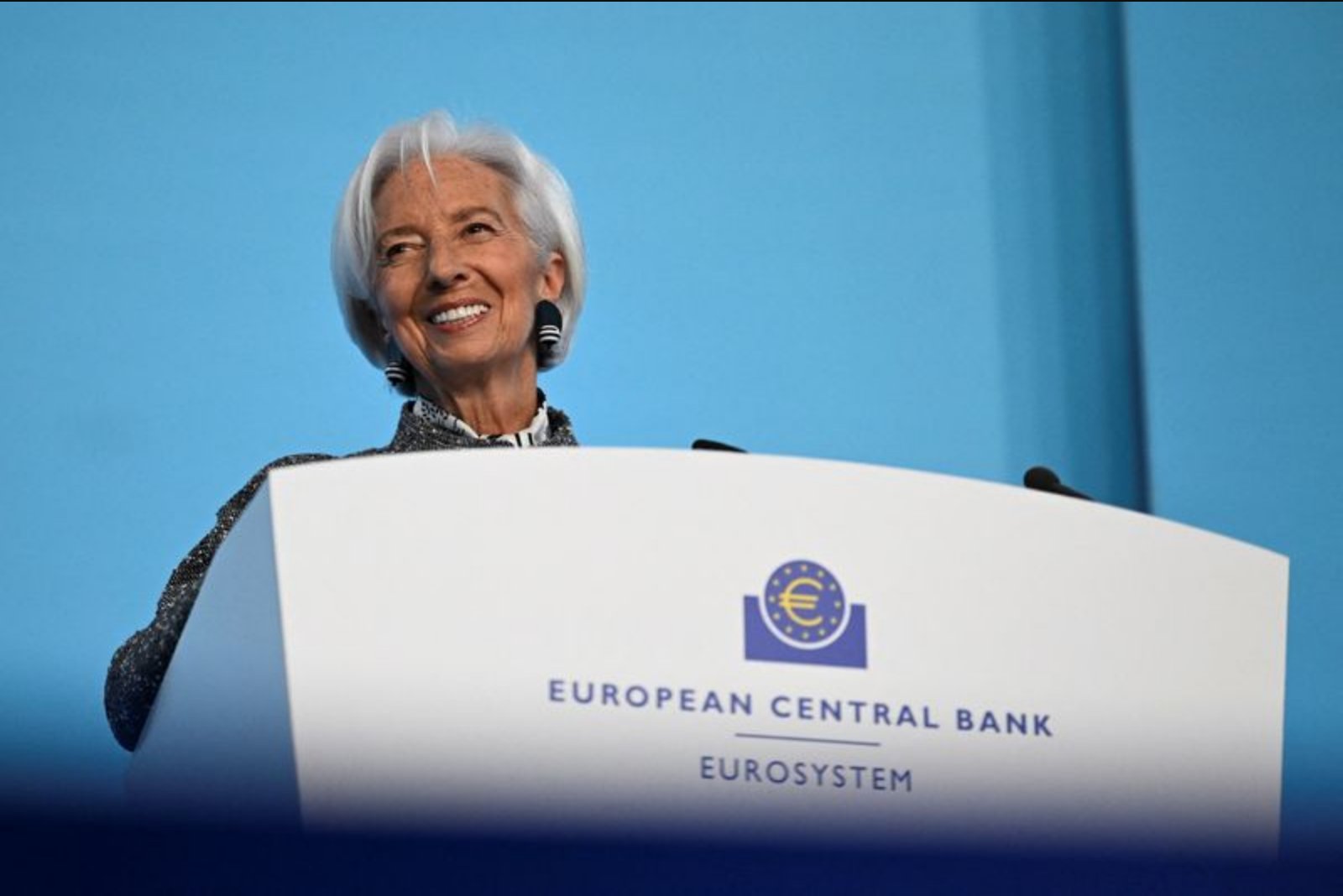
The European Central Bank left its main interest rate unchanged at 2% and highlighted the war in the Middle East as a growing risk to growth and inflation in the euro zone. ECB President Christine Lagarde said services and private consumption remain the primary supports for expansion, but noted the conflict is disrupting commodity markets, denting real incomes and weighing on confidence. The bank reiterated a data-dependent, meeting-by-meeting approach to monetary policy and recommended temporary, targeted fiscal measures to respond to energy price shocks.

Key Points

  • ECB kept its main interest rate at 2% and emphasized a cautious, data-dependent approach to future decisions.
  • Recent growth has been supported primarily by the services sector, with private consumption expected to be the main driver of medium-term growth.
  • The war in the Middle East is disrupting commodity markets, weighing on real incomes and confidence, and has led to downward revisions to consumption and investment, especially for 2026. Sectors impacted include consumer-facing industries, energy, and investment-sensitive industries.

FRANKFURT, March 19 - The European Central Bank maintained its key policy rate at 2% on Thursday and emphasised that the war in the Middle East is clouding prospects for both growth and inflation across the euro area.

Speaking at a news conference after the policy decision, ECB President Christine Lagarde outlined the main drivers of recent economic activity and the risks facing the outlook.

Growth drivers

Lagarde said that recent expansion in the euro zone was "underpinned mainly by services." She added that staff projections continue to see private consumption as "the main driver of growth over the medium term."

Middle East conflict and commodity markets

On the impact of geopolitical tensions, Lagarde warned that "the war in the Middle East is disrupting commodity markets and weighing on real incomes and confidence." She said those developments had prompted a downward revision to consumption and investment in the ECB staff baseline projections, particularly for 2026.

"The war in the Middle East is disrupting commodity markets and weighing on real incomes and confidence. This has led to a downward revision of consumption and investment in the baseline staff projections, especially for 2026."

Lagarde noted that the economic consequences would be larger in alternative scenarios involving a more prolonged or severe energy shock.

External environment

The ECB president described the external backdrop as challenging, pointing to volatile global trade policies as an additional source of uncertainty. She reiterated that developments abroad are an important factor in the bank's assessment of the outlook.

Monetary policy approach

On policy strategy, Lagarde said the ECB will remain flexible and evidence-driven: "We will follow a data-dependent and meeting-by-meeting approach to determining the appropriate monetary policy stance. In particular, our interest rate decisions will be based on our assessment of the inflation outlook and the risks surrounding it, in light of the incoming economic and financial data, as well as the dynamics of underlying inflation."

Fiscal guidance on energy shocks

Addressing policy responses to energy price pressures, Lagarde recommended that any fiscal measures be "temporary, targeted, and tailored."


The ECB's choice to hold its main rate at 2% comes as officials weigh how persistent energy price disruptions and elevated uncertainty from the Middle East conflict could alter the trajectory of consumption, investment and inflation across the euro zone.

Risks

  • Disruption to commodity markets from the war in the Middle East could reduce real incomes and consumer confidence, risking slower consumer spending - affecting retail and services sectors.
  • Downward revisions to consumption and investment in the ECB staff baseline, particularly for 2026, suggest weaker demand that could hit investment-dependent industries and capital expenditure plans.
  • A more severe or prolonged energy shock in alternative scenarios would amplify the economic impact, putting additional strain on energy-intensive sectors and potentially increasing inflation volatility.

More from Economy

Dollar Holds Firm as Markets Wrestle with Escalating Iran Conflict and Hormuz Deadline Apr 5, 2026 A Dongguan Factory’s Strategy for Living with Tariffs, Trade Shocks and Supply-Chain Friction Apr 5, 2026 Trump Seeks Sweeping Budget Shift: Big Boost to Defense, Deep Cuts to Domestic Programs Apr 5, 2026 Iran Conditions Hormuz Reopening on Compensation, Signals Wider Disruption Risk Apr 5, 2026 Why Japan Equities Deserve a Place in Long-Term Portfolios Apr 5, 2026