
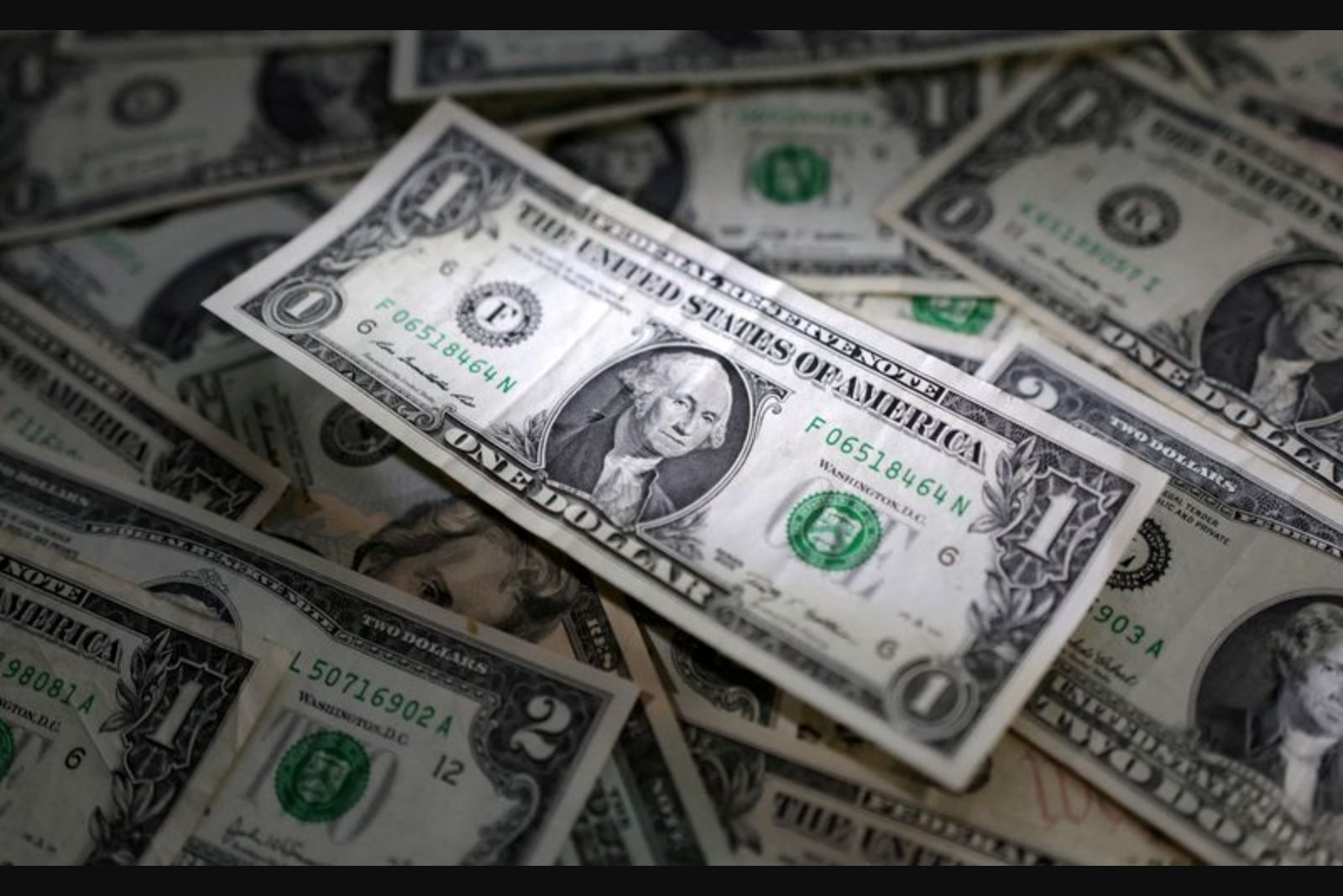
The dollar - the dominant reserve currency - is experiencing heightened turbulence as moves in Washington and concerns over the Federal Reserve's autonomy revive trades that bet against the U.S. currency. The greenback, which fell about 2% in a single week in January to four-year lows, then bounced back, producing abrupt market reactions that have spread from metals to bonds and currencies.
Recent policy headlines triggered the rebound. U.S. President Donald Trump nominated former Federal Reserve governor Kevin Warsh to replace Jerome Powell as Fed chair, a development that coincided with a strong uptick in the dollar over the last two trading sessions. The shift in sentiment has been particularly disruptive for metals markets, where positions built around a weakening dollar were abruptly unwound.
Gold, which posted its best month in over 50 years in January, plunged 5% on Monday after suffering its largest single-day drop since the early 1980s in the prior session, before recovering some losses on Tuesday. Traders had concentrated in a strategy that anticipated rising metals prices as Fed independence kept the dollar on a steady weakening trajectory. That thesis, according to Societe Generale in a client note, evaporated "at lightning speed," producing rapid losses for participants. Silver and copper also retreated sharply from recent record highs, while Brent crude oil, despite rallying 16% in January, was poised for its worst week in almost two months.
Currency markets have grown more unsettled as well. The global foreign exchange market, which handles roughly $10 trillion of daily turnover, is showing increased short-term volatility. A gauge of implied three-month volatility for the most traded pair - the euro/dollar rate - reached its highest level since July during the prior week, reflecting elevated uncertainty about exchange-rate moves.
Research from Capital Economics has flagged a growing dislocation between the dollar and traditional valuation drivers, such as interest-rate differentials with Japan and Europe. Barclays analysts have quantified a U.S. policy risk premium for the dollar, observing that White House rhetoric now plays a direct role in the currency's pricing and that the dollar has become partially detached from the economic and growth projections investors typically follow. Barclays' global head of FX and EM macro strategy, Themos Fiotakis, summed up the stakes succinctly: "The main question is whether people lose confidence in the U.S. asset base."
That confidence question carries material implications for global portfolios. Foreign holders possess almost $70 trillion of U.S. assets - a stock that has more than doubled over the past decade amid a sustained rally in U.S. equities. A softer dollar often helps U.S. stocks by boosting the home-currency value of overseas earnings, and it can lift Treasury prices. But analysts at Bank of America warned that a disorderly currency decline - defined by BofA as a monthly fall of 5% - could produce far more damaging outcomes. Such a drop, they say, could trigger a "drastic sell-off of long-dated Treasuries" and materially tighten U.S. financial conditions. BofA also flagged the risk that a broader debasement trade could see the dollar fall in tandem with domestic asset prices, amplifying losses for holders of dollar-denominated securities.
Market participants are already adjusting. Oliver Blackbourn, a multi-asset manager at Janus Henderson, described moving portfolios toward neutral to reduce market risk, noting that he trimmed exposures to equities and gold over the past two weeks. "If the dollar is more volatile on the back of various (policy) pronouncements then other assets are going to be volatile on the back of that, so we just have to get more neutral in the short term," he said.
Other managers are using options to hedge yield uncertainty. John Stopford, head of managed income at Ninety One, said he purchased both put options that pay off if Treasury yields rise and call options that pay if yields fall, a tactic designed "to cover the uncertainty over the likely direction of yields from here." Meanwhile, hedge funds are reducing their exposure to North American assets amid trade tensions and policy unpredictability.
What this means for markets
- Commodities - Metals and oil have seen swift corrections after bets on a weaker dollar reversed.
- Fixed income - Long-dated Treasuries could face heavy selling in a disorderly dollar decline, with knock-on effects for borrowing costs and financial conditions.
- Currencies - Elevated implied volatility in major pairs indicates higher hedging costs and greater trading risk for cross-border investors.
Overall, the episode underlines how policy-driven moves and perceptions of central bank independence can reprice the dollar independently of conventional economic indicators, forcing investors to manage both directional and liquidity risks across asset classes.