
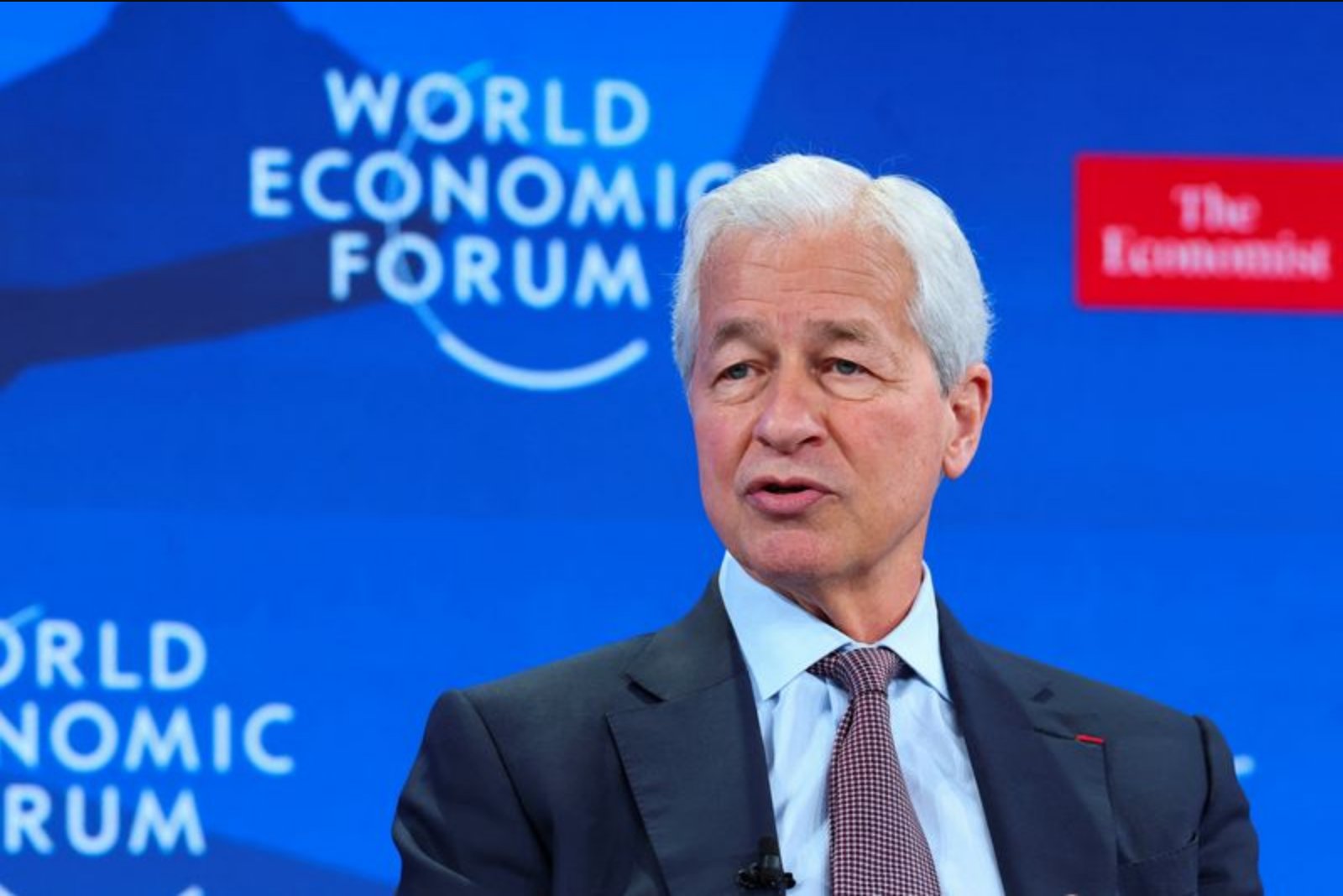
JPMorgan Chase chief executive Jamie Dimon said in his annual letter to shareholders that the war in Iran introduces a real risk of sustained oil and commodity price shocks that could make inflation stickier and drive interest rates higher than markets currently anticipate. The warning was issued a day after U.S. President Donald Trump increased pressure on Iran, threatening to target its power plants and bridges on Tuesday if Tehran does not reopen the Strait of Hormuz, a strategically vital maritime route.
Dimon, 70, who has led JPMorgan, the largest U.S. bank, for two decades, described the constellation of challenges facing the global economy as significant. He named several geopolitical stressors explicitly - the ongoing conflict in Ukraine, broader hostilities in the Middle East and tensions with China - and added that the war in Iran brought the additional prospect of prolonged price shocks in energy and other commodities. He warned these dynamics could reshape global supply chains, produce stickier inflation and ultimately leave interest rates higher than investors now expect.
Time will tell whether the Iran conflict achieves the United States' objectives, Dimon wrote, and he singled out nuclear proliferation as "the greatest danger from Iran." He noted that concerns about war-driven inflation have already shifted market expectations, contributing to a backdrop in which market participants have largely ruled out interest rate cuts this year.
Dimon pointed to the U.S. equity market's recent performance as an example of the economic sensitivity to geopolitical developments. The benchmark S&P 500 index closed its worst-performing quarter since 2022, he noted, with the downturn emerging after late February as the war and a jump in energy prices weighed on sentiment.
Despite these risks, Dimon assessed the domestic economy as resilient. Consumers, he said, are still earning and spending, albeit with signs of some recent weakening, while businesses remain generally healthy. At the same time, he cautioned that the economic expansion has been supported by substantial government deficit spending and prior stimulus measures, and he identified increased infrastructure spending as a growing fiscal need.
Dimon also cataloged certain positive forces for the economy, citing fiscal measures from President Donald Trump described in his letter as the "Big, Beautiful Bill," deregulation initiatives and capital investment tied to artificial intelligence as contributing to economic momentum.
Private credit
Turning to non-bank credit markets, Dimon described the private credit sector, sized at roughly $1.8 trillion, as relatively small and said it "probably" does not pose a systemic risk. Nevertheless, he warned that a weakening credit cycle would raise losses across leveraged lending, driven in part by modest deterioration in credit standards industry-wide. He highlighted a lack of transparency and rigorous valuation marks in private credit funds as factors that could prompt investor selling if the environment deteriorates.
Dimon's comments came amid recent investor pullbacks from certain private credit vehicles. He noted that firms had experienced significant redemptions, and pointed to an example where a manager limited withdrawals from two funds after historic first-quarter redemption requests; that firm cited investor concerns tied to artificial intelligence as prompting an exodus from a technology-focused fund.
Regulatory concerns
Dimon used the shareholder letter to deliver a strong critique of revised capital rules proposed last month by U.S. bank regulators. He described some aspects of the proposals as "nonsensical" and said the broader package remained "very flawed." He reiterated that JPMorgan and other large banks had pushed to water down draft 2023 proposals related to Basel-III and the Global Systemically Important Banks (GSIB) surcharge. Under the new proposal, he said JPMorgan's GSIB surcharge would only fall to 5.0 percent, a level he argued penalized the bank's success and called both "absurd" and "un-American."
Across his remarks, the emphasis returned to the intersection of geopolitical risk, market expectations and bank regulatory policy: higher-than-expected inflation and interest rates driven by commodity shocks would have broad implications for markets and for lenders, while regulatory choices over capital requirements would shape how large banks are positioned to absorb future stresses.
Note: This article presents the key points raised in the CEO's annual letter to shareholders without additions or new factual claims beyond those conveyed in his communication.