
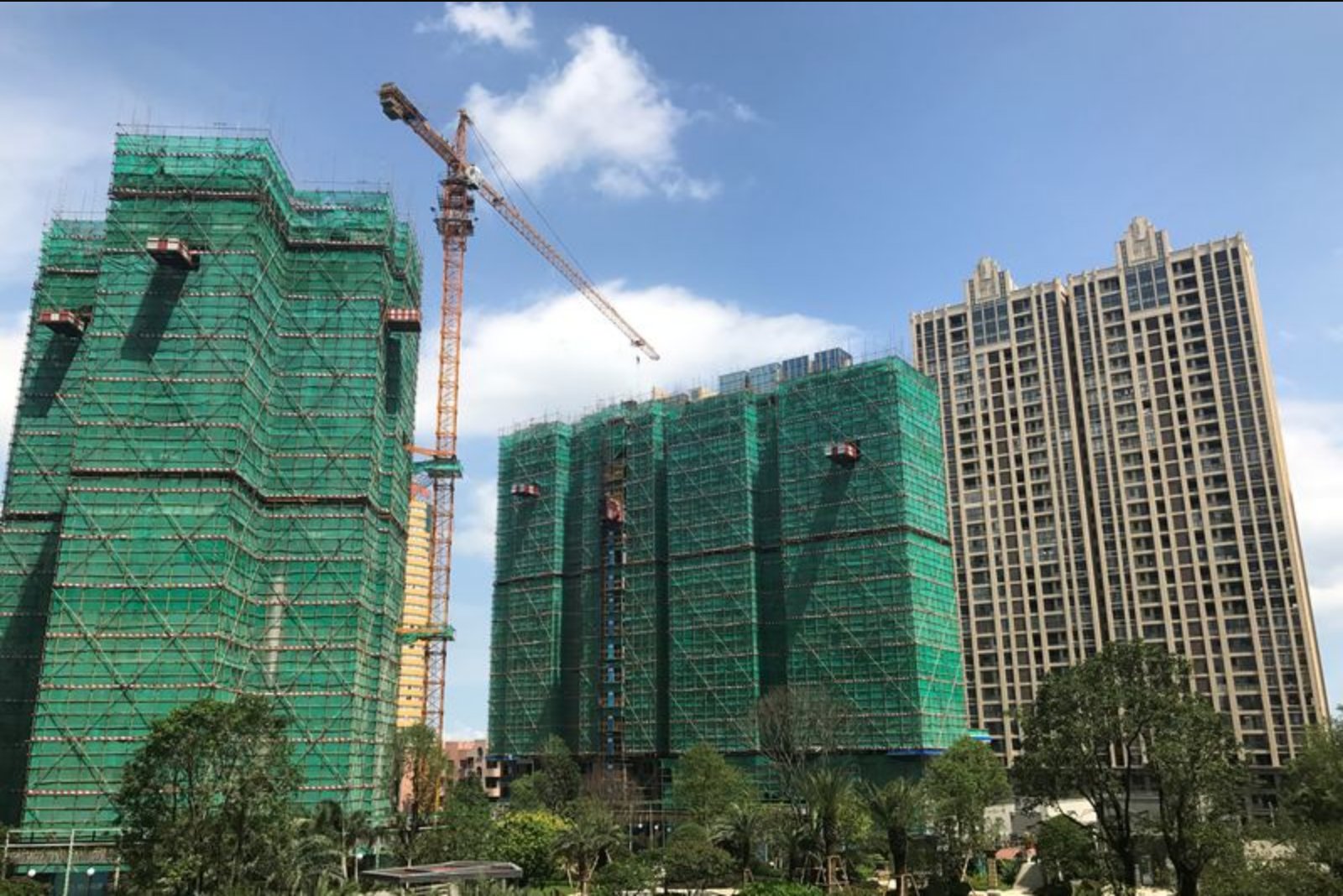
Beaten but not fixed
China’s property market has seen a stream of positive headlines in recent weeks - calls from a Communist Party journal for "strong policy actions," reported regulatory relaxations around the so-called "three red lines," five-year loan extensions for certain strategic projects and fresh bond issuance by state-owned developers. Those developments have helped lift investor sentiment, with the CSI 300 Real Estate Index up about 5% year-to-date.
Yet executives operating in the market describe a much harsher reality on the ground. Private developers, many of which defaulted or fell into distress after the liquidity shock tied to the "three red lines" regime, continue to face severe funding shortages and sliding prices amid fragile demand.
"I don’t see how private developers are going to survive," said a senior executive at a Shanghai-based private developer, one of many companies that defaulted following the tightening of debt limits. He said his firm has been unable to obtain fresh bank financing even after offering collateral and despite official measures aimed at encouraging lending. He requested anonymity because the subject remains sensitive.
Policy gestures, limited reach
Investors are pinning hopes on policy steps linked to the National People’s Congress and the Chinese People’s Political Consultative Conference in March, and a Politburo session in April. But some senior figures in state-controlled developers expect no sweeping stimulus that would materially alter the market this year. A senior executive at a state-owned firm, who also asked not to be named, said much of the conventional toolkit has already been deployed over the past five years: interest rate cuts, easing of homebuying curbs and directives to banks to support lending.
The reported removal of the "three red lines" caps - which constrained developers’ leverage and triggered a credit squeeze in 2021 - may be largely symbolic, some insiders say. Analysts and developers note the practical effect has been limited because banks have already been behaving as if the constraints were relaxed for some time, without a noticeable lift in lending to the sector.
Robert Ciemniak, CEO of Real Estate Foresight, expects policymakers to continue with a "support not stimulus" approach. He highlighted one area of potential benefit for developers: an expansion of a programme under which local governments buy back land and unsold housing developments to convert them into affordable housing stock. That would be targeted assistance rather than broad-based demand stimulus.
Sales and prices still sliding
The longer-term macro effect of the sector’s debt crisis and the resulting inventory of incomplete projects has been sharp. Weak consumer confidence - driven by slow economic growth and rising job and financial insecurity - continues to weigh on property demand, keeping downward pressure on prices.
UBS analyst John Lam flagged in client notes that it is premature to declare the market stabilised. He pointed to weak new-home sales and stressed that any sustainable recovery will need to be underpinned by rising household incomes.
Official data show new home prices in December fell 2.7% year-on-year, accelerating from a 2.4% decline the prior month and marking the fastest drop in five months. Separate figures indicate property investment fell 17.2% in 2025 while sales by floor area were down 8.7% year-on-year. A quarterly Reuters survey of analysts expects new home prices to decline a further 3.7% in 2026.
Those trends make it harder for developers to meet debt obligations and complete projects, increasing the likelihood of additional restructurings and defaults among weaker firms.
High-profile casualties and restructurings
The sector’s turmoil has already led to major corporate outcomes. China Evergrande, once the country’s largest developer, is in liquidation. Country Garden, another major name, has completed a restructuring of its offshore obligations. China Vanke secured creditor approval to defer certain repayments, delaying an immediate default, but credit analysts say Vanke is likely to follow the path of other financially stretched developers and eventually seek a broader debt restructuring.
State-backed activity and selective market interventions - including recent dim sum bond issuance by state-owned Yuexiu Property and China Overseas Grand Oceans in Hong Kong - have provided some market uplift. However, these moves appear to offer targeted relief rather than a comprehensive solution to the systemic funding and demand problems that persist.
Market perspective and tools in play
Developers and market watchers say the policy stance is likely to remain one of measured support: steps to prevent systemic spillovers and to stabilise key projects, rather than aggressive stimulus aimed at restoring the sector to previous growth trajectories. If expanded, government land and unsold inventory buy-back measures could lessen pressure on troubled balance sheets and redirect inventory into affordable housing pools.
Meanwhile, an external AI-driven stock selection product referenced in the market commentary evaluates individual tickers, including one identified as 0123, against a wide set of financial metrics to flag investment opportunities. That commercial tool claims to use many indicators to assess fundamentals, momentum and valuation, but those promotional materials stand apart from the fundamental market dynamics facing developers.
Bottom line
Recent policy signals, selective loan extensions and fresh bond issuance have lifted short-term sentiment, but developers say the structural difficulties remain: weak demand, falling prices, and constrained access to bank financing for many private firms. Absent a material improvement in household incomes and broader, sustained credit flows into the sector, the market’s path to recovery looks likely to be gradual and uneven.