
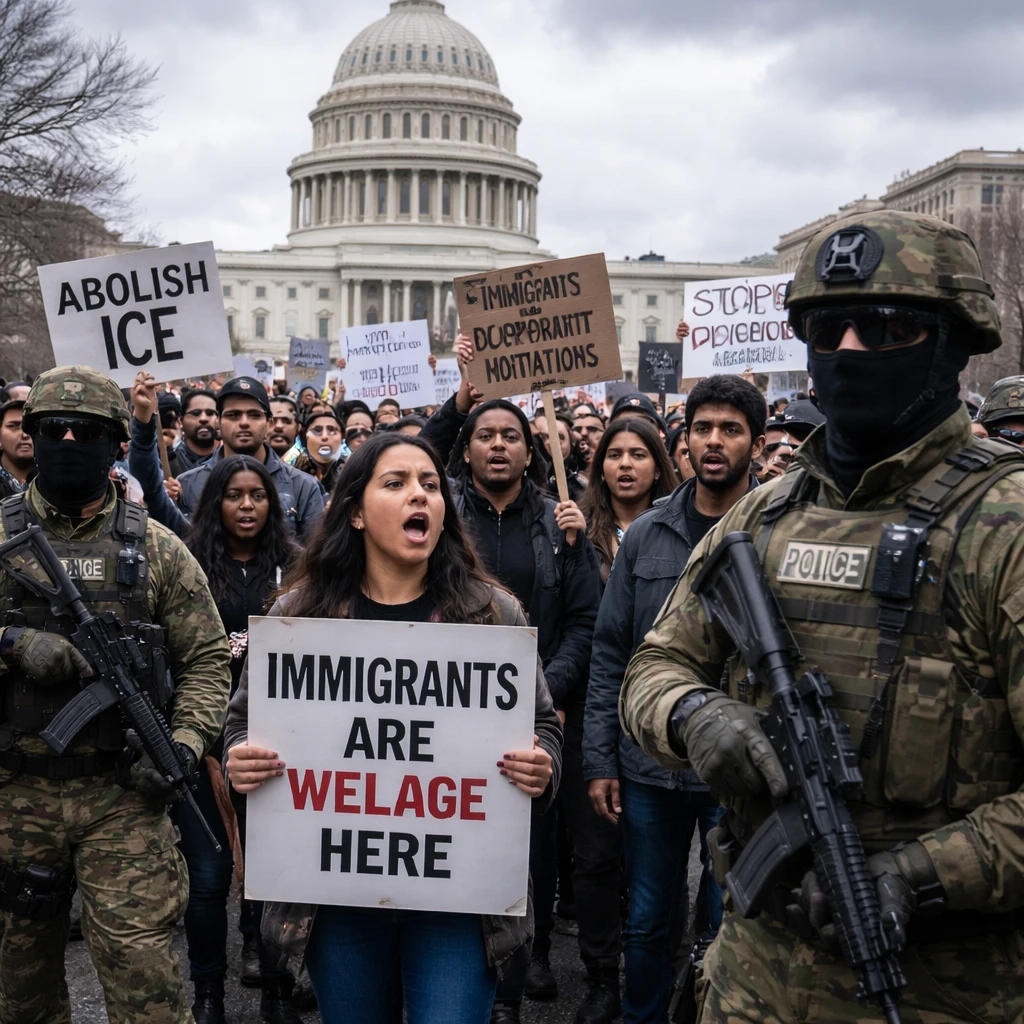
In Washington, D.C., Democrats in the U.S. House of Representatives are gearing up to resist the approval of the Department of Homeland Security funding bill. This opposition is motivated by strong disapproval of President Donald Trump's strategy involving the deployment of masked federal agents to multiple cities and states, including Minneapolis. The operation forms part of a broader effort to clamp down on illegal immigration but has drawn criticism for apprehending American citizens as well.
The urgency is underscored by the January 31 deadline for Congress to enact 12 spending bills or alternatively pass a stopgap funding measure. Failure to meet this deadline risks provoking a government shutdown, the second such occurrence within four months. To date, bipartisan negotiations have progressed on most of the bills slated to fund federal agencies throughout the Trump administration.
On Thursday morning, the House commenced deliberations on the DHS funding proposal alongside a compilation of other legislative packages. Votes on these measures were anticipated later in the day. Democratic leaders in the House issued statements confirming they would oppose the DHS funding bill, citing the national response to the January 7 fatal shooting of a 37-year-old woman in Minneapolis by an Immigration and Customs Enforcement agent as a catalyst for their protest.
Conversely, Republican members of the House framed the debate with an emphasis on finally completing the fiscal year's budget process, which began on October 1 but remains unfinished after a four-month delay. Success would see the House approving and forwarding to the Senate comprehensive funding encompassing military, health, transportation, education, housing, and homeland security programs. Representative Virginia Foxx of North Carolina articulated readiness within the Republican caucus to finalize appropriations.
Democratic opposition focused predominantly on concerns surrounding the lack of sufficient safeguards within the DHS bill to prevent excessive actions by ICE agents. Many rank-and-file Democrats are anticipated to join in this dissent. Representative Jim McGovern of Massachusetts voiced allegations that ICE operates with impunity across communities, engaging in activities including stopping, harassing, intimidating, and even shooting individuals. McGovern highlighted that the atmosphere of fear has led even U.S. citizens to carry their passports routinely to avoid wrongful detention.
In contrast, House Appropriations Committee Chair Representative Tom Cole of Oklahoma defended the bill, stating that it empowers frontline personnel to effectively enforce immigration laws. The narrow Republican majority in the House, secured by a margin of 218 to 213, leaves the passage of the $64.4 billion DHS bill uncertain under Speaker Mike Johnson's leadership. The Senate's position on the bill remains ambiguous as well.
A failure to pass the bill could result in furloughs of DHS staff deemed non-essential, although ICE operations might continue unaffected. It is notable that last year’s enacted legislation, referred to as "One Big Beautiful Bill," allocated an additional $75 billion to ICE, irrespective of the DHS spending bill passage.
Among Democratic voices, some call for pragmatism. Senator Patty Murray of Washington urged her colleagues to recognize the limitations inherent in the current political landscape, emphasizing that significant ICE accountability will require gaining political power, specifically pointing to the congressional elections scheduled for November.
Beyond the immigration-related debate, analysts observe indications that these spending bills may reflect Congress's efforts to reclaim authority over federal expenditures, especially following former President Trump's refusal to spend funds previously authorized in legislation.
Brendan Duke, associated with the Center on Budget and Policy Priorities, noted that the proposed spending bills maintain protections for programs previously targeted for cuts by the Trump administration, including medical research, housing, and education funding. He added that the key question remains whether Trump will honor the terms of the agreement.